How Koreans Actually Spend Sunday on the Han River
목차
The Han River is 514 kilometers long and runs directly through Seoul. Most tourists see it from a bridge. Koreans live alongside it every weekend. Here’s what that actually looks like from the inside.
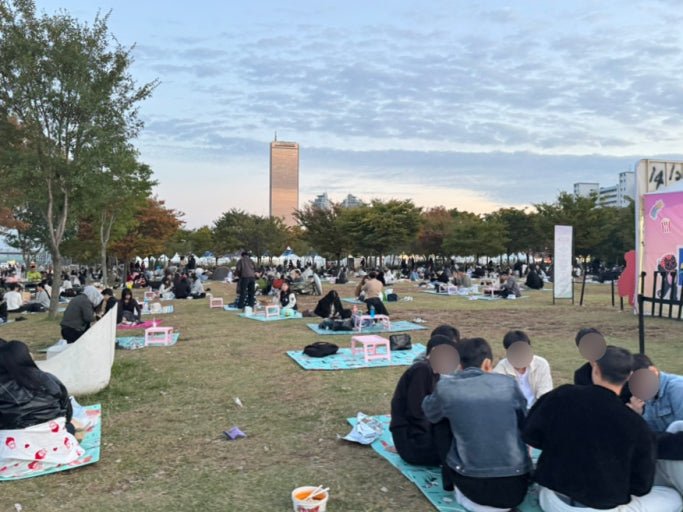
Every Korean who grew up in or near Seoul has a Han River memory. Mine is specific: late spring, my second year of university, exam season ending, the whole friend group piling out of Yeouido Station with a bag full of convenience store food and no particular plan. We found a stretch of grass, laid out a mat, and spent five hours doing essentially nothing — eating instant noodles cooked in the park’s automated machines, watching a couple attempt to flyboard and fail spectacularly, falling asleep in the late afternoon warmth. That memory is twenty years old and the exact same experience is happening right now on any given weekend between April and October at any of the Han River parks. The Han River isn’t a landmark Koreans visit. It’s a place Koreans go to be.
Understanding that distinction is the key to understanding what a Han River day actually involves — and why it’s worth doing rather than just photographing from above.
📋 Quick Navigation
- The Parks: Which One to Choose and Why
- The Food: Convenience Store Ritual Explained
- What Koreans Actually Do: Activities and How to Join
- Best Times and Seasons — Real Talk
- Practical Tips: What to Bring and What to Skip
The Parks: Which One to Choose and Why
There are twelve Han River parks in Seoul, and they are not interchangeable. Each has a different character shaped by the neighborhood it serves. Yeouido Hangang Park (여의도한강공원) is the most famous and the most photographed — this is the cherry blossom park that fills every April travel photo. It’s accessible directly from Yeouinaru Station (Line 5), genuinely beautiful in spring, and extremely crowded on weekends from late March through May. Come here for the scale and the view of the financial district skyline, but come early or come on a weekday. Mangwon Hangang Park (망원한강공원) is my personal preference for a relaxed weekend. It’s smaller, draws a more neighborhood crowd (people from Mapo-gu who walked or cycled there), and is directly adjacent to Mangwon Market — which means your food procurement situation is excellent. The walk from Mangwon Market to the riverside takes about ten minutes and is exactly what a Korean weekend afternoon looks like from the inside. Ttukseom Hangang Park (뚝섬한강공원) serves the Seongsu-dong crowd and is popular with younger Seoul residents — more inline skaters, more cyclists, livelier nighttime atmosphere. Banpo Hangang Park (반포한강공원) has the Rainbow Fountain Bridge (분수교), which runs a water and light show in evenings and is particularly popular with families and couples.
💡 My Personal Experience: I’ve been to most of the Han River parks over the years, and the single best decision I ever made was cycling the full length of the Han River Bicycle Path from Ttukseom to Yeouido on a Tuesday morning in early October. The path is flat, almost entirely car-free, and the views change every ten minutes — the industrial east, the residential middle, the financial west. It took about three hours including stops. I saw maybe forty other people the entire time. On a Saturday, the same path has thousands. Timing is everything with the Han River.
The Food: Convenience Store Ritual Explained
This is the part that confuses foreign visitors the most until they actually do it, at which point it becomes one of their favorite Korea memories. The Han River convenience store experience works like this: you find the GS25 or CU located right in or adjacent to the river park (every major park has at least one, and some have three or four). You select your food — triangle kimbap, instant noodles, chips, snacks, drinks, fried chicken if the location has it. For the instant noodles, you pay at the register and the cashier gives you a token. You take the token to the automated noodle cooking machine near the entrance, insert it, and wait approximately ninety seconds for perfectly cooked instant noodles in a foil cup. You carry everything to the riverbank, find a patch of grass or a picnic mat (you can rent or buy these at the park), sit down, and eat with the view.
I cannot overstate how satisfying this experience is. There is no restaurant that charges you for atmosphere at the Han River. You are paying ₩7,000–₩10,000 total for a meal that is eaten at one of the best viewpoints in Seoul. The Han River noodle experience is something I recommend to every foreign visitor I speak to, and every single one of them comes back having found it more enjoyable than restaurants that cost five times as much. The key practical detail: bring or buy a picnic mat. The grass can be damp, and sitting directly on it for an hour is uncomfortable. Convenience stores at the park sell basic mats for ₩3,000–₩5,000. A small insulated bag is also useful if you’re bringing cold items, but this is optional.
What Koreans Actually Do: Activities and How to Join
The Han River parks have a remarkable density of activity for what is essentially a public green space. Here’s what you’ll actually see on a warm weekend afternoon: Cycling is probably the most popular single activity — rental bikes are available at every major park from the 따릉이 (Ttareungi) public bike share system at ₩1,000 per hour. The riverside path runs uninterrupted for significant distances and is genuinely one of the best urban cycling experiences in Asia. You don’t need your own bike, you don’t need to book in advance, and you can return the bike at any station on the network. Inline skating is having a major revival in Korean youth culture — you’ll see dedicated skaters at Ttukseom and Banpo who are genuinely skilled, and rental equipment is available near both parks. Badminton and football happen wherever there’s flat grass — Koreans bring their own equipment and set up games that strangers frequently join. Flyboarding and wakeboarding are available at Ttukseom (rental operators on-site, reservation recommended on weekends). Han River cruises depart from several piers — I recommend the evening cruise from Yeouido for the city light views rather than the daytime version, which is simply pleasant rather than spectacular.
Best Times and Seasons — Real Talk
The Han River calendar matters significantly for planning. Late April–May: Post-cherry-blossom spring, warm evenings, less crowded than peak blossom season. This is my personal favorite period — warm enough to sit comfortably, cool enough that heat isn’t a factor, the grass is vivid green. June–August: Summer can be intensely hot and humid by Seoul standards. The riverbanks are popular for the breeze off the water, but midday visits in July and August are uncomfortable. The evening Han River experience in summer is excellent — cooler, atmospheric, and the riverside lighting of Banpo’s Rainbow Bridge is genuinely beautiful. September–October: Autumn. Second-best season after spring. Lower humidity, golden light, the foliage beginning to turn. Cycling in October is extraordinary. November–March: Cold. The parks don’t close, and Koreans still visit (I’ve seen winter picnics with heated thermos flasks and impressive determination), but casual visits are less comfortable. The winter sunset over the Han River is underrated and rarely photographed.
Practical Tips: What to Bring and What to Skip
Things to bring: a picnic mat (or buy one there for ₩3,000–₩5,000), a portable power bank if you want to take many photos, sunscreen in summer, a light layer for evenings even in warm months (the riverside gets breezy after sunset). Things you don’t need: a reservation for anything, an extensive packed lunch (the convenience stores cover everything), special equipment for cycling (rentals are everywhere). Trash management: Korean park culture is very particular about this — bins are available throughout all parks, and visitors are expected to separate recyclables. I’ve watched park staff politely redirect visitors who weren’t sorting their waste. It’s not aggressive, but it’s consistent. Behave as you would in a well-maintained public space. One last thing: the Han River is not a swimwear-and-towel beach. You’ll see people wading at a few spots, but lying in swimwear on the grass is not the social norm. Casual comfortable clothing is standard.
| Park | Best For | Subway Access | My Rating |
|---|---|---|---|
| Yeouido | Cherry blossoms, skyline view, scale | Line 5 — Yeouinaru | ⭐⭐⭐⭐ (go early) |
| Mangwon | Local crowd, near Mangwon Market | Line 6 — Mangwon+walk | ⭐⭐⭐⭐⭐ (personal fave) |
| Ttukseom | Young crowd, Seongsu adjacent, cycling | Line 2 — Ttukseom | ⭐⭐⭐⭐ |
| Banpo | Rainbow Fountain, evening/couples | Line 9 — Express Bus Terminal | ⭐⭐⭐⭐ |
Frequently Asked Questions
How do I get to the Han River from central Seoul?
Multiple subway lines provide direct access to Han River parks. The most accessible from tourist areas: Yeouido Hangang Park via Line 5 (Yeouinaru Station, Exit 2 — 5-minute walk to riverside); Ttukseom Hangang Park via Line 2 (Ttukseom Station, Exit 1); Banpo Hangang Park via Line 9 (Express Bus Terminal Station, Exit 8-2). All parks are free to enter and are open daily with no reservation required.
What is the Han River instant noodle experience and how does it work?
The Han River noodle experience involves buying instant noodles from a riverside convenience store (GS25 or CU), using an automated cooking machine at the store (which prepares the noodles in approximately 90 seconds using a token purchased at the register), and eating them on the riverbank. It costs approximately ₩2,000–₩3,000 for the noodles and is widely considered one of the most quintessentially Korean food experiences available to visitors. Most major Han River parks have at least one convenience store with automated noodle machines.
Can tourists rent bikes at the Han River?
Yes — Seoul’s public bike share system 따릉이 (Ttareungi) has docking stations throughout all major Han River parks. Rentals start at ₩1,000 per hour. International visitors can use the Ttareungi app (available in English) with a credit card for payment. Private bike rental stalls are also available at most parks if the app process is complex. The Han River Bicycle Path runs for significant distances in both directions from most parks and is flat, car-free, and very well maintained.
Final Thoughts from a Korean Local
The Han River is the living room of Seoul. Koreans don’t go there to see something — they go there to be somewhere that feels right when everything else is moving too fast. The fact that it’s free, accessible, and has been reliably providing that function for decades is one of those things about Seoul that I appreciate more deeply the older I get. If you have a Sunday afternoon free during your trip to Korea, take the subway to Mangwon or Ttukseom, buy some convenience store food, find a patch of grass, and do nothing in particular for a few hours. That’s the experience. It doesn’t photograph well. It feels wonderful. Drop a comment below with which park you visited or what you think I’m wrong about — I read everything.
About the Author: Hellokoreaguide
Korean local, Gyeonggi-do. Has been visiting Han River parks since childhood and still goes several times per year. 13+ years working in Seoul, dad, daily commuter. Questions? Get in touch.
📚 You might also like:
- Seoul’s Coolest Neighborhood: A Local’s Seongsu-dong Guide
- Korean Convenience Store Food: 12 Must-Try Items
- First 24 Hours in Korea: A Local’s Honest Survival Guide

For 따릉이 bike rental registration and app download, visit Seoul Public Bicycle Ttareungi’s official site.