
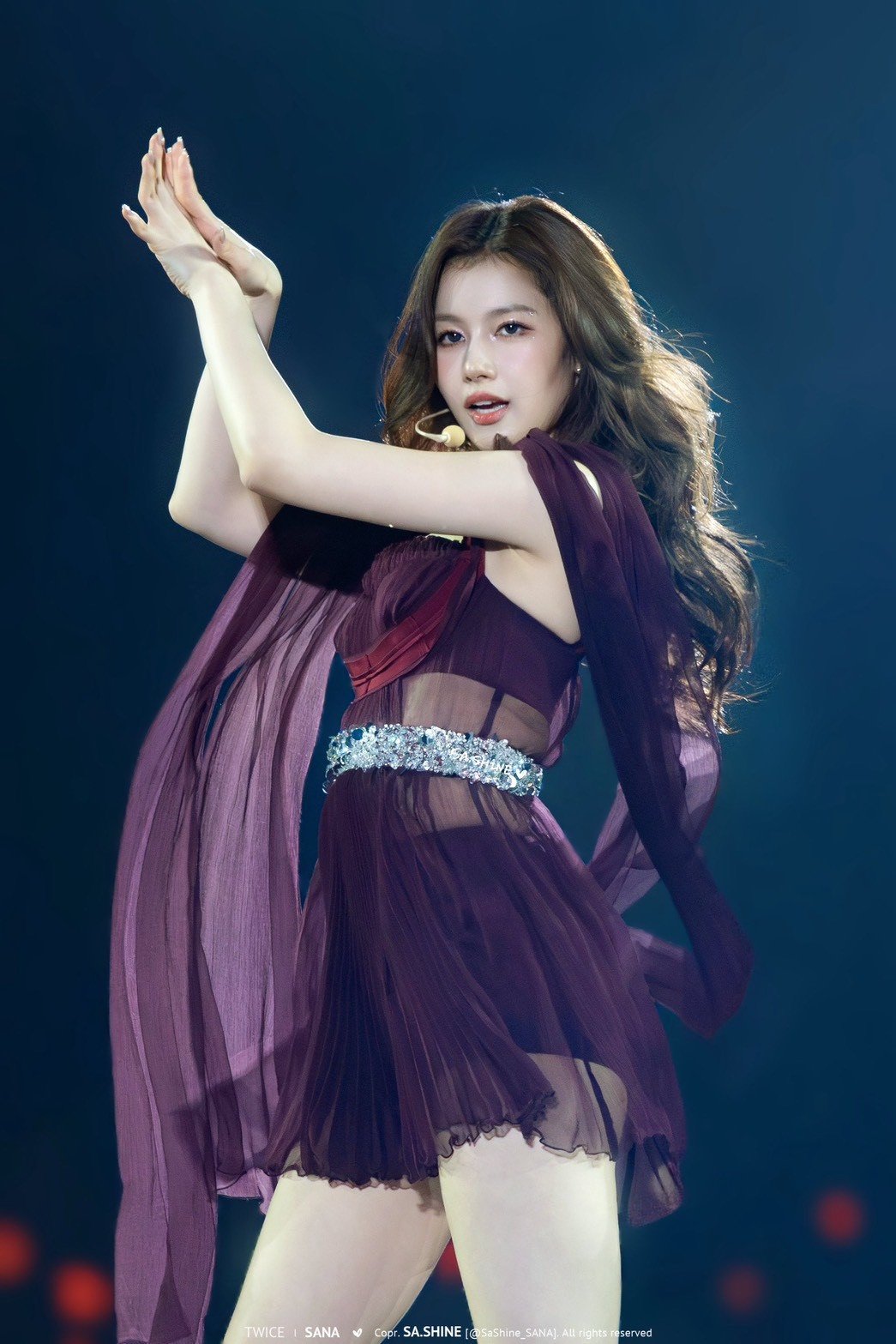
TWICE: The Best 2026 Guide to K-Pop’s Iconic Girl Group
Most K-pop girl groups have a commercial peak and then a gradual fade. TWICE has been releasing music for over a decade and is still charting, still selling out stadiums, still adding new fans. That’s not a K-pop story. That’s a music career.
I’ve watched TWICE from a particular vantage point: as a Korean commuter who hears music constantly on the subway, in convenience stores, at my daughter’s school events, and in the background of every coffee shop in Seoul. TWICE songs have been part of that ambient soundtrack for so long that they’ve become part of how I measure time. I know which TWICE era corresponds to which period of my own life the way older Koreans know which ballad era corresponds to theirs. That kind of cultural saturation — across a decade, across every age group — is what their durability actually means when you live inside it. This is my attempt to explain TWICE to someone encountering them for the first time, from someone who has been encountering them for ten years.
📋 Jump to a Section
- Who Are the group? Nine Members, Three Countries
- The Musical Evolution: From “Cheer Up” to “Fancy”
- What Makes they Last When Others Don’t
- the girl group and Japan: A Special Relationship
- Where to Start: Your the act Listening Guide
Who Are the nonet? Nine Members, Three Countries
TWICE was the group that convinced my older daughter K-pop was more than a phase. She’s been a fan for four years. I now know all nine members by name. We’re both still learning their songs.
the group (트와이스) debuted on October 20, 2015 under JYP Entertainment. The nine members were selected through a survival show called Sixteen, in which sixteen JYP trainees competed for spots in the group. The final lineup spans three countries: South Korea (Jihyo, Nayeon, Jeongyeon, Dahyun, Chaeyoung), Japan (Momo, Sana, Mina), and Taiwan/South Korea (Tzuyu). This multinational composition was not incidental — JYP Entertainment designed TWICE to have immediate reach across the most significant K-pop markets in East Asia simultaneously, and the strategy worked better than almost anyone anticipated.
Their debut single “Like OOH-AHH” performed above expectations, but it was “Cheer Up” in 2016 that established TWICE as a dominant commercial force in Korean pop. “Cheer Up” spent eight consecutive weeks at No. 1 on the Korean charts and introduced the earworm hook construction that would define their early catalog. The broad accessibility of their early concept — bright, choreography-forward, relentlessly catchy pop — drove them to success not just in Korea but across Japan and, gradually, internationally.
💡 My Personal Experience: TWICE songs have an unusual relationship with my memory. I can identify which year I first heard most of their major singles because each one was playing on the subway or in a convenience store at a moment I remember for unrelated reasons. “What is Love?” was playing at a GS25 when I stopped to buy coffee the morning a major work project ended. “Feel Special” came on a store speaker in late 2019 when I was buying school supplies with my daughter for the first time. Music that becomes part of the ambient texture of a place has done something rare — it’s stopped being something you listen to and started being something you live in. TWICE has done that for Korea for a decade.
The Musical Evolution: From “Cheer Up” to “Fancy”
The moment that changed TWICE’s trajectory artistically was “Fancy” in April 2019. Before “Fancy,” TWICE was primarily understood as a “cute concept” group — energetic, colorful, hook-driven, primarily aimed at a young Korean and Japanese audience. “Fancy” was none of those things. It was sophisticated, restrained, slightly melancholy, and built around an earworm that worked through subtraction rather than addition. The visual concept was similarly evolved — less color, more edge, the members looking like adults who knew something rather than teenagers discovering it. The audience response in Korea was instant: here was a group that had grown up in public and was telling you they’d done it.
The post-“Fancy” TWICE is the group that has the most international resonance. “Feel Special,” “I Can’t Stop Me,” “Alcohol-Free,” and their more recent work all maintain the accessibility of their early catalog while adding emotional and musical complexity that rewards the long-term listener. Jihyo’s vocal development over this period is particularly remarkable — she’s become one of the strongest live vocalists in K-pop by any technical standard, and hearing her on a stadium stage demonstrates capabilities that studio productions underserve.
What Makes TWICE Last When Others Don’t
K-pop girl groups have notoriously short commercial lifespans. The industry moves fast, concepts expire, members’ contracts end. The fact that TWICE has maintained commercial and critical relevance for over a decade is genuinely anomalous and worth examining. Several factors contribute. First, the fanbase they built in their first three years is unusually loyal — the ONCE fandom formed around a group that released consistently excellent pop music at a period when the market was growing fastest, and that early bond has proven durable. Second, JYP has managed their transitions well — the shift from cute to sophisticated was handled gradually and without abandoning the audience that existed. Third, the individual members have developed genuine star power that functions independently of the group concept. Nayeon’s solo career, Jihyo’s live reputation, Tzuyu’s modeling and entertainment work across Taiwan and Korea — these individual profiles reinforce the collective rather than competing with it.
TWICE and Japan: A Special Relationship
TWICE’s relationship with the Japanese market is worth specific attention because it’s one of the most successful in K-pop history. They debuted in Japan in June 2017 and almost immediately began setting records that Korean acts in Japan had never set. Japanese album and single releases, consistent touring that consistently sells out arenas, and the three Japanese members (Momo, Sana, Mina) who serve as cultural bridges for the Japanese audience have all contributed to a presence in Japan that most K-pop groups never approach. For context: Japan is the world’s second-largest recorded music market, and achieving genuine commercial traction there requires something different from what works in Korea or internationally. TWICE figured it out and has sustained it for years.
Where to Start: Your TWICE Listening Guide
Your starting point depends on which TWICE you want to meet first. For the early era: “Cheer Up” (2016) — the hook that made them a phenomenon. For the transition moment: “Fancy” (2019) — where they became something more than their debut concept. For emotional depth: “Feel Special” (2019) — unexpectedly moving, the song that expanded their emotional range publicly. For current TWICE: Listen to their more recent Korean and Japanese releases — the group performing now is more musically mature than the one that debuted, and the recent output rewards attention from serious listeners, not just casual pop fans.
| Song | Year | Why It Matters | Era |
|---|---|---|---|
| “Cheer Up” | 2016 | The breakthrough that defined their early sound | Early TWICE |
| “What is Love?” | 2018 | Peak early-era sophistication | Transitional |
| “Fancy” | 2019 | The pivot that changed everything | Mature TWICE |
| “Feel Special” | 2019 | Emotional range, unexpectedly moving | Mature TWICE |
| “I Can’t Stop Me” | 2020 | International breakthrough sound | Global TWICE |
Quick Answers
How many members does TWICE have and where are they from?
TWICE has nine members from three countries: Jihyo, Nayeon, Jeongyeon, Dahyun, and Chaeyoung from South Korea; Momo, Sana, and Mina from Japan; and Tzuyu from Taiwan (raised in Taiwan, part-Korean heritage). The multinational composition was intentional, designed to give the group immediate reach across Korea, Japan, and broader East Asia simultaneously.
What is the best TWICE era for new listeners?
For pure accessibility and the TWICE sound at its most distilled, the 2016–2018 era (Cheer Up, What is Love?) is the best entry point. For musical sophistication and the version of TWICE that resonates most with international adult audiences, the 2019–present era starting with “Fancy” is recommended. Most dedicated international fans cite “Feel Special” (2019) as the song that converted them from casual listeners to committed fans.
Is TWICE still active in 2026?
Yes — TWICE remains active as a group in 2026, continuing to release music and tour. Several members also pursue solo projects, including Nayeon, whose solo career has generated significant chart success. TWICE is one of the few K-pop girl groups to maintain full-group activity beyond a decade from debut, which is genuinely uncommon in the industry.
Final Thoughts from a Korean Local
I’ve said to foreign colleagues many times that if you want to understand what K-pop sounds like when it’s functioning at its most purely itself — when the craft of making a pop song that delights people is executed at the highest possible level — TWICE is your answer. Not the most experimental, not the most provocative, not the most artistic. The most consistently excellent at the thing they set out to do. That sounds like a limited compliment but it isn’t. The hardest thing in pop music is to be genuinely good at pop music across a decade. TWICE has done it. Comments welcome below — especially if you have a specific TWICE era you want recommendations from.
About the Author: Hellokoreaguide
Korean local, Gyeonggi-do. 13+ years in Korea, commuter, dad. TWICE songs have followed me through every season for a decade. Questions? Get in touch.
📚 You might also like:

For TWICE’s complete discography, JYP Entertainment’s official TWICE page provides the authoritative catalog listing.
Quick Answers
Who are TWICE?
TWICE are a hugely popular K-pop girl group formed in 2015 under JYP Entertainment, known for catchy hits like ‘TT’ and ‘Cheer Up’ and a global fanbase called ONCE.
How many members are in TWICE?
TWICE has nine members — Nayeon, Jeongyeon, Momo, Sana, Jihyo, Mina, Dahyun, Chaeyoung, and Tzuyu — blending Korean, Japanese, and Taiwanese backgrounds.
What is TWICE’s most famous song?
Their breakout hit ‘TT’ (2016) remains TWICE’s signature song, while ‘Fancy’ and the English single ‘The Feels’ are also fan favorites worldwide.
