
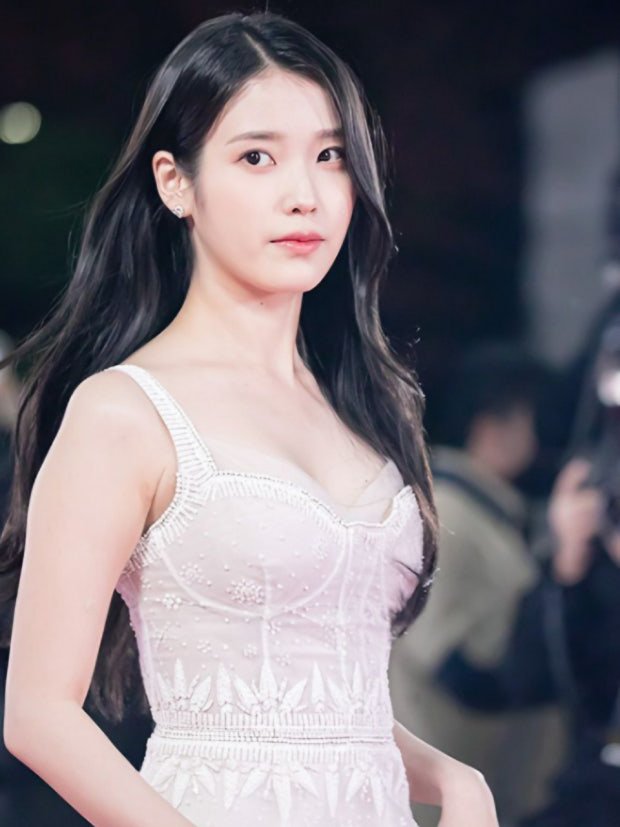
IU: The Best 2026 Guide to Korea’s Greatest Solo Artist
Rolling Stone named IU the 135th greatest singer of all time in 2023. She’s Korean, sings almost entirely in Korean, and has outsold most K-pop groups as a solo artist. The rest of the world is starting to understand what Korea has known for fifteen years.
I want to be careful about the word “greatest” — it’s the kind of claim that invites argument and usually oversimplifies. But here is what I can say honestly: in thirty years of listening to Korean music, from every generation and every genre, I have never encountered an artist whose complete body of work — the songs, the performances, the acting, the cultural presence — consistently operates at the level IU’s does. I’ve walked past IU concert posters throughout my entire adult life. Her music has soundtracked every season of living in Korea that I can remember. And every few years, she releases something that stops everyone and reminds you why you loved music in the first place. This is my attempt to explain to the rest of the world what Korea has been experiencing for fifteen years.
📋 Quick Guide Map
- Who Is IU? The Story Behind Korea’s Greatest Solo Artist
- The Music: A Decade and a Half of Mastery
- IU as an Actress: When Music Wasn’t Enough
- Why IU Matters Beyond K-Pop
- Where to Start: Your IU Listening Guide
Who Is IU? The Story Behind Korea’s Greatest Solo Artist
IU came to me through my daughters. After three years of hearing her music through their bedroom door, I have two of her albums now. She earned that through real consistency — this guide tries to explain why.
IU — born Lee Ji-eun (이지은) on May 16, 1993 — debuted at age fifteen with LOEN Entertainment (now Kakao Entertainment) in September 2008. Her early career was difficult: her debut extended play sold poorly, and the crowd at her first performance heckled her. She has spoken about this period with characteristic directness in interviews, describing practicing in a small room while other trainees had more support and clearer paths. The breakthrough came in 2010 with “Good Day” from her EP Real — a technically demanding, melodically irresistible pop song that required her to hit a triple high note at full voice three times in succession. The performance of “Good Day” on music shows became one of the defining K-pop performance moments of its era, and IU became a national star overnight.
What followed over the next fifteen years is extraordinary by any measure. IU has the most number-one singles on the Korean charts of any artist in history. She was recognized by Billboard as the all-time leader of its K-Pop Hot 100 with the most number-one songs and the most weeks at number one. Rolling Stone named her the 135th greatest singer of all time in 2023. Gallup Korea named her Singer of the Year in 2014, 2017, and 2025 — the only artist to win the title three times. She has released five studio albums of consistent quality, each representing a genuine evolution from the last. She is the best-selling Korean female solo artist of her generation by a significant margin.
💡 My Personal Experience: When IU’s “Love Wins All” was released in January 2024, I was on my morning commute when it came through on my headphones. I had to stop walking for a moment — not because I was overwhelmed, but because the opening was so specifically and quietly beautiful that I needed to not be moving. I stood on a subway platform for the first thirty seconds of that song just listening. I am not someone who cries at music easily. I came close. That’s what IU does at the peak of her powers: she finds the exact thing you didn’t know you needed to feel and gives it to you without warning. A Canadian colleague who visited Korea during “Love Wins All” era texted me, having heard it playing everywhere in Seoul: “What is this song? I’ve been crying for twenty minutes.” That’s the IU experience from every angle.
The Music: A Decade and a Half of Mastery
IU’s discography is unusual in pop music for its deliberate evolution. She began as a bright, cheerful pop singer with songs designed for immediate commercial appeal. By 2013, she had pivoted to jazz-inflected, harmonically sophisticated work on Modern Times that shocked the K-pop establishment. The years since have moved through folk-pop, intimate singer-songwriter material, maximalist pop production, and the kind of understated emotional precision that most pop musicians spend decades trying and failing to achieve.
Several moments stand out as artistic peaks. “Palette” (2017), featuring G-Dragon, was her artistic statement of maturity — a song explicitly about turning twenty-five and knowing yourself better than you did at twenty. “Autumn Morning” from the same album is one of the most emotionally precise pieces of Korean popular music I know: four minutes of controlled yearning that builds to nothing, which is exactly the point. “Eight” (2020), featuring Suga of BTS, approached mortality and time with a lightness and sorrow that only works because IU’s voice has the authority to hold both simultaneously. “Love Wins All” (2024) demonstrated that after sixteen years, she was still finding new emotional territory — the song’s quiet insistence that love is an act of will, not just feeling, resonated with a Korea that has grown older alongside her.
What unifies all of this across such a wide stylistic range is the voice. IU’s vocal quality is technically impeccable — range, control, breath management, intonation at tempo — but these qualities are means, not ends. The end is emotional specificity. She sounds like she means every syllable, and because of that, the listener believes every syllable. That’s rarer than any technical accomplishment.
IU as an Actress: When Music Wasn’t Enough
IU’s acting career began almost as early as her music career and has developed in parallel with equal seriousness. Her breakthrough dramatic role came in Moon Lovers: Scarlet Heart Ryeo (2016), a historical fantasy series in which she played a woman from the present transported to the Goryeo Dynasty. The series did not perform well domestically by conventional metrics, but internationally — particularly across Southeast Asia and among global K-drama viewers — it became a phenomenon that persists to this day. IU’s portrayal of a character who watches everyone she loves die while remaining unable to fully belong to either time period built her international dramatic fanbase, and that fanbase has followed her into every subsequent acting project.
More recent work has confirmed what Moon Lovers suggested: IU is not a musician doing acting as a side project. My Mister (2018) — a television series in which she played a deeply damaged young woman forming an unlikely bond with a middle-aged man — drew critical consensus that she was operating at the highest level of Korean dramatic performance. The Cannes-premiering film Broker (2022), directed by Hirokazu Kore-eda, placed her alongside Song Kang-Ho in a film about found family and moral ambiguity that earned both actors significant international notice. And When Life Gives You Tangerines (2025), a Netflix period drama, became one of the platform’s most-watched Korean series of the year and earned IU Best Actress at the Blue Dragon Series Awards. In April 2026, she returned to television with Perfect Crown opposite Byeon Woo-seok.
The combination — releasing music that regularly tops Korean charts while simultaneously appearing in internationally recognized dramatic films and television — is something essentially no other Korean artist manages simultaneously. IU doesn’t choose between music and acting. She is excellent at both, simultaneously, and has been for over fifteen years.
Why IU Matters Beyond K-Pop
The Rolling Stone ranking — 135th greatest singer of all time — is useful not because it settles anything but because it marks a moment of international recognition catching up to what Korean audiences have known for a long time. IU is not a K-pop phenomenon. She is an artist who happens to work primarily in Korean and primarily within the Korean pop music system. The distinction matters because K-pop, as a category, comes with assumptions — about production homogeneity, about idol manufacturing, about commercial priorities overriding artistic ones. IU violates all of those assumptions. She writes much of her own music. Her sound has changed dramatically across her career. Her artistic choices consistently prioritize emotional resonance over commercial formula. She is, by any standard that matters in music, a serious artist who would be recognized as such in any tradition.
IU is also one of Korea’s most prominent celebrity philanthropists — she donates tens of millions of Korean won annually to causes ranging from children’s education to disaster relief, often anonymously and later revealed. This consistency between her public values and her private actions has deepened her relationship with the Korean public in ways that outlast individual releases. She is not just a musician or an actress in Korean cultural life. She is a figure.
Where to Start: Your IU Listening Guide
The IU discography is large and stylistically varied, so the entry point depends on what you’re looking for. For immediate accessibility: “Palette” (2017) — her mid-career artistic statement, immediately beautiful, emotionally rich. For technical brilliance: “Good Day” (2010) — the triple high note live performance on YouTube is one of the great K-pop vocal moments. For emotional depth: “Eight” (2020) with Suga — a four-minute meditation on growing up and loss that will follow you for days. For her current peak: “Love Wins All” (2024) — her most recent artistic statement, and possibly her best single. For the full picture: The album Palette (2017) and the album LILAC (2021) in sequence show you the complete range of what she does.
For acting: start with When Life Gives You Tangerines on Netflix (2025) for her most recent work, then go back to My Mister (IU’s most acclaimed dramatic performance, available on streaming platforms).
| Song / Work | Year | Why It Matters |
|---|---|---|
| “Good Day” | 2010 | The breakthrough — triple high note, national stardom |
| “Palette” ft. G-Dragon | 2017 | Artistic maturity statement |
| “Eight” ft. Suga | 2020 | Most emotionally resonant collaborative single |
| “Love Wins All” | 2024 | 339 perfect all-kills, possibly her best single |
| My Mister (drama) | 2018 | Best dramatic performance, internationally acclaimed |
| When Life Gives You Tangerines | 2025 | Netflix hit, Blue Dragon Best Actress |
Common Questions
Why is IU so popular in Korea?
IU’s popularity in Korea is rooted in the combination of extraordinary musical talent, consistent artistic growth over fifteen years, and a public persona characterized by honesty and genuine kindness. She has the most number-one singles in Korean chart history. She writes much of her own music. Her acting career is internationally recognized. And her philanthropic work — donating tens of millions of Korean won to charitable causes — has deepened the public’s investment in her as a person, not just an artist.
Is IU considered K-pop or a different genre?
IU is categorized within K-pop in the broad sense — Korean popular music — but her sound is stylistically distinct from what most international audiences associate with the term. Unlike group-based idol K-pop, IU works as a solo singer-songwriter whose music spans folk-pop, jazz-influenced compositions, intimate ballads, and polished pop productions. She is better understood as a Korean pop musician in the tradition of singer-songwriters than as an idol in the BLACKPINK or BTS sense.
What are IU’s most famous songs?
IU has more number-one singles on Korean charts than any other artist in history. Her most recognized internationally are “Palette,” “Eight” (featuring BTS’s Suga), and “Love Wins All.” Within Korea, “Good Day,” “You and I,” “Friday,” “Through the Night,” “Celebrity,” and “Lilac” are among the most culturally significant. Her international breakthrough accelerated after her Netflix series When Life Gives You Tangerines (2025) introduced her to audiences who hadn’t previously followed Korean music.
Final Thoughts from a Korean Local
IU is, to me, the most complete answer to the question “what is Korean pop music at its best?” Not because she’s the most commercially dominant — though she often is. Not because she’s the most technically accomplished — though she is. Because she makes music that matters: that captures something real about being human, living in time, loving people who might leave, wanting things you can’t name. She does this in Korean, for Korean audiences, from a specifically Korean emotional tradition. And somehow, fifteen years in, the rest of the world is arriving at what Korea already knew. I find that quietly satisfying. Drop a comment if you have questions about her music or where to find her work.
About the Author: Hellokoreaguide
Korean local, Gyeonggi-do. IU’s music has been part of the soundtrack of my adult life in Korea. 13+ years working here, commuter, dad. Questions? Get in touch.
📚 You might also like:
- Stray Kids Explained
- NewJeans Comeback 2026: Everything You Need to Know
- 10 K-Pop Artists Foreigners Love Most in 2026

For IU’s complete discography and biography, her Wikipedia page is one of the most comprehensive English-language sources available.
Common Questions
Who is IU?
IU is one of Korea’s most beloved solo artists — a singer-songwriter and actress who debuted in 2008 and is admired for her songwriting, vocals, and acting.
What are IU’s most famous songs?
IU’s best-known songs include ‘Good Day,’ ‘Through the Night,’ ‘Palette,’ and ‘Eight,’ spanning more than a decade of chart-topping hits in Korea.
Is IU also an actress?
Yes. IU has starred in popular dramas such as ‘Hotel del Luna’ and ‘My Mister,’ earning praise as both a top musician and a serious actress.
