
10 Best K-Pop Artists Foreigners Love in 2026
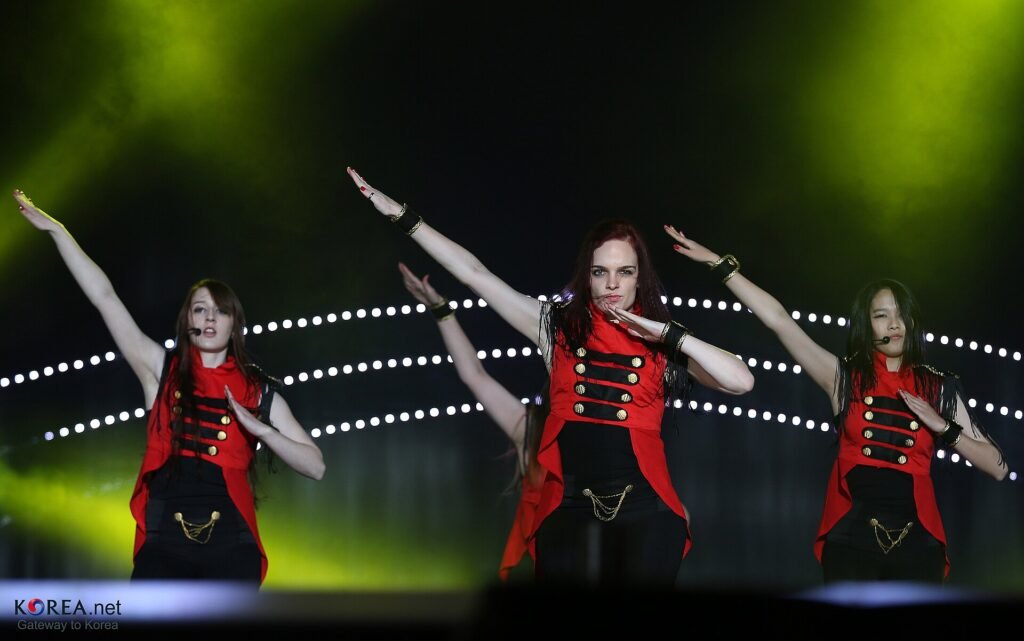
Photo: Korea KPOP World Festival 22 by Korea.net / Korean Culture and Information Service (Jeon Han), CC BY-SA 2.0, via Wikimedia Commons
I’ve lived in Korea my entire life. I’ve watched K-pop go from something my teenage cousins watched to something that fills stadiums from Paris to São Paulo. Here are the 10 artists I think foreigners connect with most — and why, from someone who watches it all happen from the inside.
Let me be upfront about something: I’m not a K-pop journalist. I’m a Korean dad who works in the chemical industry and commutes through Seoul every day. I know K-pop the way any Korean knows it — through overheard conversations on the subway, through what my kids are obsessed with, through watching my foreign colleagues arrive in Seoul and immediately ask where they can find BTS or BLACKPINK merchandise.
Over the past few years, I’ve had front-row seats to watching international visitors fall in love with Korean music culture in real time. This list reflects what I’ve genuinely observed — which artists stop foreign visitors in their tracks, which ones come up most in conversation, and which ones make people buy plane tickets to Seoul specifically to feel closer to them. This isn’t a ranking based purely on streaming numbers. It’s a personal take, informed by actually living here.
📋 What’s Inside
- 1. BTS — The Group That Changed Everything
- 2. BLACKPINK — Four Women Who Built a Global Empire
- 3. Stray Kids — The Self-Produced Generation
- 4. IU — Korea’s Soul, Explained
- 5. SEVENTEEN — 13 People, One Improbable Vision
- 6. TWICE — The Group That Made “Cute” Global
- 7. Rosé — The Voice That Crossed Every Boundary
- 8. NewJeans — The Most Interesting Comeback Story in K-Pop
- 9. Lisa — K-Pop’s Most Powerful Solo Global Brand
- 10. ENHYPEN — The Fourth-Generation Group Most Ready for the World
💡 My Personal Context: I’ve worked alongside foreign colleagues from Germany, the Philippines, the US, and the UK over my 13 years in the Korean chemical industry. Every year, the K-pop question comes up — “Who should I actually listen to? Where should I start?” This list is what I actually tell them. Some answers surprised even me when I thought about why I kept recommending the same artists.
1. BTS — The Group That Changed Everything
My older daughter has made me listen to at least forty K-pop groups over three years. The ten on this list are the ones that have stayed on our family playlist the longest.
I was on the subway home from work in 2017 when I first noticed something had shifted. A Western tourist sitting across from me was wearing a BTS t-shirt — in Seoul, on a Tuesday afternoon, far from any tourist zone. I’d seen Korean fans wearing BTS merchandise before. Seeing a foreigner with it in Gyeonggi-do felt different. That was the moment I realized this wasn’t just a Korean pop phenomenon anymore.
BTS — RM, Jin, Suga, J-Hope, Jimin, V, and Jungkook — are the undisputed most popular K-pop group globally, and in 2026 that position hasn’t changed despite individual military service periods. They boast over 82 million Spotify followers and unmatched global brand power even amid members’ solo activities and an anticipated full-group comeback. Their ARIRANG comeback in March 2026 went straight to No. 1 on both the Billboard 200 and the Hot 100.
What makes BTS connect with foreigners in a way that most K-pop groups don’t? In my observation, it comes down to three things: the music is genuinely emotionally intelligent and addresses loneliness and self-worth in ways that translate across cultures; the members have built individual personalities that fans can connect with beyond the music; and the group has never stopped being visibly themselves, even as they became the most famous Koreans alive.
My foreign colleagues almost always start with BTS. The entry point is usually “Dynamite” or “Butter” for the purely pop-curious, “Spring Day” for people who want to feel something, and Suga’s solo work for anyone who’s been underestimated. When my British colleague asked me where to start with K-pop at a work dinner last year, I said BTS. He came back three weeks later having binged their entire discography and booked a trip to Seoul. That’s the BTS effect, and it’s very real.
Best starting point for foreigners: “Spring Day” (emotional depth), “DNA” (pure energy), RM’s solo album Indigo (artistically ambitious).
2. BLACKPINK — Four Women Who Built a Global Empire
If BTS changed how the world thought about Korean music, BLACKPINK changed how the world thought about Korean women. Jisoo, Jennie, Rosé, and Lisa are not just four very talented performers — they’re four distinct archetypes that seem designed to reach every corner of the global audience simultaneously. And it works. BLACKPINK comes in second globally with 12.3% global preference and 56 million Spotify followers — both group and solo endeavors.
What strikes me as a Korean watching their international success is how much BLACKPINK has been able to bring their Koreanness with them into global pop culture, rather than diluting it to be more internationally palatable. Their aesthetic remains distinctly Korean-inflected even as they collaborate with Western labels and appear at Coachella. When I’ve asked foreign visitors why they love BLACKPINK specifically, the answers are always about confidence. “They look like they own every room they walk into,” a Filipino colleague told me once. That’s exactly right, and it’s a quality that doesn’t translate through description — you have to see it.
In 2026, BLACKPINK’s influence continues through solo projects as much as group releases. Jennie, Rosé, and Lisa are all forces in their own right. Jisoo remains one of the most compelling presences in Korean fashion and beauty culture. The four of them together remain one of the most powerful propositions in global entertainment.
Best starting point for foreigners: “Kill This Love” (pure impact), “How You Like That” (the comeback that shocked the world), Rosé’s “APT.” with Bruno Mars (the 2024 crossover that showed the world was ready).
3. Stray Kids — The Self-Produced Generation
Stray Kids are the K-pop group I’ve noticed resonating most with foreign music fans who come into K-pop from a rock or hip-hop background rather than mainstream pop. Their sound is heavier, more aggressive, and more experimental than most of their peers, and the fact that member Bang Chan and his producing unit 3RACHA write and produce most of their music themselves gives them a creative authenticity that a certain audience responds to very strongly.
Stray Kids debuted on March 25, 2018, and since then have built a huge international following that competes with older acts. Their sound mixes hip-hop, EDM, and rock — experimental and bold, which is why international fans love them. Felix’s deep voice and the fact that several members speak English fluently helped them break through internationally. I noticed this clearly when a group of American college students I met on the subway last autumn were playing Stray Kids from a portable speaker — not BTS, not BLACKPINK, but Stray Kids.
When I mentioned I was Korean, the conversation immediately shifted to “what do Koreans think of them?” (Answer: very popular and well-respected for their artistic integrity.) That kind of organic discovery through music recommendation is how Stray Kids have built their following, and it’s very different from the top-down marketing push that launched many other groups.
Best starting point for foreigners: “Miroh” (the moment it all clicked), “God’s Menu” (the sound that made them a mainstream force), “Hall of Fame” (the fan-favourite opener of their 2023 album 5-Star).
4. IU — Korea’s Soul, Explained
IU is the artist I recommend most strongly to foreigners who want to understand Korea at a deeper level — not just the flashy surface of K-pop, but the emotional texture of what it means to be Korean, to carry vulnerability and ambition simultaneously, to be national property and also just a person. She is, in my honest opinion, the most complete artist Korea has ever produced.
I’ve walked past IU concert posters throughout my entire adult life. Her music has been the soundtrack to everything from subway rides to late nights working overtime to weekend mornings with my kids. In 2024, IU’s “Love Wins All” climbed to the No. 1 spot on Melon’s TOP100 chart just an hour after its release and stayed at the top of Korean charts for weeks. That’s not a K-pop idol phenomenon. That’s the kind of cultural saturation that only comes from someone who has genuinely earned the love of an entire nation across two decades.
For foreigners, the entry point is often through K-dramas. IU’s portrayal of Hae Soo in Moon Lovers: Scarlet Heart Ryeo gave international audiences their first sustained look at her range as a dramatic performer. Internationally, particularly across Southeast Asia and among global K-drama viewers on streaming platforms, Moon Lovers became a phenomenon.
Once they find her acting, they find her music. And once they find her music, they tend to stay for life. When a Canadian colleague texted me from Seoul asking “Why is everyone playing the same song everywhere?” during IU’s “Love Wins All” era, I just sent her the Wikipedia page and told her to clear her afternoon. She called me two hours later to tell me she’d been crying.
Rolling Stone named her the 135th greatest singer of all time in a 2023 ranking. That’s extraordinary for any artist. For a Korean woman whose music is almost entirely in Korean, it’s genuinely historic. IU doesn’t translate — she transcends translation. That’s the rarest thing in any music.
Best starting point for foreigners: “Palette” (artistic maturity), “Eight” featuring Suga (bittersweet perfection), “Love Wins All” (the song that stopped Korea for a month), and the Netflix series When Life Gives You Tangerines if you want to see why she’s considered Korea’s greatest living entertainer.
5. SEVENTEEN — 13 People, One Improbable Vision
The first time I explained SEVENTEEN to a foreign colleague, I watched his eyes go through a very specific sequence: confusion (13 members?), disbelief (they choreograph everything themselves?), and then genuine fascination once I showed him a performance clip. That trajectory is almost universal for people encountering SEVENTEEN for the first time.
SEVENTEEN has 13 members, which sounds crazy, but they make it work with their three-unit system: Hip-hop, Vocal, and Performance units. Woozi produces most of their music, so they have this consistent sound that’s totally theirs. When 13 people dance in perfect sync, doing these intricate formations, it’s honestly legendary. What I find most impressive watching them as a Korean is how much creative control they maintain within an industry that often treats artists as products. Woozi producing, S.Coups leading, the performance unit developing their own choreography — SEVENTEEN feels like a genuine collective in a way that most K-pop groups don’t.
International fans of SEVENTEEN — called Carats — are some of the most thoughtful and community-oriented fandoms I’ve observed. They engage with the music as music, discuss production choices, and follow the group’s creative development over time. That’s a different kind of fandom from the pure idol-worship model, and it speaks to something SEVENTEEN does differently in how they communicate with their audience.
Best starting point for foreigners: “Clap” (the first one to watch for performance), “Don’t Wanna Cry” (vocal unit showcase), and any live performance compilation — SEVENTEEN is a group you really need to see performing to understand.
6. TWICE — The Group That Made “Cute” Global
TWICE occupy a unique position in Korean pop culture that I think is often misread internationally. To outside observers, they can look like a “cute concept” girl group — bright colors, catchy hooks, synchronized dance moves. And they are those things. But what they represent within Korea is something more significant: a decade of consistent, joyful, meticulously crafted pop music that has never once made you feel like you were being sold something you didn’t want.
TWICE has high Spotify followers and monthly listeners, supported by an extensive discography and consistent releases. Their bright, catchy concepts continue to attract both longtime and new fans. What impresses me most is their durability. Girl groups in K-pop have notoriously short commercial lives — the industry moves fast, concepts become dated, members leave. TWICE has been releasing music for over a decade and is still charting, still touring sold-out stadiums, still adding new fans globally. That’s not luck. That’s craft. Members like Nayeon and Jihyo have become genuinely iconic figures in Korean pop culture independently of the group.
For foreigners visiting Korea, TWICE is often the first K-pop group they realize they already knew without knowing it — their songs have appeared in so many dramas, commercials, and cultural moments that international visitors frequently recognize the music before they know the name. That instant recognition across cultures is something TWICE has built over years of producing undeniably good pop music.
Best starting point for foreigners: “Fancy” (when they pivoted from cute to sophisticated), “What is Love?” (the pure pop peak), “Feel Special” (the one that will make you cry unexpectedly).
7. Rosé — The Voice That Crossed Every Boundary
I want to talk about Rosé specifically rather than just BLACKPINK because what she’s done as a solo artist in 2025–2026 represents something genuinely new in K-pop. Her full-length album Rosie, featuring 12 tracks, debuted at No. 3 on the Billboard 200. The album’s pre-release single “APT.” — a collaboration with Bruno Mars — stayed on the Hot 100 for around 45 weeks. Let me put that in context: no previous K-pop solo female artist had ever charted that persistently on the Hot 100. Ever. This isn’t a Korean music story anymore — it’s a global pop story that happens to have a Korean woman at the center.
What makes Rosé compelling beyond the statistics is her emotional transparency. Her music doesn’t feel managed or packaged in the way that much mainstream K-pop does. She posts aesthetic photos, music updates, fashion moments with designer brands, and snaps from her daily life, and the resulting public image is remarkably human — someone who genuinely feels things and lets that show in her music. For foreign audiences accustomed to the highly constructed nature of K-pop idol presentation, Rosé’s authenticity is disarming. My daughter has been listening to her on repeat since “APT.” came out, which is how I know the song genuinely crosses age demographics.
Best starting point for foreigners: “APT.” with Bruno Mars (the moment the world stopped resisting), “On the Ground” (the debut that showed her emotional range), the full Rosie album for anyone ready to go deeper.
8. NewJeans — The Most Interesting Comeback Story in K-Pop
NewJeans deserve a place on this list for two reasons: what they created before their legal dispute, and what their return means for K-pop in 2026. The music — “Hype Boy,” “Ditto,” “Super Shy,” “OMG” — was genuinely unlike anything K-pop had produced before. It wasn’t trying to be louder or more spectacular than the competition. It was quiet, precise, and emotionally specific in a way that felt radical within the genre.
As a Korean watching the NewJeans legal drama unfold, it was genuinely uncomfortable. The dispute between the group and their management had the quality of a family dissolution — public, painful, and involving real feelings about creative ownership and loyalty. But what I observed internationally was that the drama, paradoxically, deepened foreign fans’ emotional investment in the group. People who’d been casual listeners became deeply engaged advocates. Four members — Minji, Hanni, Haerin and Hyein — are back with ADOR, but the label ended Danielle’s contract in December 2025, and no comeback date has been confirmed yet. The comeback, when it happens, will be one of the most-watched events in K-pop history.
When the “Happy Hyein Day” post appeared on NewJeans’ official account after six months of silence — the first post in that period — my phone buzzed three times in quick succession with messages from foreign friends asking “did you see this?” That’s the level of investment. Few groups generate that kind of real-time global emotional response.
Best starting point for foreigners: “Ditto” (the song that explained what made them different), “Hype Boy” (the debut energy), “OMG” (the most viral K-pop video of its release year).
9. Lisa — K-Pop’s Most Powerful Solo Global Brand
Lisa’s position in K-pop is unlike anyone else on this list. With more than 100 million Instagram followers, Lisa is the most-followed K-pop idol. That number represents something extraordinary: she has a following that extends far beyond the K-pop audience into mainstream global pop culture, fashion, and entertainment. When she appears at a fashion week show in Paris, the coverage isn’t in K-pop media — it’s in Vogue and WWD. That crossover into fashion editorial is something no K-pop artist has achieved at her level.
What makes Lisa interesting from a Korean perspective is that her Thai identity has remained visible and celebrated throughout her career, even as she operates within a Korean industry that historically expected non-Korean members to assimilate completely. She’s become, in a very real sense, a bridge between Korean pop culture and Southeast Asia — and that bridge runs both ways. Thailand is home to some of the most influential K-pop idols and fan communities worldwide. The country’s representation in idol groups such as Lisa from BLACKPINK keeps national pride burning brightly.
I’ve seen Lisa’s impact directly: when Thai colleagues visit our facility for business meetings, the first Korean cultural reference they raise is almost always Lisa. Not Korean food, not K-dramas — Lisa. She is the most visible Korean entertainment export in Thailand, and arguably in all of Southeast Asia. That’s a genuinely remarkable position for a performer to hold.
Best starting point for foreigners: “LALISA” (the solo debut that broke records), “Money” (the performance that made her a global meme), her dance covers that demonstrate why she’s considered one of the greatest dancers in K-pop history.
10. ENHYPEN — The Fourth-Generation Group Most Ready for the World
I’ll be honest: ENHYPEN was not on my original shortlist for this article. My daughter put them there. She’s been listening to them consistently for the past year, which is how I pay attention to what’s actually connecting with the next generation of K-pop listeners rather than relying purely on the data I follow professionally. When a 10-year-old in Gyeonggi-do and a 19-year-old in New York are listening to the same group independently, something real is happening.
As a rising boy group under HYBE, ENHYPEN’s popularity continues to grow. Their blend of pop, R&B, and high-energy performances ensures they remain one of the most talked-about acts. ENHYPEN keeps climbing, proving that newer bands can stand alongside established names when they truly connect with listeners. These fourth-generation performers use modern methods, mixing social media interaction, frequent content drops, and worldwide tours to stay relevant. What I find compelling about ENHYPEN specifically is their storytelling approach — their albums are conceptually interconnected in a way that rewards deep listeners, which creates exactly the kind of intensive fan engagement that builds durable careers.
For foreign visitors specifically, ENHYPEN represents a useful entry point into fourth-generation K-pop: their production values are world-class, their social media presence is consistent and genuinely warm, and their fanbase (called ENGENE) is welcoming to newcomers in a way that can feel daunting with more established groups’ fandoms.
Best starting point for foreigners: “Given-Taken” (the debut that announced their arrival), “Bite Me” (the mature pivot that expanded their international audience).
Why These 10 — A Korean Local’s Final Thoughts
What connects these ten artists, from my perspective, is something beyond streaming numbers or social media metrics: each of them has something genuinely worth finding. BTS have emotional intelligence. BLACKPINK have magnetic presence. Stray Kids have creative integrity. IU has artistic depth that few pop artists anywhere in the world can match. SEVENTEEN have collective vision. TWICE have consistency. Rosé has emotional authenticity. NewJeans had — and will again have — an aesthetic vision unlike anything in contemporary pop. Lisa has a global presence that transcends genre and language. ENHYPEN have the storytelling instincts of artists who understand that fans want to go somewhere, not just listen to songs.
If you’re a foreign visitor to Korea and you want to understand why K-pop matters — not as a phenomenon to be analyzed but as music to be felt — any of these ten artists will show you something real. The K-pop experience is better live and in person than it is through a screen. Seoul in 2026 has more K-pop related experiences than at any point in history: fan cafes, dedicated merchandise stores, concert venues, idol-themed coffee shops, and the very streets where a lot of these music videos were filmed. You can walk through the culture here in a way you can’t anywhere else.
If you’re planning a visit and want to know which specific neighborhoods to explore for K-pop culture, drop a comment below. I’ve walked most of them and I’m happy to share what’s actually worth your time versus what’s purely tourist infrastructure. That’s what this blog is for.
About the Author: Hellokoreaguide
Written by a Korean local based in Gyeonggi-do, just outside Seoul. With 13+ years of professional experience working across Korea and a lifetime of navigating daily Korean culture, this blog covers the real Korea that guidebooks and tourist packages miss — the music, the food, the cultural codes, and the hidden corners that make living here genuinely extraordinary. I’m a dad, a daily commuter, and an occasional guide for the foreign colleagues and friends who visit Korea for the first time and want to know what to actually do. Questions, corrections, or a different opinion? I’d love to hear from you.
For official streaming data and rankings, Billboard’s K-Pop Artist 100 list provides regularly updated comprehensive rankings across multiple metrics.
Common Questions
Which K-Pop artists are most popular with foreigners?
The K-Pop artists foreigners love most in 2026 include BTS, BLACKPINK, Stray Kids, TWICE, SEVENTEEN, and IU — spanning boy groups, girl groups, and soloists.
Where should beginners start with K-Pop?
New fans often start with chart hits from BTS and BLACKPINK, then explore groups like Stray Kids or soloists like IU to find their favorite style.
Why is K-Pop so popular worldwide?
K-Pop combines polished music, striking visuals, tight choreography, and close fan engagement, creating a global community that crosses language barriers.
