
Eonyang Giwajip Bulgogi: Korea’s Best Charcoal Beef (2026)
1. Introduction: A Taste of Tradition in a Historic Setting
Located in the heart of Ulsan, Eonyang Giwajip Bulgogi is more than just a restaurant; it is a landmark of Korean culinary tradition. Housed in a beautifully preserved 100-year-old traditional Korean tile-roofed house (Giwajip), this establishment has been serving its signature dish for over 40 years.
What makes it so popular among foreigners? It’s the perfect blend of authentic atmosphere and premium quality. While many are familiar with the soupy version of Bulgogi found in Seoul, the Eonyang style offers a unique, smoky, and concentrated flavor profile that captures the essence of Korean BBQ. It has been featured on numerous TV shows, including the popular “Jun Hyun-moo Plan,” cementing its status as a “must-visit” for any food enthusiast traveling through the southern part of the Korean peninsula.
📋 Jump to a Section
2. Flavor Profile: A Symphony of Smoke and Umami
Eonyang bulgogi is the version that changed my understanding of what Korean charcoal beef can actually be. My father-in-law drove me there years ago. I’ve taken three separate groups of friends since. Nobody left disappointed.
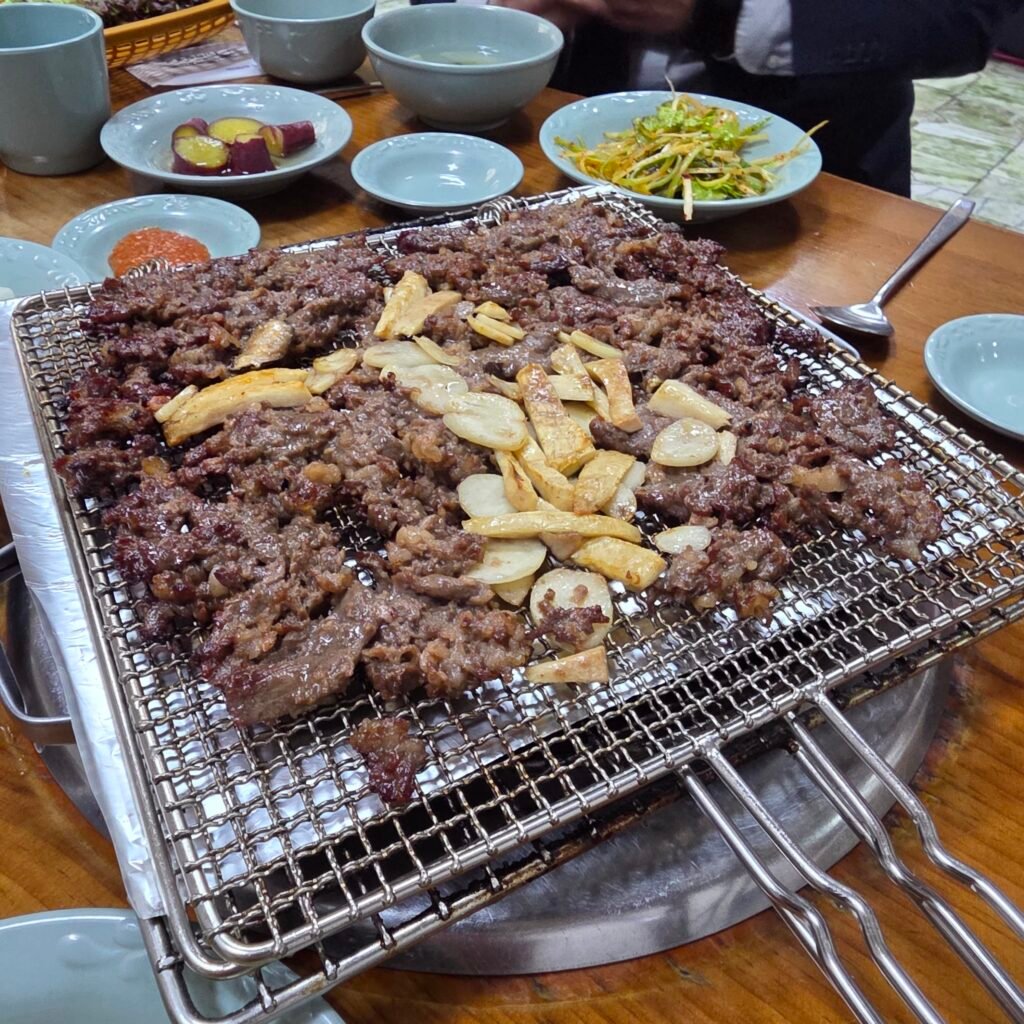
The flavor of Eonyang Bulgogi is a masterclass in balance. Unlike the liquid-based Bulgogi, this version is minced and grilled over high-quality charcoal on a wire rack.
| Sensory Element | Description |
| Taste | A perfect harmony of sweet and savory (Umami), with a subtle hint of garlic and soy sauce. |
| Texture | The meat is finely minced, making it incredibly tender and juicy, yet it retains a slight charred crispness on the edges. |
| Aroma | A deep, intoxicating smoky scent from the charcoal that enhances the natural richness of the Hanwoo (Korean beef). |
The Yukhoe (Korean Beef Tartare) is equally impressive. It features a clean, refreshing taste with a silky texture, seasoned lightly with sesame oil and salt to let the freshness of the premium beef shine through.
A close-up shot of Eonyang Bulgogi being grilled on a wire rack over charcoal, showing the charred edges and juicy texture.
3. Ingredients: The Secret Behind the Quality
The secret to the legendary taste at Giwajip lies in the ingredients. They use only the finest Hanwoo (premium Korean beef), which is renowned for its marbling and deep flavor.
| Ingredient (English) | Korean Romanization | Role in the Dish |
| Premium Korean Beef | Hanwoo (한우) | The star of the show, known for its superior quality. |
| Soy Sauce | Ganjang (간장) | Provides the savory base for the marinade. |
| Minced Garlic | Dajin-maneul (다진 마늘) | Adds a pungent, aromatic depth. |
| Sesame Oil | Cham-gireum (참기름) | Gives a nutty finish to both the Bulgogi and Yukhoe. |
| Pear Juice | Bae-jeup (배즙) | Naturally tenderizes the meat and adds a subtle sweetness. |
4. Step-by-Step Guide: How Eonyang Bulgogi is Crafted
While you can’t easily replicate the 100-year-old atmosphere at home, understanding the process helps you appreciate the craft:
1.Selection: Only specific cuts of Hanwoo are selected for their ideal fat-to-meat ratio.
2.Mincing: The beef is finely minced by hand to ensure a tender texture that melts in your mouth.
3.Marinating: The meat is lightly seasoned with a secret blend of soy sauce, garlic, and pear juice, then left to rest.
4.Grilling: The marinated beef is spread thinly on a wire rack and grilled over glowing charcoal. The chef constantly flips the rack to ensure even cooking and a perfect char.
5.Serving: It is served directly on the rack or a heated plate to maintain its warmth and smoky aroma.
5. Best Places to Experience Eonyang Bulgogi
While Eonyang Giwajip Bulgogi in Ulsan is the gold standard, here are the top areas to find this specific style:
•Eonyang Bulgogi Street (Ulsan): The birthplace of this style. Giwajip is the most famous, but the entire street is lined with specialized restaurants.
•Gwangjang Market (Seoul): While more famous for street food, you can find stalls serving various styles of grilled beef that mimic the smoky Eonyang profile.
•Myeongdong (Seoul): Several high-end Korean BBQ houses in this tourist hub offer “Eonyang-style” Bulgogi for those who cannot make the trip down south.
6. Pro Tip: Eat Like a Local
To truly enjoy your meal at Giwajip, follow these local secrets:
Pro Tip: Don’t just eat the meat alone! Take a fresh perilla leaf or lettuce, add a piece of Bulgogi, a slice of grilled garlic, and a dab of Ssamjang (seasoned soybean paste). Wrap it up and eat it in one bite. Also, make sure to order the Doenjang-jjigae (soybean paste stew) at the end; the earthy soup perfectly cleanses the palate after the rich meat.
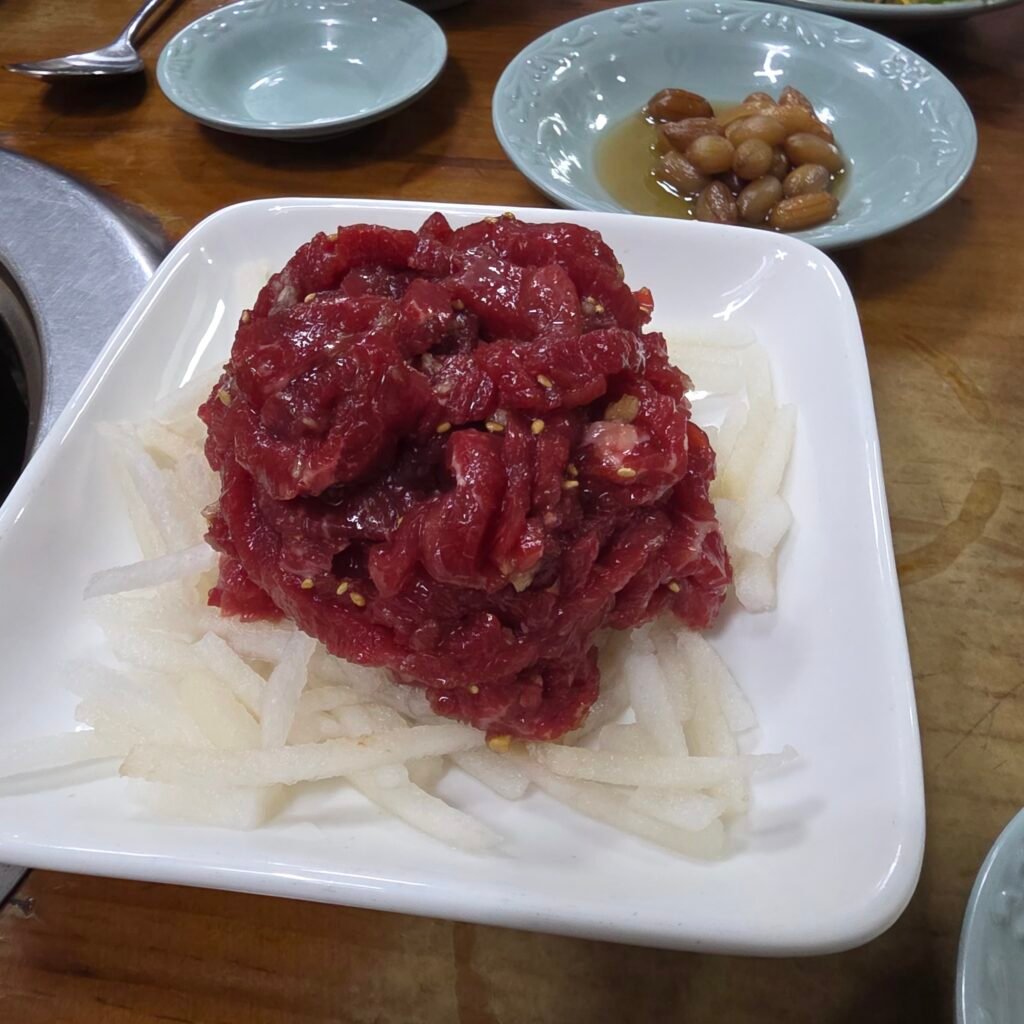
A plate of fresh Yukhoe (Korean beef tartare) garnished with pear strips and a sprinkle of sesame seeds.
Things Readers Often Ask
What is Eonyang Giwajip known for?
Eonyang Giwajip, near Ulsan, is known for its grilled bulgogi — Eonyang-style beef that is a celebrated regional specialty in Korean cuisine.
What is Eonyang bulgogi?
Eonyang bulgogi is a regional style of Korean grilled beef from the Eonyang area, prized for its quality and traditional grilling method at spots like Giwajip.
Is Giwajip good for foreign visitors?
Yes — grilled bulgogi is approachable and beloved, making Giwajip a friendly introduction to authentic regional Korean barbecue.
📚 You may also enjoy:
More travel info: Korea Tourism Organization.
