
Jeonju Hanok Village Local Guide 2026
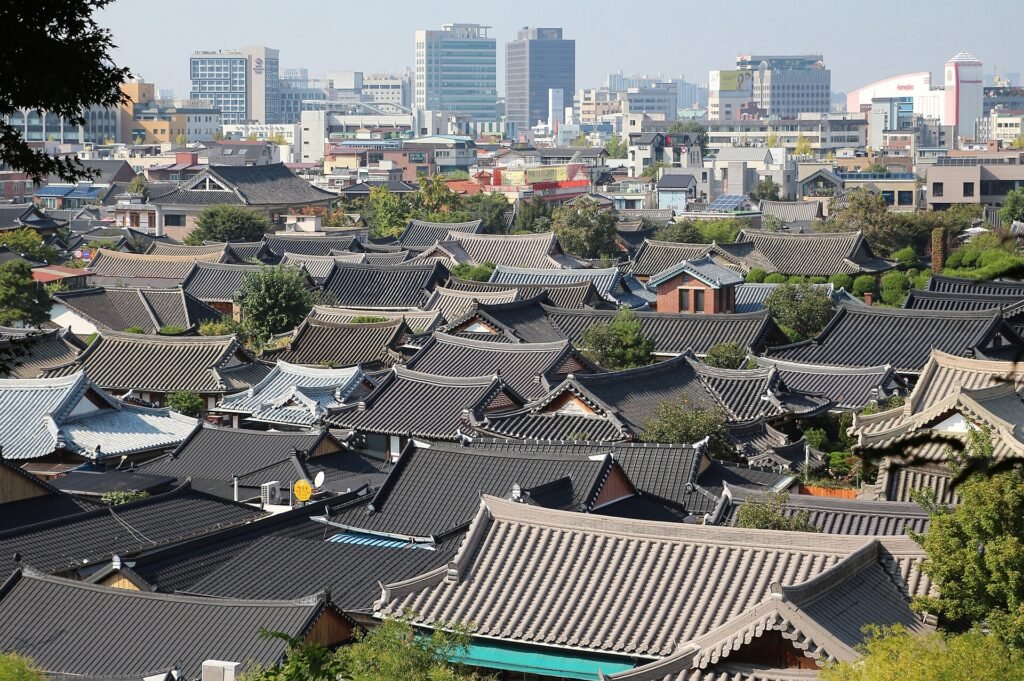
Photo: Jeonju Hanok Maeul 02 by Bernard Gagnon, CC0, via Wikimedia Commons
Every Korean will tell you Jeonju Hanok Village is worth visiting. Almost none of them will tell you to arrive at 7 AM on a weekday morning, walk to the back streets, and have most of it to yourself. That’s what I’m telling you.
I’ve been to Jeonju Hanok Village four times. The first time was a Saturday afternoon with a group of friends in my mid-twenties — beautiful, crowded, slightly overwhelming, a queue at every food stall I wanted to try. The second time was a Wednesday morning alone, arriving on the 6:45 KTX from Seoul Station, reaching the village by 8 AM. I walked through streets I hadn’t been able to photograph properly before because they’d been full of people.
I ate breakfast bibimbap at a haenyeo-run restaurant where I was the second customer. I stood in the center of a 700-unit hanok neighborhood for fifteen minutes and heard almost nothing. That second visit is what made me understand what Jeonju actually is, as opposed to what visiting Jeonju on a weekend tells you it is. This guide is for the second visit.
📋 On This Page
- What Jeonju Hanok Village Actually Is (vs What It Appears to Be)
- The Timing That Changes Everything
- The Food: What to Eat Here Beyond the Line
- What to Do Beyond the Obvious
- Getting There: KTX, Bus, and the Practical Details
What Jeonju Hanok Village Actually Is
We did Jeonju in a day — technically possible, but rushed. Two days is right. Stay in a hanok guesthouse if you can; my daughters still talk about waking up in that wooden courtyard. Book a month ahead for weekends.
Jeonju Hanok Village (전주한옥마을) is a neighborhood of approximately 700 traditional Korean hanok houses (한옥) in the Pungnam-dong and Gyo-dong districts of Jeonju, a city of about 650,000 people in Jeonbuk State (formerly North Jeolla Province), about three hours south of Seoul by bus or 1.5 hours by KTX.
Unlike the smaller, more curated Bukchon Hanok Village in Seoul, Jeonju’s hanok neighborhood is genuinely large — large enough that you can walk for thirty minutes in any direction and still be surrounded by traditional tile-roofed buildings. People still live in many of them. The neighborhood isn’t a museum; it’s a functioning residential and commercial area that happens to have one of the highest concentrations of preserved traditional Korean architecture anywhere in the country.
Jeonju is also the birthplace of the Joseon Dynasty and the ancestral home of the Jeonju Yi clan — the family that produced the kings of the dynasty that ruled Korea for 519 years. That history is embedded in the physical geography of the neighborhood in ways that aren’t always labeled in English but reward exploration. The Gyeonggijeon shrine complex at the center of the neighborhood houses the only royal portrait of King Taejo to survive intact — a genuinely significant cultural artifact that most visitors walk past without fully registering. UNESCO designated Jeonju a Creative City of Gastronomy, which means the food is not an afterthought here. It’s one of the primary reasons Koreans visit.
💡 My Personal Experience: On my second visit, at 8 AM on a Wednesday, I found a small dolsot bibimbap restaurant on a side street behind Gyeonggijeon that I hadn’t noticed before. I was the only customer. The grandmother running it brought out side dishes while the stone pot sizzled, and when I finished she asked me where I was from in Korean (Gyeonggi-do, I told her, which she found funny for reasons I didn’t fully understand).
The bibimbap cost ₩10,000. It was the best version I’ve eaten anywhere, including expensive Seoul restaurants that charge four times as much. That specific experience is impossible on a Saturday afternoon, and it’s completely accessible on a weekday morning. Timing isn’t a minor detail in Jeonju. It’s the difference between two completely different trips.
The Timing That Changes Everything
Jeonju Hanok Village on a weekend afternoon between April and October — particularly during cherry blossom season, autumn foliage, or any Korean school holiday — is genuinely overwhelming. The narrow lanes that give the neighborhood its character become impassable with crowds. Food stalls develop queues of forty-five minutes or more. The sounds and smells that should make the place feel alive instead make it feel congested.
This is the version most visitors experience, and many come away thinking “beautiful but too crowded” — which is accurate but incomplete. Jeonju before 10 AM on a weekday morning is one of the most peaceful and beautiful places in Korea. The morning light on the curved tile roofs, the sound of birds and the distant noise of kitchen preparation, the absence of amplified music or street barkers — these things exist here, and they exist reliably, but you have to arrive before the tour buses.
My recommendation for foreign visitors: take one of the first KTX trains of the day (Jeonju trains leave mainly from Yongsan Station, and some ex-SRT trains from Suseo), walk from the station to the hanok village (taxi takes about ten minutes, ₩6,000–₩8,000), explore until noon while everything is at its best, eat lunch somewhere without a queue, and either stay overnight or take the afternoon KTX back. If you stay overnight — which I recommend — book a hanok guesthouse within the village itself. The experience of sleeping in a traditional Korean house with ondol floor heating is worth the premium over a regular hotel.
The Food: What to Eat Here Beyond the Line
Jeonju bibimbap (전주 비빔밥) is the most famous dish here and it deserves the reputation. The Jeonju version uses bean sprouts as a key element, a richer gochujang paste than other regions, and is traditionally served in a stone hot pot (돌솥) that keeps the rice at the bottom slightly crispy.
The restaurants with the longest queues are not always the best — some of the most consistently excellent bibimbap in the village is served at small, unlabeled family restaurants on the streets behind the main Taejo-ro tourist corridor. Look for establishments where the menu is hand-written (rather than printed and laminated), where most customers are Korean rather than tourists, and where there’s a grandmother involved in the kitchen. These are reliable quality signals that apply across most of Korean food culture.
Beyond bibimbap: Jeonju kongnamul gukbap (콩나물국밥) — soybean sprout soup with rice — is a local specialty and an excellent hangover cure. Choco-pie hotteok (a local variant of the classic street pancake filled with Choco-pie flavor cream) is sold by street vendors throughout the village and worth trying. The local makgeolli (막걸리) variety is well-regarded and pairs with pajeon (scallion pancakes) in the way that makes sense after you try it once.
What to Do Beyond the Obvious
Most visitors to Jeonju do three things: walk the main street, eat bibimbap, and rent hanbok. All three are worthwhile. But here are the things I did on my less-crowded visits that I don’t see in most English guides. Omokdae (오목대): A hillside pavilion about a fifteen-minute walk uphill from the center of the village. From here you get a panoramic view over the entire hanok roof line against the surrounding mountains. The walk up is quiet even on busy days because most tourists don’t attempt the hill. The view from the top is the photo that makes all the other photos look like approximations.
Go in the morning for the light. The back residential streets: The area west of Gyeonggijeon and south of the main tourist corridor contains residential hanok where people actually live.
These streets are quieter, the architecture is more varied (some buildings have been updated in ways that show how traditional design coexists with modern life), and the experience of walking through a neighborhood rather than an attraction is available here in a way it isn’t on the main drag. Jeonju Hanji Museum (전주 한지 박물관): Hanji is traditional Korean handmade paper, and Jeonju is the center of its production. The museum is small, inexpensive, and usually nearly empty. It tells you something significant about Korean craft tradition that the bibimbap and hanbok experiences don’t cover.
Getting There: KTX, Bus, and the Practical Details
KTX from Yongsan Station to Jeonju Station takes approximately 1 hour 40 minutes (some services take up to 2 hours 10 minutes depending on stops). Tickets cost approximately ₩27,000–₩38,000 one-way in standard class. Book through the Korail website or app — I’d recommend booking at least a few days in advance for weekend travel as Jeonju trains fill quickly.
From Jeonju Station to the Hanok Village: taxi (₩6,000–₩8,000, about 10 minutes) or City Bus #1, #5, or #51 (₩1,200, about 20–30 minutes with traffic). The hanok village itself is compact enough to navigate entirely on foot — no further transit needed once you arrive. Most hanok guesthouses can be booked through Naver Hotel, Booking.com, or Airbnb; prices range from approximately ₩60,000 for a basic ondol room to ₩150,000+ for a private courtyard hanok.
| Transport | Duration | Cost | My Tip |
|---|---|---|---|
| KTX (Seoul → Jeonju) | ~1h 45min | ₩27,000~₩38,000 | Book early; take one of the first trains |
| Express Bus | ~2h 30min | ₩17,000~₩20,000 | Budget option; more comfortable seats |
| Station → Village (taxi) | ~10min | ₩6,000~₩8,000 | Fastest from the station |
| Station → Village (bus) | ~20–30min | ₩1,200 | More local experience |
Things Readers Often Ask
How far is Jeonju from Seoul and how do I get there?
Jeonju is approximately 230 kilometers south of Seoul. The fastest option is KTX from Yongsan Station to Jeonju Station, taking approximately 1 hour 45 minutes and costing ₩27,000–₩38,000 one-way. Express buses from Seoul’s Express Bus Terminal take approximately 2.5 hours and cost ₩17,000–₩20,000. From Jeonju Station, the Hanok Village is accessible by taxi (10 minutes, ₩6,000–₩8,000) or city bus.
Is Jeonju Hanok Village worth visiting on a day trip from Seoul?
Yes, but only if you go on a weekday and arrive early. A full day trip is feasible: morning KTX arrives by 8 AM, explore the quieter morning streets, eat bibimbap for a late breakfast or early lunch, visit Gyeonggijeon and Omokdae viewpoint, and return on the afternoon KTX. Overnight stays in a hanok guesthouse significantly enhance the experience — sleeping on ondol floors in a traditional house and having the morning hours before tourist crowds arrive is the version most worth experiencing.
Before You Go
Jeonju is one of those places that rewards patience and timing in ways that not many Korean destinations do. Seoul is worth visiting any time; Jeonju is worth visiting at the right time. Get there early, get off the main tourist streets, find the restaurants with Korean grandmothers in the kitchen, walk up to Omokdae before the light changes, and eat your bibimbap in a place where the only sound is the stone pot sizzling. That’s the Jeonju I want you to find. Drop a comment with questions or with what you discovered when you visited.
About the Author: Hellokoreaguide
Korean local, Gyeonggi-do. Four visits to Jeonju and counting. 13+ years in Korea, dad, commuter. Questions? Get in touch.
📚 You might also like:
- Seoul in Spring
- Seongsu-dong Seoul 2026: Best Complete Neighborhood Guide
- How to Order Food at a Korean Restaurant (2026 Guide)
For official information about Jeonju’s cultural heritage sites, Jeonju City’s official English portal provides current opening hours and entry fees.
