
Tteokbokki in 2026: A Korean Dad’s Honest Street Food Guide
Tteokbokki is everywhere right now — in Korean drama scenes, in street market reels, in convenience stores from Seoul to Singapore. But the version most foreigners encounter is nothing like what locals actually eat.
I grew up eating tteokbokki from a pojangmacha (street cart) near my school in Gyeonggi-do. The sauce was thick, aggressively red, and sweet-spicy in a way that hit differently at 4pm after class. That version still exists — but in 2026, tteokbokki has evolved in ways that even surprised me. New formats, fusion versions, premium restaurant upgrades — and a global viral moment that’s bringing millions of first-timers to try it for the first time. Here’s my honest guide to all of it.
📋 Quick Guide Map
Why Tteokbokki Is Having a 2026 Moment
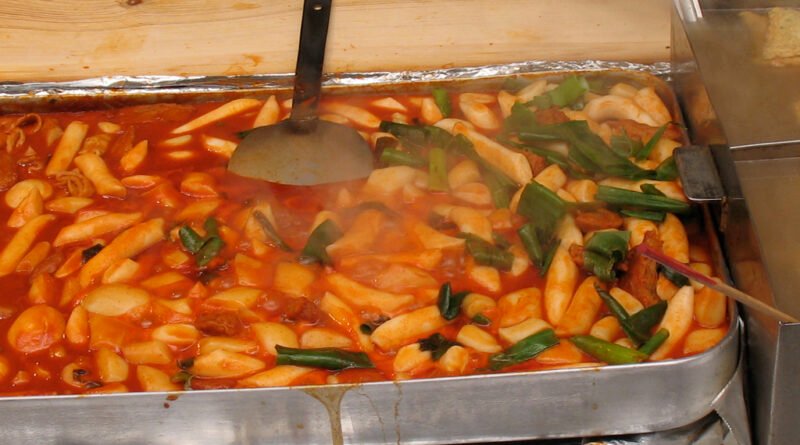
Tteokbokki from a pojangmacha street cart at night hits differently from the restaurant version. The best I’ve had recently was from a cart near Suwon Paldalmun — not photogenic, just very good.
Tteokbokki — chewy rice cake cylinders in a gochujang-based sauce — has been a Korean comfort food staple for decades. But something shifted in the past two years. Social media algorithms fell in love with the visual: the bright red sauce, the stretch of melted mozzarella, the steam rising from a street cart in winter. Global Korean food conversations grew 5.5% on social platforms in the past year, and tteokbokki leads that conversation.
The Seoul Food 2026 exhibition, running June 9–12 at KINTEX in Goyang, Gyeonggi Province, will feature tteokbokki prominently in Korea’s push to hit ₩21 trillion (approximately $16 billion USD) in food exports. International buyers from 45 countries are expected. What was once a cheap after-school snack is now a Korean cultural export competing with bibimbap and bulgogi for international recognition.
Most tourists get this completely wrong — here’s what actually happens: they try tteokbokki once from a convenience store pack, find it too sweet and one-dimensional, and write it off. The real thing — fresh, handmade rice cakes in a properly layered sauce — is an entirely different experience. This guide is about finding that version.
💡 Honest Local Tip: The difference between convenience store tteokbokki (₩1,500–₩2,500) and a proper restaurant version (₩6,000–₩12,000) is massive. If your first taste was from a 7-Eleven, give it another chance at a dedicated tteokbokki shop before making up your mind.
Classic vs. New Variations: What’s Changed in 2026
The classic version — gochujang tteokbokki — uses a base of gochujang (red pepper paste), gochugaru (red pepper flakes), soy sauce, sugar, and fish cake (eomuk) broth. The rice cakes are cylindrical, chewy, and slightly smoky from the wok. It’s served with fish cake slices and sometimes a hard-boiled egg. This is the version your Korean friends grew up eating, and it’s still the best-selling format at street stalls.
What’s new in 2026: the gungjung (royal court) tteokbokki is having a serious revival. Made with soy sauce instead of gochujang, it’s not spicy at all — nutty, savory, slightly sweet, and wildly underrated for foreigners who can’t handle heat. Premium versions use Wagyu beef strips, mushrooms, and sesame oil. A bowl runs ₩12,000–₩18,000 at specialist restaurants.
Then there’s the rose tteokbokki — gochujang cut with heavy cream and cheese — which blew up on Korean food social media in 2024 and is now everywhere. Milder, richer, almost pasta-like. Perfect entry point for first-timers. And the new low-sodium, zero-sugar gochujang trend (driven by health-conscious Korean millennials) is producing lighter versions of the classic that keep the flavor profile without the sugar spike.
As referenced on Wikipedia’s tteokbokki article, the dish traces back to at least the Joseon Dynasty, though the street-food red-sauce version popularized in the 1950s is what most people recognize today.
⚠️ Heads Up: The “spicy level” warnings on Korean menus for tteokbokki tend to underestimate the heat for non-Korean palates. “Mild” at a Korean tteokbokki shop is still genuinely spicy by international standards. Ask for “안 맵게 해주세요” (an maep-ge hae ju-se-yo = “please make it not spicy”) if you’re heat-sensitive.
Where Locals Actually Eat Tteokbokki (Not Just the Tourist Spots)
Gwangjang Market in Jongno gets all the Netflix attention, and the tteokbokki there is fine — but it’s priced for tourists and surrounded by cameras. Where do locals go? Neighborhood bunsik (분식) shops — small, slightly grimy, run by an ajeossi or ajumma who’s been making the same sauce for 20 years. That’s the real thing.
After 13+ years living here, here’s my honest take on where to find it: look for a shop with handwritten menus, plastic stools, and a queue of Korean high schoolers. Those three things together are a better guide than any food app. In Seoul, neighborhoods like Mapo, Dongdaemun, and Nowon have dense clusters of excellent bunsik spots. In Gyeonggi-do, try any neighborhood market area — Suwon’s Paldalmun Market has excellent options within walking distance of the fortress.
Prices at local spots: tteokbokki portion ₩3,500–₩6,000, usually enough for one person as a snack. Add eomuk (fish cake skewers, ₩500–₩1,000 each) and a cup of the broth they’re boiling in — it’s free, just pour it yourself. That broth dipped from the eomuk pot is genuinely one of the best things you’ll eat in Korea and most tourists completely miss it.
| Tteokbokki Style | Price Range | Spice Level | Rating |
|---|---|---|---|
| Classic gochujang (street stall) | ₩3,500–₩6,000 | 🌶🌶🌶 Hot | ⭐⭐⭐⭐⭐ |
| Rose (cream + gochujang) | ₩8,000–₩12,000 | 🌶 Mild | ⭐⭐⭐⭐⭐ |
| Gungjung (soy sauce, no spice) | ₩12,000–₩18,000 | No heat | ⭐⭐⭐⭐⭐ |
| Cheese tteokbokki | ₩7,000–₩10,000 | 🌶 Mild-medium | ⭐⭐⭐⭐ |
| Convenience store pack | ₩1,500–₩2,500 | 🌶🌶 Medium | ⭐⭐⭐ |
How to Eat Tteokbokki Like a Korean
The eating ritual matters. At a street stall, you’ll get a small bowl or tray with tteokbokki and a wooden skewer or plastic fork. There’s no ceremony — just eat it. The trick locals use: stab a rice cake with your skewer, drag it through the sauce pool at the bottom of the tray to load it up, and eat it in one or two bites. Don’t cut it in half unless the pieces are unusually large — the chew is the whole point.
Between bites, grab a fish cake skewer from the simmering pot on the side. Dip it in the broth ladle if you need cooling. Alternate between the spicy tteokbokki and the mild eomuk — locals do this instinctively. The sweetness of the fish cake resets your palate and makes the next bite of tteokbokki hit harder. It’s a rhythm.
At a sit-down restaurant, tteokbokki often arrives in a mini wok or clay pot, still bubbling. Wait 30–60 seconds before eating or you will burn the roof of your mouth. This is experienced-based advice. The sauce thickens as it cools slightly — that’s when it’s best. If mozzarella is involved, stretch it with chopsticks and wrap it around the rice cake. That stretch is the Instagram shot everyone’s chasing — but it tastes as good as it looks.
Making Tteokbokki at Home: The Shortcut Koreans Actually Use
Koreans don’t always make tteokbokki from scratch. The shortcut: pre-made tteokbokki sauce packets from Haechandle or Ottogi, sold at every Korean grocery store and H-Mart globally. Add fresh rice cakes (garaetteok), eomuk, half an onion, a couple of boiled eggs, and you’ve got something genuinely close to the street stall version in 15 minutes.
Fresh garaetteok (rice cakes) are the key. Frozen or vacuum-packed ones work but need to soak in cold water for 30 minutes first to soften. The ratio that works: about 300g rice cakes to 500ml water to 3–4 tablespoons of gochujang sauce. Add a tablespoon of sugar, a splash of soy sauce, and a teaspoon of sesame oil at the end. That’s the home version most Korean families make.
For the rose version: after making the classic base, turn the heat to low and stir in 100ml of heavy cream and a handful of shredded mozzarella. Stir until melted and silky. It sounds wrong but it works perfectly — the cream cuts the gochujang heat without losing the flavor depth. My kid demolishes this version every time. Prices may vary — always check the official site for ingredient sourcing when ordering online.
Things Readers Often Ask
Is tteokbokki gluten-free?
Traditional tteokbokki rice cakes (garaetteok) are made from rice flour and are naturally gluten-free. However, the sauce typically contains gochujang, which often includes wheat as a fermentation ingredient — making standard tteokbokki not safe for celiac sufferers. Fish cakes (eomuk) also commonly contain wheat flour. For a gluten-free version, seek out certified GF gochujang (available in specialty stores) and skip the fish cakes, or make the gungjung soy sauce version with certified tamari instead of regular soy sauce.
Why is my tteokbokki too sweet?
Most commercial and convenience store tteokbokki sauces are calibrated for mass appeal — they lean heavily on sugar to balance the gochujang heat. Restaurant and street stall versions tend to be more balanced. When making it at home, reduce the sugar and increase the gochugaru (red pepper flakes) for a spicier, less sweet profile that’s closer to the traditional version. Adding anchovy broth instead of plain water also deepens the savory dimension significantly.
What do you eat with tteokbokki?
The classic tteokbokki combo (known as “분식 세트” / bunsik set) includes eomuk (fish cake skewers), hard-boiled eggs, and gimbap (seaweed rice rolls). The gimbap is used to cool down between spicy bites and provide a starchy contrast. Some spots also serve twigim (Korean tempura — battered and fried vegetables or squid) on the side. At proper bunsik restaurants, you can usually mix and match from a menu of these accompaniments at very low individual prices (₩500–₩2,000 per item).
Where can I buy tteokbokki rice cakes outside Korea?
Fresh or frozen garaetteok rice cakes are available at most Korean or Asian grocery stores internationally — H-Mart, Zion Market, and local Koreatown shops in the US; Wing Yip and Seoul Plaza in the UK; and various Asian supermarkets across Europe and Southeast Asia. Online, they’re available via Amazon (vacuum-packed) or via Korean grocery delivery services like Gochujar or Hankook Mart depending on your region. The vacuum-packed refrigerated version has a shelf life of several weeks and performs nearly as well as fresh.
Final Thoughts from a Korean Local
Tteokbokki isn’t a trend that appeared overnight — it’s a dish that earned its global moment after decades of being the food Koreans reached for when they needed comfort, warmth, or just something genuinely good after a long day. Honestly, this is one of those things Koreans never explain to foreigners: the dish is deeply tied to memory and feeling, not just flavor. That’s why the street stall version still beats the restaurant version for most Koreans, no matter how creative the new formats get. Find a small bunsik shop, order a tray, grab a fish cake skewer, pour yourself a cup of that free broth, and eat it standing up if you have to. That’s the real experience. Everything else is just a variation on that moment. Go find it.
