
Black Day Korea: Why Singles Eat Black Noodles Apr 14
February 14 is for women to give chocolate. March 14 is for men to give gifts. April 14 is for everyone who got nothing — and somehow, it’s the best day of the three.
I’ve celebrated Black Day more times than I care to admit. Not because I was perennially single — but because the tradition of gathering with friends, ordering a big bowl of jjajangmyeon, and collectively deciding that being single is actually fine has a kind of liberating absurdity to it that I genuinely appreciate. As a Korean dad living in Gyeonggi-do who grew up watching Korea’s romantic calendar evolve from Valentine’s Day into a full multi-month cultural production, I can tell you: Black Day is the most misunderstood Korean holiday in the world, and probably the one foreigners respond to most enthusiastically once they actually understand it. Here’s the full story.
📋 Quick Guide Map
- What Is Black Day in Korea? The Basic Explanation
- Korea’s Full Romantic Calendar: 14 Love Holidays Explained
- Jjajangmyeon: The Dish That Became a Symbol
- How Koreans Actually Celebrate Black Day in 2026
- Why This Tradition Is More Interesting Than It Looks
What Is Black Day in Korea? The Basic Explanation
I’ve eaten jajangmyeon on Black Day exactly zero times while single and about twelve times with my family since getting married. At this point it’s just a good noodle dish with an interesting backstory.
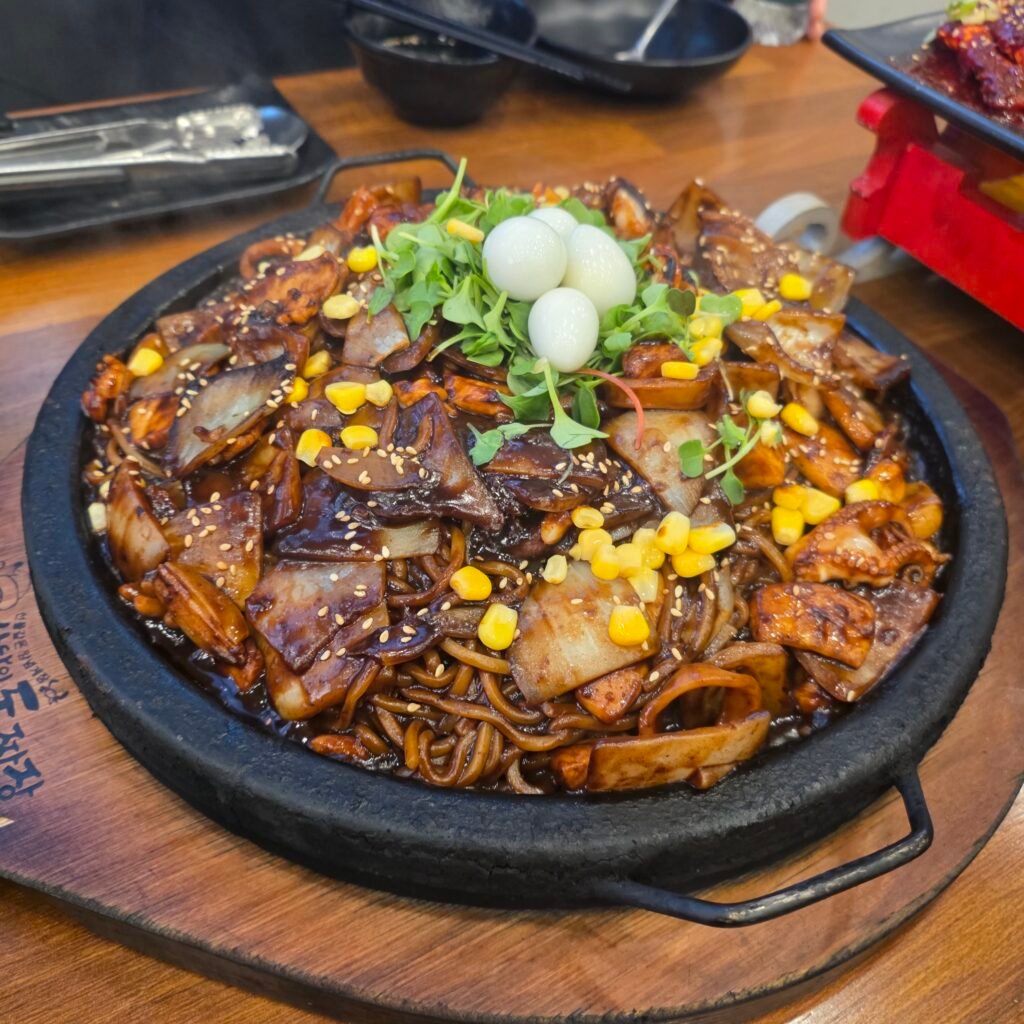
Black Day (블랙데이) is an unofficial Korean holiday observed every April 14. It is specifically for single people — those who didn’t give or receive gifts on Valentine’s Day (February 14) or White Day (March 14). The tradition centers on gathering with other single friends, wearing black clothing, and eating black-colored food, most famously jjajangmyeon (짜장면) — a thick Korean-Chinese noodle dish smothered in jet-black fermented black bean paste sauce.
The name “Black Day” comes from the color theme: black clothes, black food, and perhaps a black mood — though as we’ll see, the mood is rarely as dark as the name suggests in practice. It is not a government-designated public holiday; there’s no day off, no official programming. But it’s culturally recognized enough that Chinese-Korean restaurant bookings spike noticeably on April 14, convenience stores run black-themed promotions, and the hashtag 블랙데이 trends on Korean social media every year. If you happen to be in Korea on April 14, you will almost certainly encounter it.
💡 Hellokoreaguide’s Note: Most Koreans I know treat Black Day with a mixture of irony and genuine affection. It started as a day to commiserate, but in modern Korea — where social attitudes toward singlehood have shifted significantly and the pressure to be in a relationship is much lower than even a decade ago — it’s increasingly a celebration. The point isn’t “I’m sad I’m single.” The point is “I’m going to eat great noodles with people I like.” That’s a pretty good April 14.
Korea’s Full Romantic Calendar: 14 Love Holidays Explained
To understand Black Day, you need to understand the broader context of Korean love holidays — a calendar system that is both genuinely baffling and secretly brilliant. Korea operates on a system where the 14th of each month has a themed “love holiday.” This isn’t organic folk culture; it was largely created by marketers and the government in the late 20th century as a way to generate recurring commercial occasions. But like many things that started as marketing, several of the holidays took on genuine cultural life.
The three most significant are the February–April triangle. Valentine’s Day (February 14): In Korea, this is when women give chocolate to men — the reverse of Western practice. It’s a one-way gift holiday. Men who receive chocolate are considered lucky; men who don’t receive any use this as data for Black Day. White Day (March 14): Exactly one month later, men reciprocate by giving gifts (typically white-colored items — candy, flowers, jewelry) to women. This reverse flow completes the couple’s exchange.
Both Valentine’s Day and White Day are heavily commercial, with cafes releasing limited-edition items, bakeries doing premium packaging, and brands running K-pop collaborations around both dates. Black Day (April 14): The logical third act — for everyone who wasn’t part of either exchange. Other notable dates in the Korean love calendar include Rose Day (May 14), Kiss Day (June 14), and Silver Day (July 14) — but these have far less cultural purchase than the February–April trio.
| Date | Holiday | Who Celebrates | How |
|---|---|---|---|
| Feb 14 | Valentine’s Day | Couples (women give to men) | Chocolate, gifts |
| Mar 14 | White Day | Couples (men give to women) | Candy, jewelry, flowers |
| Apr 14 | Black Day | Singles | Jjajangmyeon, black clothes, friends |
| May 14 | Rose Day | Couples | Roses |
| Jun 14 | Kiss Day | Couples | — |
| Nov 11 | Pepero Day | Everyone | Pepero snack sticks (biggest commercial day) |
Jjajangmyeon: The Dish That Became a Symbol
If Black Day has a mascot, it’s jjajangmyeon (짜장면) — and it’s a genuinely delicious one. Jjajangmyeon is a Korean-Chinese dish: thick, handmade wheat noodles topped with a thick, glossy sauce made from chunjang (춘장, fermented black soybean paste) stir-fried with diced pork and vegetables. The sauce is deeply savory, slightly sweet, with a characteristic earthy richness that comes from the fermented paste. It’s jet black. It turns everything it touches black. It is the perfect visual metaphor for Black Day, and it tastes extraordinary.
Jjajangmyeon has been a staple of Korean-Chinese cuisine (called “jungshik,” 중식) since the late 19th century when Chinese immigrants in Incheon adapted the dish for Korean palates. It’s also one of Korea’s great comfort foods — inexpensive, filling, warming. In the Korean imagination, it occupies the same emotional space that pizza or ramen might in the West: the default dish when you want something satisfying without effort or money.
Which is exactly why it works for Black Day. You’re not consoling yourself with something elaborate and expensive. You’re eating the Korean equivalent of a bowl of happiness noodles with people you actually like. Most jjajangmyeon orders are delivered, adding another layer of comfort — you can celebrate Black Day from your own couch, surrounded by friends, with black bean noodles that cost about ₩7,000–₩9,000 per serving.
How Koreans Actually Celebrate Black Day in 2026
Modern Black Day looks rather different from its original conception. The holiday began as a kind of collective commiseration — singles gathering to mourn their lack of romantic partners in a country where social pressure to be in a relationship was historically quite high. That version of Black Day is largely historical. Contemporary Korean attitudes toward singlehood have shifted substantially, particularly among the MZ generation (roughly equivalent to millennials and Gen Z). The marriage rate has declined significantly, solo living is increasingly normalized, and the social stigma of being unmarried in your late twenties or thirties has weakened considerably.
As a result, 2026’s Black Day is more celebration than commiseration. Friend groups gather for jjajangmyeon and black food spreads. Cafes run black-themed menus — black sesame lattes, black sugar drinks, activated charcoal desserts. Companies run speed dating events positioned as Black Day activities. Convenience stores launch limited black-packaging promotions (the big chains often run Black Day specials). For visitors in Korea on April 14, the most visible evidence is restaurants: Chinese-Korean restaurants see a clear jump in jjajangmyeon orders, and delivery apps see a sharp spike in orders that day.
Why This Tradition Is More Interesting Than It Looks
Here’s what I think most Western observers miss about Black Day: it’s not actually pessimistic. It looks like it is — a holiday called “Black Day” for people who “failed” at Valentine’s Day — but the function it serves is something more interesting. It’s a cultural permission slip.
In a society that has historically placed enormous value on coupling and marriage, Black Day is the moment in the calendar where the social script explicitly says: being single is also a valid state, and here’s a day to acknowledge that with food and friends rather than shame. The fact that it was originally created by marketers to capture spending from the non-coupled demographic doesn’t make this function any less real. Culture appropriates commerce all the time.
For foreign visitors, Black Day is also just a fantastic entry point into understanding how Korea thinks about relationships, community, and food. The idea that a specific dish — black bean noodles — can become the visual and emotional symbol of an entire demographic’s shared experience is very Korean. Food in Korea isn’t just sustenance; it carries enormous social meaning.
The fact that singles chose jjajangmyeon — a Chinese immigrant dish adapted into Korean comfort food — as their emblem is, in retrospect, perfect. It’s cheap, it’s filling, it’s black, and it’s shared. If you’re ever in Korea on April 14, eat the noodles. Even if you’re coupled. Even if you’re happily married with children. Get the jjajangmyeon. Consider it a gesture of solidarity with the solo diners, and a great introduction to one of Korea’s best loved dishes.
Frequently Asked Questions
What is Black Day in Korea?
Black Day is an informal Korean holiday observed on April 14 each year. It is primarily for single people who did not give or receive gifts on Valentine’s Day (February 14) or White Day (March 14). The tradition involves gathering with other singles, wearing black clothing, and eating black-colored food — particularly jjajangmyeon, a Korean-Chinese noodle dish with black bean sauce. Modern celebrations are more festive than melancholic, and the day has significant commercial activity around black-themed food and events.
What is jjajangmyeon and where can I try it in Korea?
Jjajangmyeon (짜장면) is a Korean-Chinese noodle dish: thick handmade wheat noodles topped with a black sauce made from fermented black bean paste (chunjang), diced pork, and vegetables. It’s one of Korea’s most beloved comfort foods and costs approximately ₩7,000–₩9,000. You can find it at Korean-Chinese restaurants (look for “중국집” signs) throughout Korea, or order it delivered through Coupang Eats or Baemin apps.
Does Korea have a holiday for every month on the 14th?
Yes — Korea has 14 themed “love holidays” falling on the 14th of each month. The most culturally significant are Valentine’s Day (Feb 14), White Day (Mar 14), and Black Day (Apr 14). Later holidays like Rose Day (May), Kiss Day (June), and Silver Day (July) exist but have far less cultural traction. November 11 — Pepero Day — is technically separate from the 14th calendar but is the most commercially significant food-themed holiday of the year.
The Bottom Line
I’ve watched Black Day evolve over the years from something that felt a little melancholy to something that feels genuinely celebratory. That shift tracks exactly with how Korean society has changed — less pressure, more permission to live on your own terms, more honest acknowledgment that being single is just one of many valid ways to be a person. The jjajangmyeon has stayed the same throughout. It’s still cheap, still black, still excellent.
If you’re visiting Korea in April, plan to be somewhere you can order it on the 14th. If you’re already in Korea and missed April 14 this year — there’s always next year. In the meantime, most Chinese-Korean restaurants serve jjajangmyeon every day, and it never needs a holiday as justification. It’s good enough on its own. Drop a comment below if you’ve tried jjajangmyeon or celebrated Black Day — I’d love to hear about it.
📚 You might also like:
For more on Korea’s romantic holiday calendar, Wikipedia’s Black Day entry has a solid overview of the historical origins.
