
How to Hike Bukhansan from Seoul Subway: 2026 Honest Guide
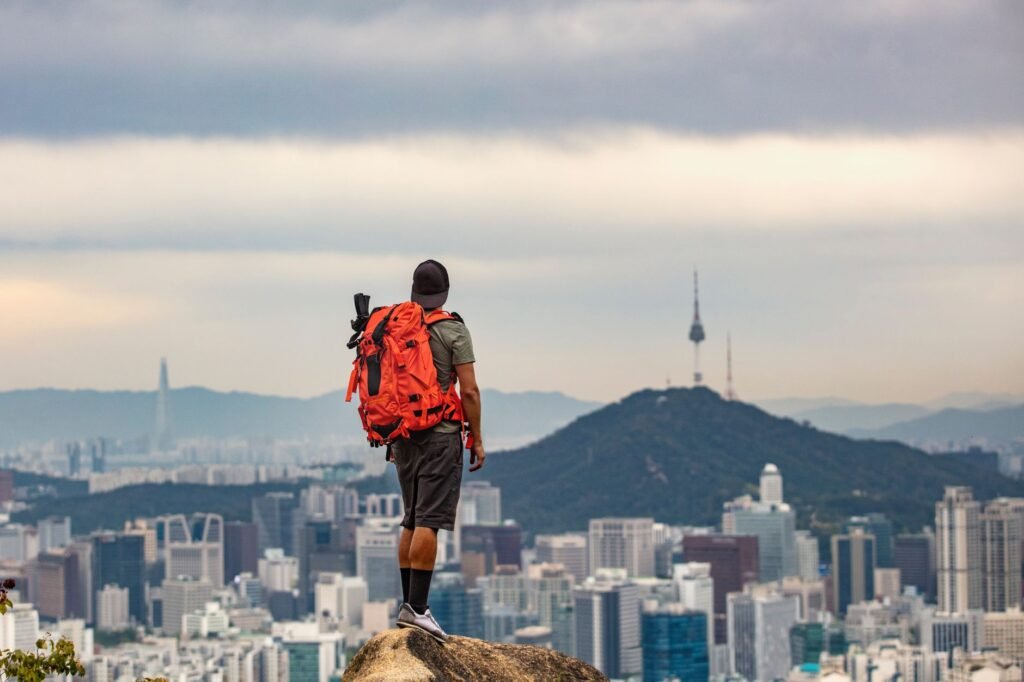
Every summer I explain to visiting friends how to hike Bukhansan from Seoul subway — and every time I watch them blink at the options. Three different subway lines. Four entrance areas. A dozen trail names in Korean only. And not a single ticket booth, because entry to Bukhansan National Park is completely free. I have been making this trip from my home in Gyeonggi for over fifteen years. My son made it to the summit at age ten. Last weekend I was back again, and the view from Baegundae Peak (836.5m) — Seoul’s highest natural point — still stops me cold. If you are visiting Seoul this summer, set aside one full day for this mountain. This is exactly how to do it.
Table of Contents
- Why Bukhansan Is Worth Your Day
- How to Hike Bukhansan from Seoul Subway — Three Routes
- Choosing the Right Trail for Your Fitness Level
- What to Pack for Summer Hiking in Bukhansan
- Eating Like a Local at the Trailhead
- Tips Only Seoul Locals Know
- Frequently Asked Questions
Why Bukhansan Is Worth Your Day
Bukhansan National Park sits on the northern edge of Seoul, yet it feels completely removed from the city below. The forest is dense, the granite peaks are sharp, and the air cools noticeably above 400 metres. What surprises most international visitors is how deeply ordinary this park is for Koreans — not a weekend warrior destination, but part of daily life. On a Tuesday morning you will share the trail with retired men in full technical gear eating gimbap on a boulder, office workers who detoured here before their commute, and school groups in matching yellow windbreakers.
The park covers roughly 80 km² and has no entrance fee at all. No ticket, no reservation, no online registration. You walk in. Parking is ₩2,000–₩8,000 if you drive, but from most parts of Seoul, the subway is both cheaper and faster. For other outdoor destinations beyond the capital, my guide to Korea’s east coast covers what else is worth the journey.
How to Hike Bukhansan from Seoul Subway — Three Routes
There are three practical subway approaches to Bukhansan, each reaching a different face of the park. Which one you choose depends on your trail plan.
| Route | Line | Station | Entrance | Best For |
|---|---|---|---|---|
| Route 1 | Ui Line (우이신설선) | Bukhansan Ui (북한산우이역) | Baegundae entrance | Summit hikers |
| Route 2 | Line 3 (Orange) | Gupabal (구파발역) + Bus 704 | Bukhansanseong entrance | Fortress wall trail |
| Route 3 | Line 4 (Blue) | Gireum (길음역) + Bus 110B/143 | Jeongneung entrance | Quiet valley trail |
Route 1: Ui Line → Bukhansan Ui Station (most visitors’ first choice)
The Ui Line (우이신설선) runs from Sinseol-dong — connected to Line 1 and Line 2 — north to Bukhansan Ui Station (북한산우이역) at the end of the line. Take exit 1 and walk five minutes to the Seoul Hiking Tourism Center (서울등산관광센터), where you can rent basic hiking boots for around ₩5,000–₩10,000. From there, another ten minutes on foot gets you to the main Baegundae trail entrance. Subway fare from central Seoul is roughly ₩1,500–₩1,800 with a T-money card. This is the route I use on every family trip. Make sure your T-money card is loaded before you leave — read my full guide to the T-money card in Korea if this is new to you.
Route 2: Line 3 → Gupabal Station (fortress wall side)
Take Line 3 (Orange Line) to Gupabal Station (구파발역), exit 1. Bus 704 runs directly to the Bukhansanseong Park Information Center (북한산성 탐방지원센터). Bus fare is ₩1,200. This entrance feeds the old Joseon-era fortress wall trail, which is flatter and historically richer than the summit route. If you are traveling with older family members or just want history alongside scenery, this is my top recommendation.
Route 3: Line 4 → Gireum Station (quietest option)
Take Line 4 (Blue Line) to Gireum Station (길음역), exit 3. Then take bus 110B or 143 for roughly 13 minutes to the last stop. A 10-minute uphill walk arrives at the Jeongneung Park Information Center (정릥 탐방지원센터). This is the least crowded entrance, especially on weekdays, and leads into a gentle valley trail with a stream running beside the path — ideal for a hot summer day.
To navigate between stations and entrances on foot, I always use Naver Map. My guide to using Naver Map in Korea shows how to save offline maps before you lose signal in the upper trails.
Choosing the Right Trail for Your Fitness Level
Baegundae Summit Course (백운대 코스) — 4–5 hours round trip
This is the main event. The round trip from Bukhansan Ui Station to the 836.5m summit is approximately 5.8km. The lower section is a wide, well-shaded forest path; the final 200 metres is exposed granite with iron chains bolted into the rock. Hold them — I have seen visitors attempt this section in running shoes on a drizzly day and it ends badly. Proper grip shoes are non-negotiable. Plan 2.5 hours going up and 1.5 hours coming down. On a clear summer morning the view from the top stretches across the entire Han River basin. Worth every step.
Bukhansanseong Fortress Wall Trail (성곽 둘레길) — 3–4 hours round trip
Starting from the Gupabal entrance, this trail follows the restored fortress wall built to protect the Joseon capital. The walking surface is mostly paved stone with fewer steep sections. Great for families with older children or anyone who wants historical context alongside the scenery. Walls, gates, and old tower ruins appear every fifteen minutes along the path.
Jeongneung Valley Trail (정릉 계곡) — 2–3 hours
A loop through dense forest alongside a mountain stream. In June and July the water is cool enough to sit beside and dip your feet in at the wider crossing points. My go-to option when I want fresh air without committing to a full-day climb.
What to Pack for Summer Hiking in Bukhansan
June through August is Korea’s rainy season (jangma, 장마), and Bukhansan in summer means high humidity, sudden showers, and midday heat. The heavy tree cover helps more than you’d expect, but come prepared.
- Water: at least 1.5 litres per person. The upper trails have no reliable water points.
- Rain layer: a lightweight jacket that packs small. A clear morning can turn into a wet afternoon with almost no warning during jangma.
- Sunscreen: the summit ridge is fully exposed. No trees above 700m.
- Snacks: the GS25 near the Gupabal entrance sells kimbap for ₩1,500–₩2,000, boiled eggs for ₩500, and triangle onigiri for ₩1,200. I always buy two kimbap rolls before I start.
- Shoes with proper grip: wet granite near the Baegundae summit is genuinely dangerous in smooth-soled shoes. Sandals are not appropriate anywhere on this trail. If you did not bring hiking boots, the rental center near Bukhansan Ui Station charges around ₩5,000–₩10,000.
- Naver Map offline download: phone signal weakens above 600m. Save the area map before you leave home.
Eating Like a Local at the Trailhead
Koreans do not treat a mountain hike as a survival exercise. It is a social occasion with very specific food rituals attached. At every major entrance area — especially Bukhansanseong — there is a cluster of small restaurants serving the post-hike combination that every Korean hiker knows:
- Pajeon (파전, green onion pancake) — ₩8,000–₩12,000. The definitive post-hike dish. Crispy edges, soft interior. It arrives sizzling at the table.
- Makgeolli (막걸리, milky rice wine) — ₩5,000 a clay bowl. Sitting on a wooden deck above the fortress wall after coming down from Baegundae and drinking makgeolli with pajeon is a Korean hiking ritual that I genuinely look forward to more than the summit itself. This is the honest truth.
- Doenjang-jjigae (된장짌개, fermented soybean paste stew) — ₩7,000–₩9,000 with rice. Thick, salty, and deeply satisfying after hours on granite. Your legs will thank you.
The restaurants near the Bukhansanseong entrance have wooden deck seating (마루) with views over the old wall. If the weather holds, eat outside. This moment — mountain air, cold rice wine, the wall in the background — does not appear in any tourist brochure and it is one of my favourite things Seoul has to offer.
Tips Only Seoul Locals Know
Start before 8am on weekends. The iron chain section near the Baegundae summit forms a single-file queue by 10am on busy Saturdays. I leave home by 6:30am and have the trail nearly to myself for the first two hours. Weekday hiking is even better — especially if you can come on a Tuesday or Wednesday.
Read the daily safety board at the information center. Each entrance posts a recommended end time for that day based on sunset. Rangers actively close trails about two hours before dark. Most foreign visitors walk straight past this notice. Do not be one of them.
No portable speakers on the trail. Playing music out loud is considered extremely rude in Korean hiking culture. Earphones are fine; speakers are not. This is enforced by collective social pressure, not signs.
The fortress wall between Daeseo Gate (대서문) and Wondang Gate (원당문) is a section that most day-trippers skip. It is the most scenic stretch of the old wall and almost always quiet, even on busy weekends.
Buy drinks before you start, not after. The GS25 near the Gupabal entrance runs out of chilled drinks by noon on weekends. Stock up at the start. For official trail hours and seasonal closures, the Bukhansan National Park page on VisitKorea is kept up to date by the Korea Tourism Organization.
Frequently Asked Questions
Is Bukhansan National Park free to enter?
Yes, completely free. There are no entrance fees, no ticket gates, and no reservation required at any of the park entrances. Parking is ₩2,000–₩8,000 if you drive, but entering on foot is always free.
Which subway line goes directly to Bukhansan?
The Ui Line (우이신설선) terminates at Bukhansan Ui Station, the most convenient stop for the Baegundae summit trail. From Sinseol-dong (Line 1/2 connection), the ride takes about 20 minutes and costs roughly ₩1,500–₩1,800 with a T-money card.
How long does it take to hike Bukhansan Baegundae summit?
Plan 2.5–3 hours going up and 1.5–2 hours coming down from the Bukhansan Ui Station entrance — roughly 4–5 hours round trip. A full day, leaving Seoul by 7am and returning by 4pm, is comfortable for most people at moderate fitness.
