
How to Watch a KBO Game in Seoul: Honest 2026 Guide
Update, September 2026: LG Twins and Doosan Bears play at Jamsil Baseball Stadium through the 2026 season. From 2027 to 2031 they move next door to a converted Jamsil Olympic Stadium while the new domed ballpark is built. Source: Kyunghyang Shinmun.
People ask me all the time what one thing tourists consistently miss in Seoul. I’ve been going to baseball at Jamsil with my family since my kids were small enough to share one seat, and my answer hasn’t changed: watch a KBO game. If you’re looking for a guide on how to watch a KBO game in Seoul, you’ve come to the right place. This is the honest, local-perspective write-up I always wanted to hand to foreign colleagues visiting from our partner plants abroad.
The Korea Baseball Organization (KBO) season runs from late March through October. By June, teams are deep in the summer schedule — almost every evening has a game somewhere. Entry is affordable, the atmosphere is extraordinary, and I guarantee you’ll leave saying it was the best ₩15,000 you spent in Korea.
Why KBO Baseball Is Worth Your Time
I work long hours at a chemical company in the Seoul metro area, and the way my family winds down in summer is a subway ride to Jamsil. A night game costs about the same as a single cup of specialty coffee in Seongsu, but it lasts three hours and you’ll leave slightly hoarse from cheering. The KBO drew a record 10.88 million fans in 2024 and 12.3 million in 2025 — this isn’t a niche hobby; it’s a huge part of Korean popular culture that most travel guides barely acknowledge.
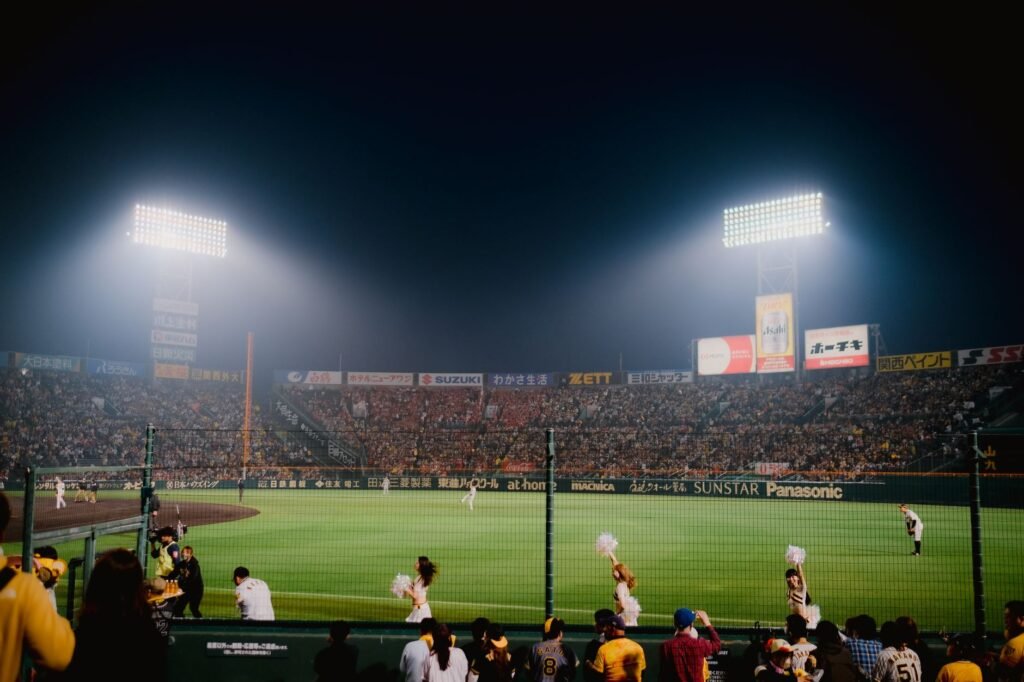
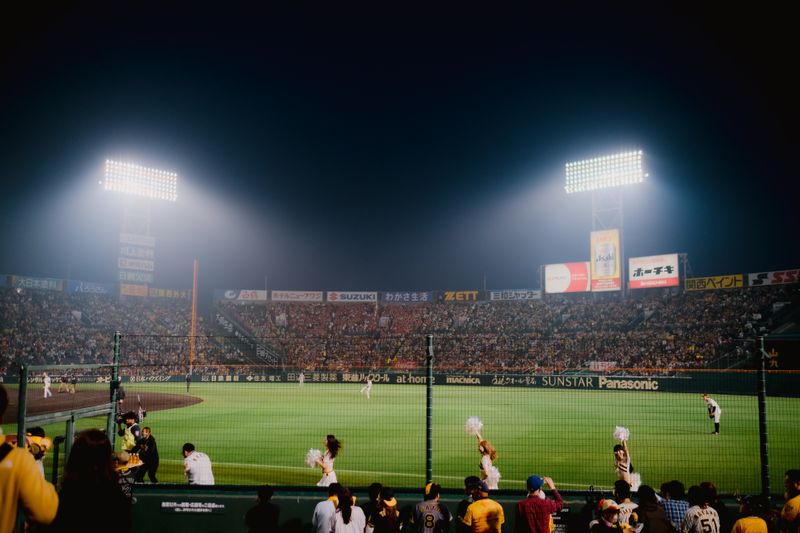
For international visitors, the atmosphere is especially striking because it doesn’t look like any baseball you’ve seen on TV. The cheer sections — in the outfield bleachers — are fully choreographed. Every batter has his own team-specific chant. Professional cheerleaders lead the section from a raised platform. Fans bring fried chicken delivered mid-game. It’s sport and performance and family dinner all happening simultaneously, and it’s completely unique to Korea.
Jamsil vs. Gocheok: Which Stadium to Choose
Seoul has two main KBO stadiums and they offer distinctly different experiences.
Jamsil Baseball Stadium (잠실야구장) is home to both the LG Twins and the Doosan Bears. It’s an open-air stadium that seats about 27,000 people. Getting there is simple: take Line 2 (the green line) to Sports Complex Station (종합운동장역), Exit 5 or 6. The stadium is directly in front of you — maybe a 2-minute walk. The location near the Han River and Olympic Park means it’s easy to combine with other plans for the day.
Gocheok Sky Dome (고척스카이돔) is Korea’s only fully indoor baseball stadium, home to the Kiwoom Heroes. It’s climate-controlled, which becomes relevant once the July rainy season hits. Take Line 1 to Guil Station (구일역), Exit 2, and walk about 10 minutes. The dome is newer and has a slightly modern feel, though Jamsil carries more historical atmosphere.
My honest recommendation for a first visit: go to Jamsil, specifically an LG Twins weekday evening game. The stadium fills without being overwhelming, and the LG fan section is particularly well-organized and energetic — great for newcomers who want to understand the cheering culture without feeling lost.
How to Watch a KBO Game in Seoul: Buying Tickets
This is where most English guides fall short. Many Korean ticketing platforms require a Korean phone number for SMS verification, which stops a lot of foreigners from completing their purchase. Here’s what actually works:
- Ticketlink Global (global.ticketlink.co.kr): Designed specifically for foreign visitors. It accepts international credit cards without a Korean phone number or address. This is the most reliable option for tourists.
- NOL Ticket (formerly Interpark Ticket): the official seller for Doosan Bears and Kiwoom Heroes games in 2026 (LG Twins games are on Ticketlink). I’ve done this for visiting colleagues and it works, though Naver account setup requires some patience.
- Official team apps: Each team — LG, Doosan, Kiwoom — has its own app. Some now allow international card payment, but it varies by team and season.
- Box office on the day: Available at the stadium about 90 minutes before first pitch. Weekday regular-season games rarely sell out. Showing up and buying at the window is a perfectly reliable option for most games.
Tickets typically go on sale about a week in advance. Weekend derbies — especially LG Twins vs. Doosan Bears — can sell out, so plan ahead for those. Before heading out, make sure you have a T-money card loaded for the subway ride and post-game convenience store stop. If you need one, I wrote a full guide on how to use a T-money card in Korea. And for navigating Line 2 to the stadium, Naver Map is far more accurate than Google Maps for Korean transit.
Stadium Seating Sections and Prices in 2026
Here’s a breakdown of current seating at Jamsil for the 2026 KBO season:
| Section | Korean Name | Price Range (2026) | Best For |
|---|---|---|---|
| Outfield Bleacher | 외야석 | ₩10,000–₩12,000 | Immersive cheering experience; standing, loud |
| Infield General | 내야 일반석 | ₩14,000–₩18,000 | Best all-round view; comfortable pace |
| Infield Reserved | 내야 지정석 | ₩20,000–₩28,000 | Assigned seats; ideal for families |
| Premium / Dugout Club | 프리미엄석 | ₩35,000–₩55,000 | Close to the field; often includes perks |
For a first visit, I recommend the infield general section (내야 일반석) at ₩14,000–₩18,000. You get a clear sightline of the entire field, you can see the cheer section performing in the outfield bleachers, and you’re not locked into standing and chanting if you need a break.
Avoid the outfield bleachers on your first visit unless you genuinely want to stand and chant for three hours — it’s one of the best experiences Korea offers, but it helps to know at least a few of the chants before committing to it.
What to Eat at a Korean Baseball Stadium
Stadium food is a central part of the KBO experience — not an afterthought. Here’s what I always order and what I recommend to anyone visiting Jamsil:
- Fried chicken (치킨), ₩15,000–₩20,000: Available from multiple vendors inside the stadium. You buy at the counter and carry it to your seat in a tray. This is the quintessential KBO stadium food — there’s simply no substitute.
- Draft beer (생맥주), ₩5,000–₩7,000: Cass and Hite are standard. Beer kiosks are distributed throughout every seating section. The lines get long right after an inning ends, so time your trip to the counter wisely.
- Cup ramyeon (컵라면), ₩1,500: You fill it yourself from a hot water dispenser at the concession stand. It sounds simple and it is — but it tastes exactly right in a baseball stadium at 9 PM.
- Tteokbokki (떡볶이), ₩4,000–₩5,000: Available from some vendors in small cups. Good for snacking between innings without filling up too fast.
- GS25 kiosk items, ₩2,000–₩5,000: There are GS25 convenience store counters inside Jamsil selling kimbap sets, sandwiches, and snacks at slightly better prices than the hot food vendors.
After the game, the Han River is a 10-minute walk from Jamsil Stadium, making it a natural evening continuation — especially on warm summer nights. My complete guide on Han River picnic tips for foreigners in Seoul covers everything you need for an outdoor evening there.
Understanding Korean Baseball Cheering Culture
This is what separates KBO from every other baseball league. Each team has a dedicated cheering section (응원단) in the outfield bleachers, led by professional cheerleaders (치어리더) who perform from a raised platform during every single at-bat. Each batter has his own song — a full chant with specific choreography — that the entire section performs in unison. I’ve watched my daughter learn all the LG Twins chants by her second game just by following along.
Fans use thunder sticks (빵빵이) — inflatable plastic clappers — to add rhythm to each chant. These are sold at entrance gates for ₩2,000–₩3,000, or you can buy cheaper versions at any GS25 near the stadium before the game.
A few practical points if you’re in the outfield cheering section: you are expected to stand during at-bats. No one will say anything if you don’t know the chants — foreign visitors who try are almost always helped warmly by the people around them. Step out for food and the bathroom between innings, not during active play. Trash is sorted into separate bins even inside the stadium (plastic, general waste, food waste), so follow the Korean habit and sort properly.
If your team wins, there is usually a short fireworks display from the outfield. It’s brief, but it’s a perfect ending to an evening that already feels like it cost five times what it did. For background on attending other authentic Korean cultural experiences, the Korea Tourism Organization’s official English site has useful overview content — though honestly, the fans beside you at Jamsil will teach you more in three innings than any website can.
Frequently Asked Questions
Can foreigners buy KBO baseball tickets without a Korean phone number?
Yes. The most reliable option for foreigners is Ticketlink Global (global.ticketlink.co.kr), which accepts international credit cards without requiring a Korean phone number or address. You can also buy tickets at the stadium box office starting about 90 minutes before first pitch — weekday regular-season games rarely sell out.
Which is better for first-timers: Jamsil Stadium or Gocheok Sky Dome?
Jamsil Baseball Stadium is easier and more atmospheric for first-time visitors. It’s a 2-minute walk from Sports Complex Station on Line 2 (Exit 5 or 6), hosts both the LG Twins and Doosan Bears, and is surrounded by Olympic Park and the Han River for pre- or post-game plans. Gocheok Sky Dome is worth visiting for its indoor, climate-controlled environment — especially useful during July’s rainy season.
How much does a KBO baseball game cost in Seoul in 2026?
Tickets at Jamsil range from ₩10,000 for outfield bleacher seats up to ₩55,000 for premium seats. For most visitors, an infield general seat at ₩14,000–₩18,000 is the best value. Add in fried chicken (₩15,000–₩20,000) and a couple of beers (₩5,000–₩7,000 each), and a great evening at the stadium costs around ₩40,000–₩55,000 total — still far less than a typical evening out in most major cities.
