
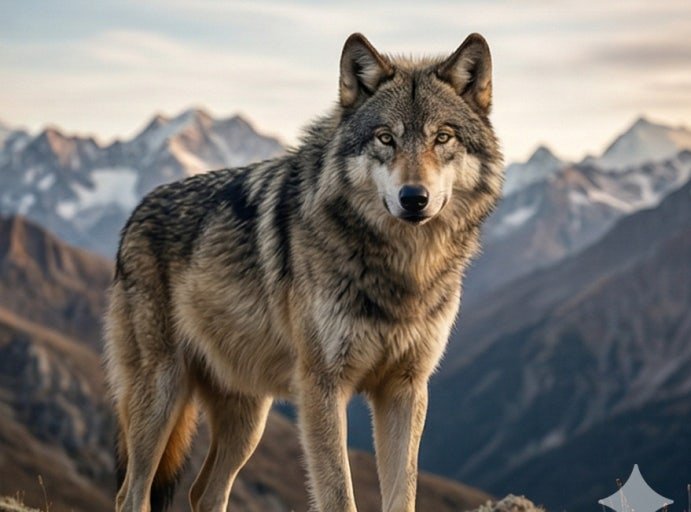
Neukgu the Wolf: Korea’s 9-Day Escape Story Explained
For nine days in April 2026, a two-year-old wolf named Neukgu became the most famous animal in Korea — and the whole nation watched, worried, and cheered.
I’ve lived in Korea my whole life, and I’ve rarely seen the country unite quite so completely around a single story. When Neukgu — a young male wolf at the O-World zoo in Daejeon — burrowed out of his enclosure on April 8, 2026 and disappeared into the city, something remarkable happened: an entire nation of 52 million people started rooting for a wolf. Military drones searched the hills. Elementary schools closed. The president weighed in on social media. A cryptocurrency meme coin appeared within days. CNN, CBC, and AP all filed stories. And on April 17, when Neukgu was finally found — safely tranquilized on a hill near an expressway, a fishing hook removed from his stomach, his vital signs normal — the South Korean internet erupted in celebration. This is the full story, and why it says so much about who Koreans are.
📋 Jump to a Section
- Who Is Neukgu? The Wolf Behind the Story
- The Escape: How a Wolf Outsmarted an Entire City
- 9 Days on the Run: The Search That Gripped Korea
- The Viral AI Image That Made Things Worse
- Why Koreans Cared So Much — What This Tells You About Korean Culture
Who Is Neukgu? The Wolf Behind the Story
My older daughter followed the Neukgu story daily and gave me dinner updates I pretended to fully understand. When it ended, she was genuinely upset. That emotional investment is what makes these stories viral.
Neukgu (늑구) means “wolf” in informal Korean — it’s a simple, affectionate name, almost like calling him “Wolfy.” He was born at O-World zoo in Daejeon in 2024, which makes him just two years old — practically a puppy in wolf terms. He is a third-generation descendant of a group of wolves brought from Russia in 2008 as part of a genuinely meaningful conservation effort: a program to restore the Korean wolf, a subspecies that went extinct in the Korean wild in the 1960s due to habitat loss and hunting. Neukgu isn’t just a zoo animal. He’s a link in a chain of restoration. That context matters enormously for understanding why Koreans reacted the way they did when he escaped.
O-World is a theme park and zoo in Daejeon, a city of about 1.5 million people roughly 140 kilometers south of Seoul. The zoo has had a troubled record with animal security — a puma escaped from the same facility in 2018 and was killed during capture, a fact that animal rights groups immediately invoked when Neukgu disappeared. The fear wasn’t just that Neukgu might hurt someone. The fear was that Neukgu might be hurt, or killed, before anyone could bring him back safely.
💡 Hellokoreaguide’s Note: The Korean wolf (한국 늑대) was declared extinct in the wild in the 1960s. The captive breeding program that produced Neukgu is one of several ongoing conservation efforts in Korea to preserve species lost during rapid industrialization. When Neukgu escaped, he wasn’t just a zoo animal on the loose — for many Koreans, he represented something fragile and irreplaceable that needed to be protected.
The Escape: How a Wolf Outsmarted an Entire City
On the morning of April 8, 2026, zoo staff arrived to find Neukgu missing from his enclosure. Surveillance footage later revealed how he did it: he had burrowed under the fence, methodically digging over what must have been multiple nights until the gap was wide enough. The escape itself was a Tuesday morning. By afternoon, the story was everywhere in Korea.
The immediate response was significant. O-World closed its doors. Daejeon authorities issued an emergency public alert. A nearby elementary school shut its doors for the day. Hundreds of firefighters, police officers, and military personnel were mobilized alongside wildlife experts and veterinarians. Thermal imaging cameras and military-grade drones swept the hills and parks surrounding the zoo. For a city that had never had to organize a wolf hunt before, the response was remarkably swift. What nobody anticipated was that Neukgu would prove to be extremely good at not being found.
9 Days on the Run: The Search That Gripped Korea
Over the next nine days, Neukgu was spotted multiple times — and vanished each time before anyone could get close enough. He was seen near residential areas, in parks, along hillsides. Each sighting generated a fresh wave of national attention. Korean online communities (especially the massive Naver and DC Inside platforms) ran live threads tracking every development. Social media was flooded with a specific anxiety that felt genuinely collective: this wasn’t fear of the wolf, it was fear for the wolf.
Animal rights organizations were particularly active, publicly calling for Neukgu to be captured alive under any circumstances. The memory of the 2018 puma — shot dead during capture at the same zoo — was cited constantly. Korean President Lee Jae-myung weighed in on X (formerly Twitter), urging authorities to ensure Neukgu’s safe return. The story even generated international coverage: CNN, CBC, UPI, AP, and the Washington Times all ran the Neukgu saga as international news. Within a week of his escape, a meme coin named “Neukgu” appeared on decentralized cryptocurrency exchanges — a peculiarly 2026 form of national celebrity. Through it all, the dominant emotional register on Korean social media wasn’t panic. It was a kind of collective parental worry, like watching a toddler who had wandered off somewhere dangerous.
| Date | Event | National Response |
|---|---|---|
| April 8 (Tue) | Neukgu escapes O-World enclosure by burrowing | Emergency alert issued, school closed, search launched |
| April 8–13 | Multiple sightings, wolf vanishes each time | National media coverage, social media live threads |
| April 8 | AI-generated wolf image goes viral | Emergency text sent based on fake image |
| April 14 | Neukgu spotted near park; located hours later | President posts on social media |
| April 17 (Fri) | Neukgu tranquilized near expressway, 12:44 AM | Internet eruption of celebration, fishing hook removed |
The Viral AI Image That Made Things Worse
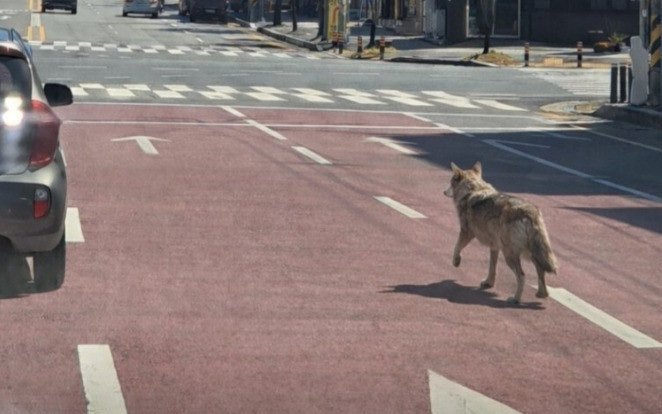
One of the most remarkable subplots of the Neukgu saga involved artificial intelligence — and it became an international cautionary tale. On April 8, just hours after Neukgu escaped, an image began circulating on Korean social media platforms: a wolf walking calmly through a Daejeon intersection. The image looked real. It was shared by government agencies. It was published by some of Korea’s largest newspapers. An emergency text alert was sent to Daejeon residents based on it. The only problem: AFP visual analysis, confirmed by AI expert Howard Kim of Seoul Cyber University, found it was AI-generated.
The false image had been passed along a government employee’s KakaoTalk message three minutes before the emergency text was sent. It demonstrated, with alarming clarity, how quickly AI-generated content can enter official emergency response channels in a high-pressure situation. Professor Kim publicly noted that the case showed how “the widespread use of generative AI technology can pose an unforeseen threat to public safety response systems.” This dimension of the story — a real animal escape, chaos amplified by fake AI imagery, government agencies deceived — was part of why the international media found the Neukgu story irresistible. It was a perfect collision of ancient (a wolf in the wild) and contemporary (AI deepfakes in government alerts).
⚠️ Watch Out: If you search for Neukgu images online, many of the most-shared photos from April 8 were later confirmed as AI-generated. The actual authentic images — Neukgu being tranquilized on a hill, being examined by veterinarians, the fishing hook removal — were released by Daejeon city officials on April 17. Those are the real ones.
Why Koreans Cared So Much — What This Tells You About Korean Culture
If you’ve ever wondered what Korean culture looks like from the inside, the Neukgu story is actually a perfect introduction. Several things about the national response are distinctly, recognizably Korean. First, the collective emotional investment. Korea has a deeply communal social fabric — the idea that something affecting the country affects everyone, and that everyone has a stake in how it ends. The Neukgu story wasn’t just news; it was a shared experience that millions of people followed simultaneously, in real time, together. Second, the animal welfare dimension. Korea’s relationship with animal welfare has shifted dramatically in the past two decades, particularly among younger generations. Veterinary and animal rights communities are increasingly influential, and the national pressure to bring Neukgu back alive — rather than treating him as a threat — reflects a genuine cultural evolution. Third, the humor and warmth alongside the anxiety. Online communities simultaneously tracked Neukgu’s movements, created fan art, named him a celebrity, gave him a meme coin, and posted messages like “Neukgu, it’s dangerous outside the house.” Korean internet culture is incredibly fast-moving and emotionally intelligent — it can hold genuine worry and gentle comedy at the same time.
The final image of the saga — Neukgu lying tranquilized in a net, being lifted carefully by rescuers, his vital signs stable, a fishing hook quietly removed from his stomach — landed with enormous emotional impact. Daejeon Mayor Lee Jang-woo called him “an honorary ambassador for the zoo.” The internet called him a national hero. And Neukgu, now recovered in a separate enclosure at O-World while the zoo works on its security upgrades, is probably unaware that he spent nine days as the most famous animal in one of the most online-connected countries on earth. That gap between wolf and witness is, somehow, exactly what made the whole thing so moving.
Quick Answers
What happened to Neukgu the wolf after he was recaptured?
Neukgu was tranquilized and safely captured on April 17, 2026, nine days after his escape. Veterinarians found and removed a 2.6-centimeter fishing hook from his stomach but found no other significant health issues. He was placed in a separate enclosure at O-World to recover. The zoo remained closed following the escape as management reviewed security measures. Daejeon Mayor Lee Jang-woo called Neukgu an “honorary ambassador for the zoo.”
Was anyone hurt during Neukgu’s nine-day escape?
No. Despite nine days of freedom in and around Daejeon, Neukgu did not attack or injure anyone. The main public safety concern during the search was precautionary — a nearby elementary school closed on April 9. Animal rights groups and the public were primarily worried about Neukgu’s safety, not human safety, particularly given that a puma that escaped from the same zoo in 2018 was killed during capture.
Why is the Korean wolf significant to conservation efforts?
The Korean wolf went extinct in the wild in the 1960s due to hunting and habitat loss. Neukgu is a third-generation descendant of wolves brought from Russia in 2008 as part of a program to preserve the species in captivity and potentially restore the Korean wolf population. His escape and safe return drew renewed attention to both the conservation program and the broader question of animal welfare standards at Korean zoos.
Final Thoughts from a Korean Local
Honestly, watching the Neukgu story unfold from here in Gyeonggi-do was one of those rare moments when you feel the whole country breathing at the same frequency. I was following the live threads at work, checking my phone between meetings, watching the drone footage like everyone else. When the confirmation came at around 1 AM on April 17 that he’d been found alive — fishing hook and all — I actually exhaled. I don’t have a particularly strong connection to wolves or to Daejeon. But that’s exactly the point. Neither did most of Korea. And yet the story got us anyway. If you want to understand why Korea is the way it is — the intensity, the emotional connectivity, the way humor and care coexist — Neukgu is actually a pretty good place to start. Comments and questions welcome below.
📚 You might also like:
- Korea’s Black Day: Why Singles Eat Black Noodles on April 14th
- Korean Age System Explained
- Korean Culture for Beginners

For the official account of Neukgu’s safe return, CNN’s report on the recapture includes official footage from Daejeon city officials.
