Buddha’s Birthday Korea 2026: Lanterns & Temples Guide
Update, September 2026: Buddha’s Birthday 2026 fell on Sunday, May 24, with Monday, May 25 off, and Seoul’s Lotus Lantern Festival parade ran on May 16. The next Buddha’s Birthday is Thursday, May 13, 2027. Sources: Seoul Metropolitan Government, Seoul Focus.
Every spring, Seoul transforms into a sea of glowing lotus lanterns — and if you’ve never seen Buddha’s Birthday in Korea, you are seriously missing one of the most beautiful nights of the year.
As a Korean dad living just outside Seoul in Gyeonggi-do, I’ve taken my kid to the Lotus Lantern Festival more times than I can count. There’s something about that walk down Jongno, thousands of paper lanterns swaying overhead, that never gets old — even for someone who grew up here. Buddha’s Birthday 2026 (부처님오신날) falls on Sunday, May 24, with Monday, May 25 off as a substitute holiday, which makes it a busy, festive long weekend across the country. Foreign visitors have been asking me how to actually experience this holiday properly, so I put together this complete guide covering everything from the big Seoul parade to quiet temple stays in the mountains.
📋 What’s Inside
When Is Buddha’s Birthday 2026 & Why It Matters
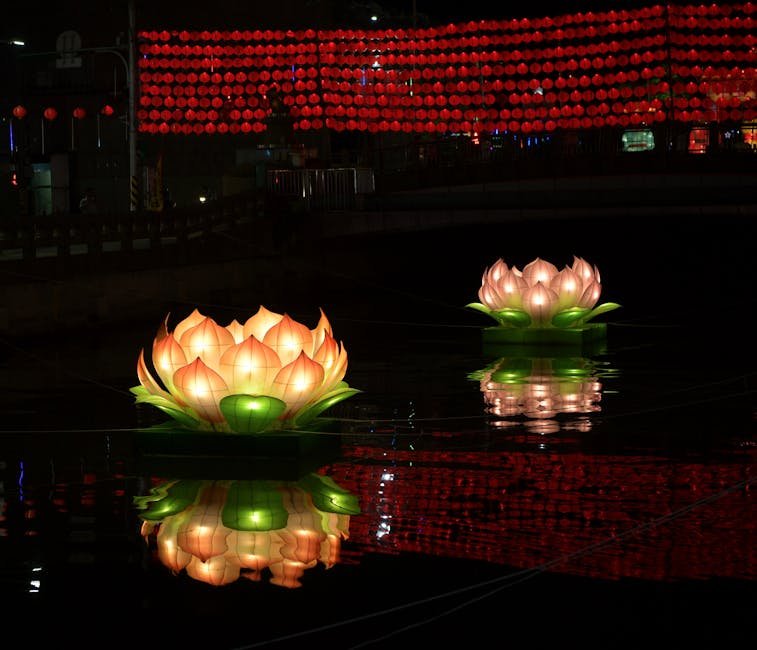
The Jogyesa lotus lantern display in central Seoul is free to walk through and genuinely beautiful at night. My younger daughter paid ₩3,000 to light her own lantern — she still talks about it.
Buddha’s Birthday in Korea — officially called Seokgatansinil (석가탄신일) or more commonly Bucheonim Osinnal (부처님오신날) — follows the lunar calendar. In 2026, it falls on Sunday, May 24 (with Monday, May 25 off). Most workers and school kids get a long weekend, and popular tourist spots will be extremely busy.
This isn’t just a religious observance tucked away inside temples. It’s a full-blown national cultural event. UNESCO added Yeondeunghoe to its list of Intangible Cultural Heritage in 2020, which honestly just confirmed what Koreans already knew — this is something special. Celebrations run for about two weeks leading up to the holiday, with the biggest lantern parade usually held on a Saturday a week or two before the actual date. In 2026, the festival ran May 16–17, with the main lantern parade on the evening of Saturday, May 16.
Even if you’re not Buddhist, this is 100% worth experiencing. Admission to most temple grounds is free on this day, lantern-making workshops pop up everywhere, and the entire atmosphere is warm and welcoming to foreigners.
Lotus Lantern Festival Seoul: The Yeondeunghoe Parade Guide
The centerpiece of Buddha’s Birthday in Korea is the Yeondeunghoe Lotus Lantern Festival, and the evening lantern parade through central Seoul is the event you absolutely cannot miss. The parade typically runs from Dongdaemun down through Jongno to Jogyesa Temple, starting around 7:00 PM. Hundreds of thousands of people line the streets — get there by 5:30 PM if you want a decent spot.
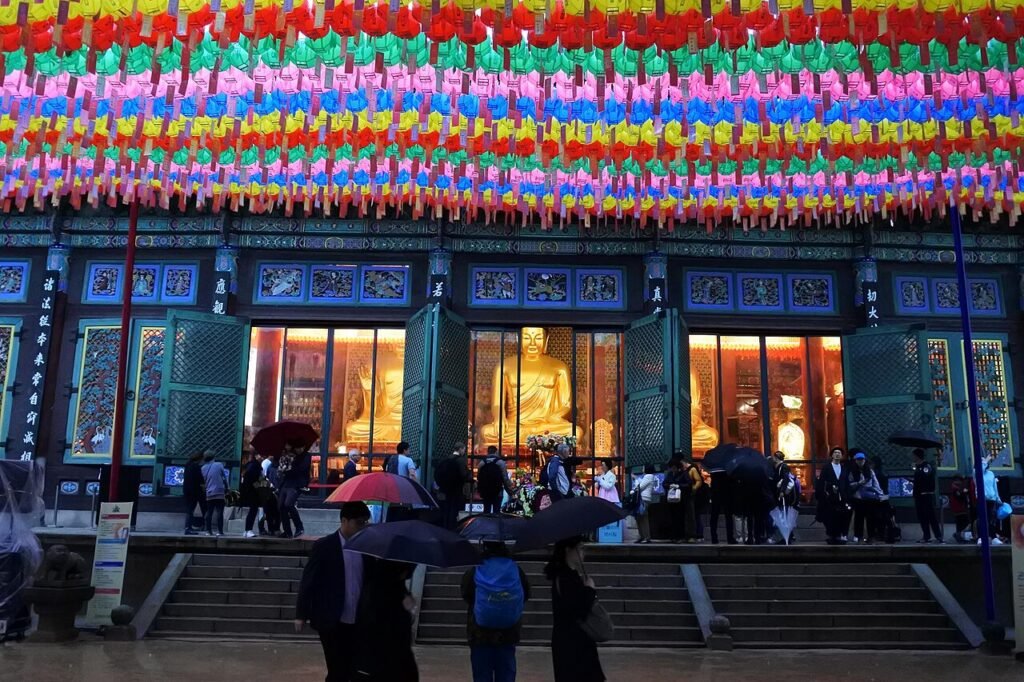
The parade floats are genuinely jaw-dropping. I’m talking massive illuminated lotus flowers, dragon boats made entirely of paper lanterns, groups carrying hand-held lanterns in perfect formation. My kid’s face the first time she saw it was worth every minute of the subway ride. Nearest subway stations are Jongno 3-ga (Line 1, 3, 5) and Anguk (Line 3). Exit and just follow the crowd — you won’t get lost.
The day before the parade, the Lantern Parade Cultural Festival at Dongdaemun Design Plaza (DDP) area usually features lantern exhibitions and interactive booths. Entry is free. Arrive hungry — street food vendors sell everything from hotteok to tteokbokki along the route, and prices are normal street food range (around ₩3,000–₩5,000 per item).
💡 Hellokoreaguide’s Tip:
Bring a small flashlight or use your phone torch when the parade ends — Jongno gets extremely dark as the lanterns move away and the crowd is dense. Also, download the Kakao Maps app before you go; Google Maps can be slow with Korean transit routing.
Jogyesa Temple & Other Seoul Buddhist Temples to Visit
Jogyesa Temple (조계사) in Insadong is the headquarters of the Jogye Order of Korean Buddhism and the absolute ground zero for Buddha’s Birthday celebrations in Seoul. In the weeks leading up to the holiday, the entire temple courtyard gets covered in tens of thousands of colorful lotus lanterns hanging from every tree and eave. It genuinely looks like something from a fantasy film at night.
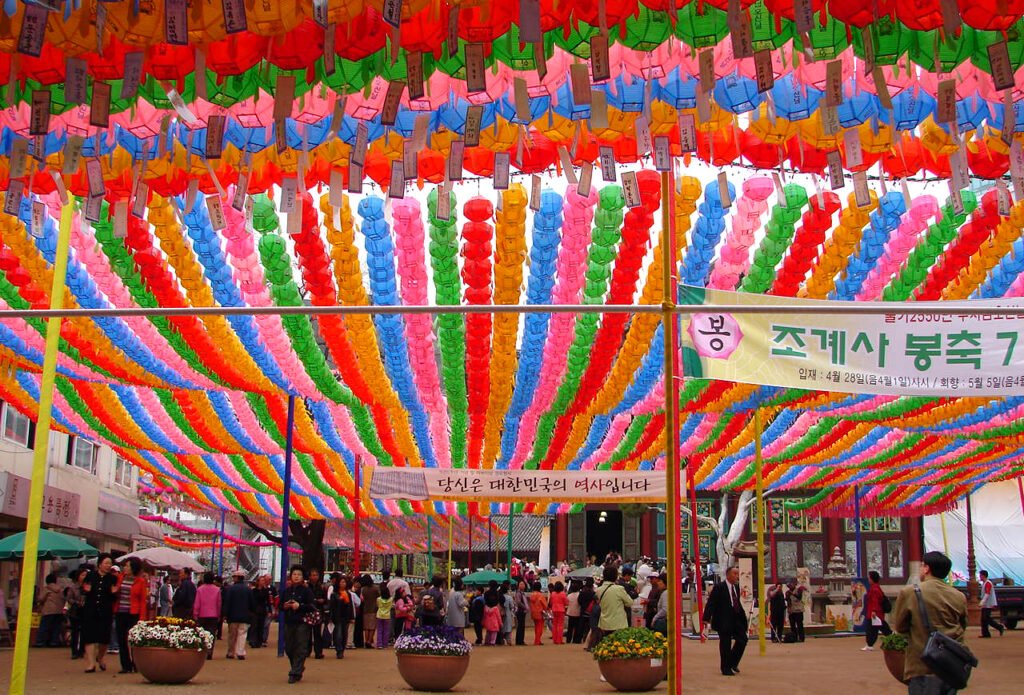
On the holiday itself, Jogyesa offers free lantern-making workshops (the line forms early — get there before 10:00 AM), a special ceremonial bathing of the baby Buddha statue, and free temple food (사찰음식). The temple food is vegetarian and surprisingly delicious — expect simple rice, kimchi, and various banchan. Entry to the grounds is always free.
Outside of Jogyesa, here are other Seoul temples worth visiting:
- Bongeunsa Temple (봉은사) in Gangnam — stunning contrast between modern skyscrapers and ancient halls, very photogenic
- Gilsangsa Temple (길상사) in Seongbuk-dong — quieter, very atmospheric, great if you want to escape the crowds
- Hwagyesa Temple (화계사) near Bukhansan — popular for temple stays, beautiful mountain setting
All of these temples are easily accessible by subway or bus. Bongeunsa is right next to COEX Mall (Bongeunsa Station on Line 9, or Samseong Station on Line 2).
Temple Stays: Overnight Experience at a Korean Buddhist Temple
If you want to go deeper than just watching the parade, a temple stay (템플스테이) is one of the most unique experiences you can have in Korea. The official Templestay program (templestay.com) runs government-supported overnight and day programs at over 100 Buddhist temples across the country. Costs typically run ₩70,000–₩130,000 per person for an overnight stay, which includes accommodation, meals, and guided programs like meditation, tea ceremony, and 108 bows.
As a Korean dad who works long hours in the chemical industry, I did my first temple stay relatively recently and I’ll be honest — that 4:00 AM wake-up bell is rough. But the morning meditation session watching the sun come up over a mountain temple courtyard? Completely worth it. My wife still talks about the temple food from Haeinsa.
For the Buddha’s Birthday period, spots fill up extremely fast — I’m talking months in advance. Book a few weeks ahead at templestay.com (available in English). Top picks for foreigners include:
- Haeinsa Temple (합천, South Gyeongsang) — home of the Tripitaka Koreana, UNESCO World Heritage
- Tongdosa Temple (양산, South Gyeongsang) — one of Korea’s three jewel temples, very authentic
- Myogaksa Temple (Seoul) — great for first-timers, English-speaking monks available
⚠️ Watch Out:
Temple stays have strict rules. No alcohol, no loud conversations after 9:00 PM, and you must cover your shoulders and knees inside the main halls. Some temples won’t allow children under 7. Always read the specific temple’s rules on their Templestay listing page before booking.
Practical Tips: What to Wear, Eat & Expect as a Foreigner
May in Korea is honestly one of the best times to visit weather-wise — expect temperatures around 18–24°C (64–75°F) during the day, dropping to maybe 12°C at night. Comfortable walking shoes are essential since you’ll be on your feet for hours during the parade. A light jacket for the evening is smart.
For the parade itself, wear comfortable, dark-colored clothing. You may get dripped on by candle wax from hand-held lanterns in the crowd (it’s happened to me). Avoid sandals if possible — Jongno sidewalks get crowded and feet get stepped on.
| Experience | Cost | Best For | Book Ahead? |
|---|---|---|---|
| Lantern Parade (Seoul) | Free | Everyone, families | No |
| Jogyesa Temple Visit | Free | Everyone | No |
| Lantern-Making Workshop | Free–₩10,000 | Kids, couples | No (arrive early) |
| Overnight Temple Stay | ₩70,000–₩130,000 | Couples, solo travelers | Yes — months ahead |
| Day Temple Stay Program | ₩30,000–₩50,000 | First-timers, families | Yes — weeks ahead |
One thing I always tell foreign friends: don’t be shy at the temples. Korean Buddhist monks and temple staff are genuinely welcoming to curious visitors of all backgrounds. You don’t need to be Buddhist to participate. Just be respectful — bow slightly when entering halls, remove shoes where indicated, and keep your voice low inside the main temple buildings. Taking photos outdoors is generally fine; inside the main prayer halls, look for posted signs.
Frequently Asked Questions
When is Buddha’s Birthday in Korea 2026?
Buddha’s Birthday in Korea 2026 falls on Sunday, May 24 (with Monday, May 25 off), following the lunar calendar. The main Lotus Lantern Festival parade in Seoul took place on Saturday, May 16, 2026.
Is the Lotus Lantern Festival in Seoul free to attend?
Yes, the main Yeondeunghoe Lotus Lantern Festival parade along Jongno in Seoul is free to watch. Temple visits on Buddha’s Birthday are also generally free. Some hands-on workshops and special programs may charge a small fee of ₩5,000–₩10,000, but the core festival experience costs nothing.
What should I wear to a Korean Buddhist temple on Buddha’s Birthday?
Dress respectfully — cover your shoulders and avoid shorts or short skirts inside temple buildings. Comfortable walking shoes are essential since you’ll be standing and walking for hours. Bring a light jacket for the evening as temperatures in Seoul in early May can drop to around 12°C after sunset.
As a Korean dad living just outside Seoul in Gyeonggi-do, I can tell you that Buddha’s Birthday 2026 is one of those rare occasions when the whole country feels genuinely joyful and open. Whether you spend the evening watching the lantern parade from Jongno with a cup of hotteok in your hand, or you wake up at 4:00 AM to meditate in a mountain temple, you’re going to come away with memories that no regular sightseeing tour can give you. Don’t overthink it. Just go.
Have you been to the Lotus Lantern Festival before, or is 2026 your first time? Drop your questions or stories in the comments below — I read every single one!
📚 You Might Also Like:
Festival reference: Korea Tourism Organization.
