
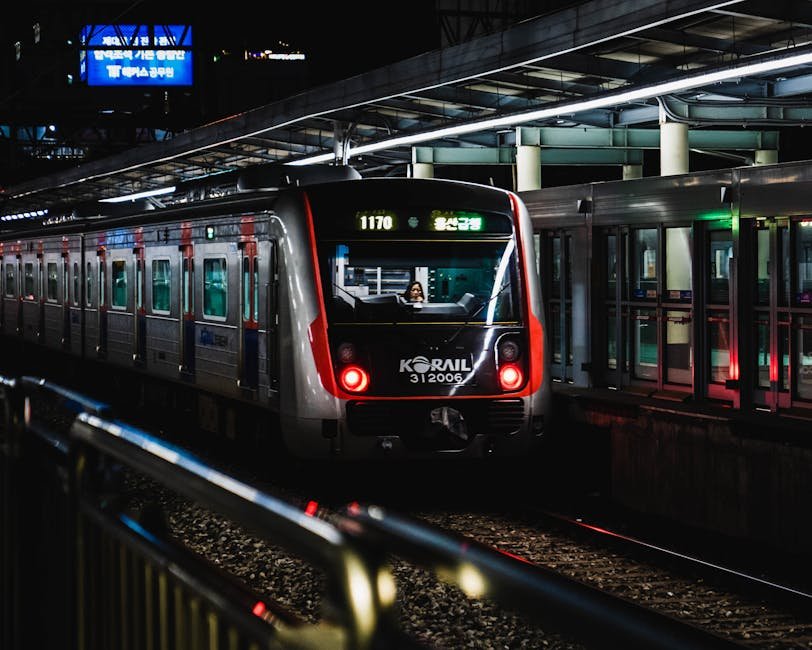
How to Use a T-money Card in Korea: The Essential 2026 Guide
If there’s one thing I tell every foreign friend before they land in Korea, it’s this: get a T-money card first, ask questions later.
As a Korean dad living just outside Seoul in Gyeonggi-do, I commute into the city almost every day — and I’ve watched countless tourists fumble with cash at the subway gate while the rest of us tap and go. A T-money card is the single small thing that makes getting around Korea feel effortless. In this 2026 guide I’ll walk you through exactly where to buy one, how to recharge it, where it works, and the little mistakes most visitors make in their first week.
📋 What’s Inside
What a T-money Card Is (and Why You Need One)
Top up T-money at any convenience store — minimum ₩1,000 per load. I keep ₩30,000 on mine and top up weekly. Losing an unregistered card means losing the balance permanently. Register it.
A T-money card is Korea’s rechargeable transport card — a small plastic card (or keyring, or phone sticker) that you tap on a reader to pay for public transport. Instead of buying a paper ticket every time, you load money onto the card once and tap your way through subways, buses, and even some taxis.
Here’s why it matters: Korea’s transfer system rewards you for using one. When you tap the same T-money card between a bus and the subway within 30 minutes, you get a discounted or even free transfer. Pay with cash and you lose that benefit entirely. Over a week of sightseeing, that’s real money saved.
💡 Local Tip: Most tourists miss this — the card itself costs a small non-refundable fee (around 2,500–4,000 won), but that’s separate from your travel balance. Think of it like buying the wallet, then putting cash inside.
Where to Buy a T-money Card
You can pick one up almost anywhere, which is part of the beauty. The most common spots are convenience stores — GS25, CU, 7-Eleven, and Emart24 — that you’ll see on practically every corner. Just walk in and say “T-money card, please.” You can also buy them from vending machines inside subway stations.
At the airport, both Incheon and Gimpo have convenience stores and information desks selling them right after arrivals. I always tell visiting colleagues to grab one before they even leave the airport, so the train into the city is their very first tap.
How to Recharge Your T-money Card
Recharging (Koreans say “charging”) your T-money card takes about ten seconds once you know the routine. The easiest method is the recharge machines in every subway station: select English, insert cash, choose the amount, and tap your card on the pad. Note that most station machines accept cash only, so keep some bills handy.
Convenience stores are the other go-to. Hand your card to the cashier, say how much you want to add, and they’ll top it up — and unlike the machines, many stores let you pay the recharge with a card. I usually load 10,000–20,000 won at a time so I’m not constantly refilling.
Where You Can Actually Use It
This is where a T-money card quietly becomes your best friend. It’s far more than a subway pass.
| Where | Works? | Notes |
|---|---|---|
| Subway (Seoul, Busan, etc.) | ✅ Yes | Nationwide in major cities |
| City & intercity buses | ✅ Yes | Tap on entry and exit |
| Taxis | ✅ Most | Look for the T-money sticker |
| Convenience stores | ✅ Yes | Pay for snacks with leftover balance |
| Lockers & some vending | ✅ Often | Handy at stations |
On buses, remember to tap both when you board and when you get off — that’s how the system calculates your fare and keeps your free transfers. Forget the exit tap and you may be charged the maximum fare next time.
T-money vs Other Transport Cards
You’ll hear about a few different cards. Honestly, for most visitors the standard T-money card is all you need, but here’s how they compare.
| Card | Best For | Refundable Balance? |
|---|---|---|
| T-money | Everyone — the default | Yes (small fee) |
| Cashbee | Same uses, different brand | Yes |
| Tourist “Korea Tour Card” | Short trips + discounts | Yes |
⚠️ Watch Out: You can refund your leftover balance at convenience stores (usually up to 20,000 won) before you fly home, but the initial card fee is non-refundable. Don’t recharge a huge amount on your last day.
Tips Only Locals Know
A few things I’ve learned after years of daily commuting. First, you can buy beautifully designed character T-money cards (think popular K-pop or cartoon editions) — they make great cheap souvenirs and work exactly the same. Second, if you have a Korean phone or certain banking apps, you can even load T-money onto your phone and skip the card entirely.
Finally, keep your card somewhere easy to reach. The gates move fast, and there’s nothing more Korean than the smooth, unbroken rhythm of commuters tapping through at rush hour. Once you’re part of that flow, you’ll feel like you actually live here.
Common Questions
How much does a T-money card cost?
A T-money card costs a one-time, non-refundable fee of roughly 2,500–4,000 won for the card itself. The travel balance you load on top is completely separate, and you can refund most unused balance before leaving Korea.
Can I use one T-money card for multiple people?
On buses you can tap one card for several passengers by telling the driver the number of people, but on the subway each person generally needs their own tap. For a family, it’s simplest to buy one card per person.
Does a T-money card work outside Seoul?
Yes. A T-money card works on public transport in most major Korean cities including Busan, Incheon, Daegu, and Daejeon, as well as intercity buses, making it useful for travel well beyond Seoul.
Final Thoughts from a Korean Local
Living here my whole life, I can honestly say the T-money card is the most quietly useful 4,000 won you’ll spend in Korea. It removes the daily friction of cash, unlocks transfer discounts, and lets you move through the country the way locals do. Grab one at the airport, load a little money, and you’re ready. If this helped, drop a question in the comments — I read every one.
📚 Related reads:
Official fare info: Korea Tourism Organization.
