
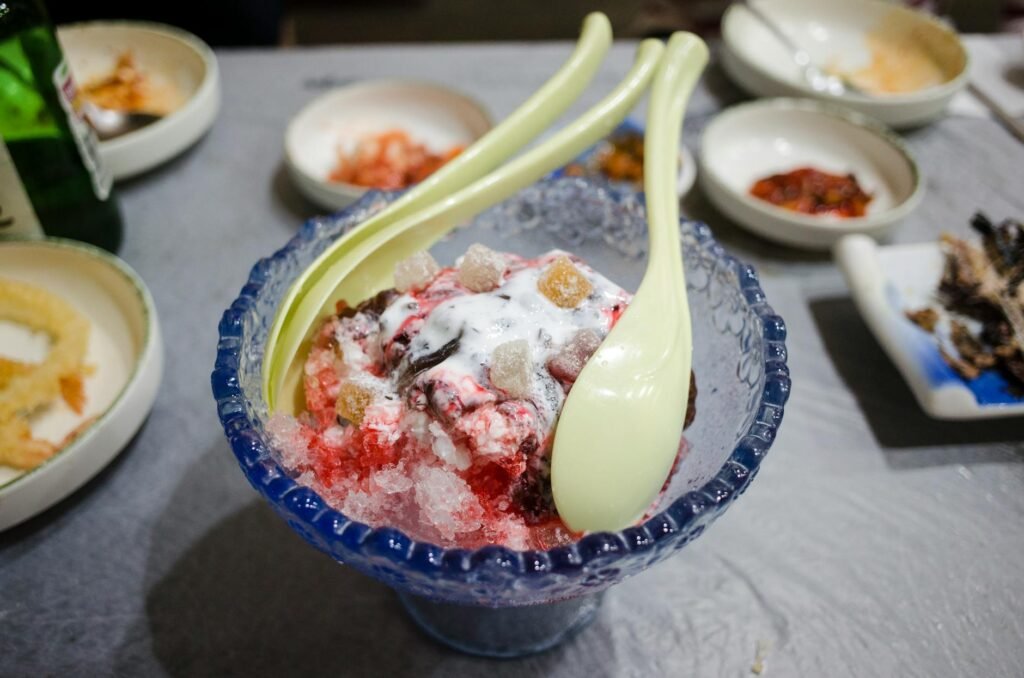
Korean Bingsu Guide 2026: Best Flavors & Where to Try It
📋 Quick Navigation
Every June, something shifts across Seoul. The bingsu shops — small pastel-colored cafes that stayed shuttered all winter — flip their signs to “open,” and the queues start forming before noon. I have been eating korean bingsu my entire life, growing up in Gyeonggi Province, and no matter how many summers pass, that first bowl of the season still feels like a reward. If you have been curious about this iconic Korean dessert, this Korean bingsu guide 2026 covers everything you need: the best flavors trending right now, where to go in Seoul, and how to make it at home without special equipment.
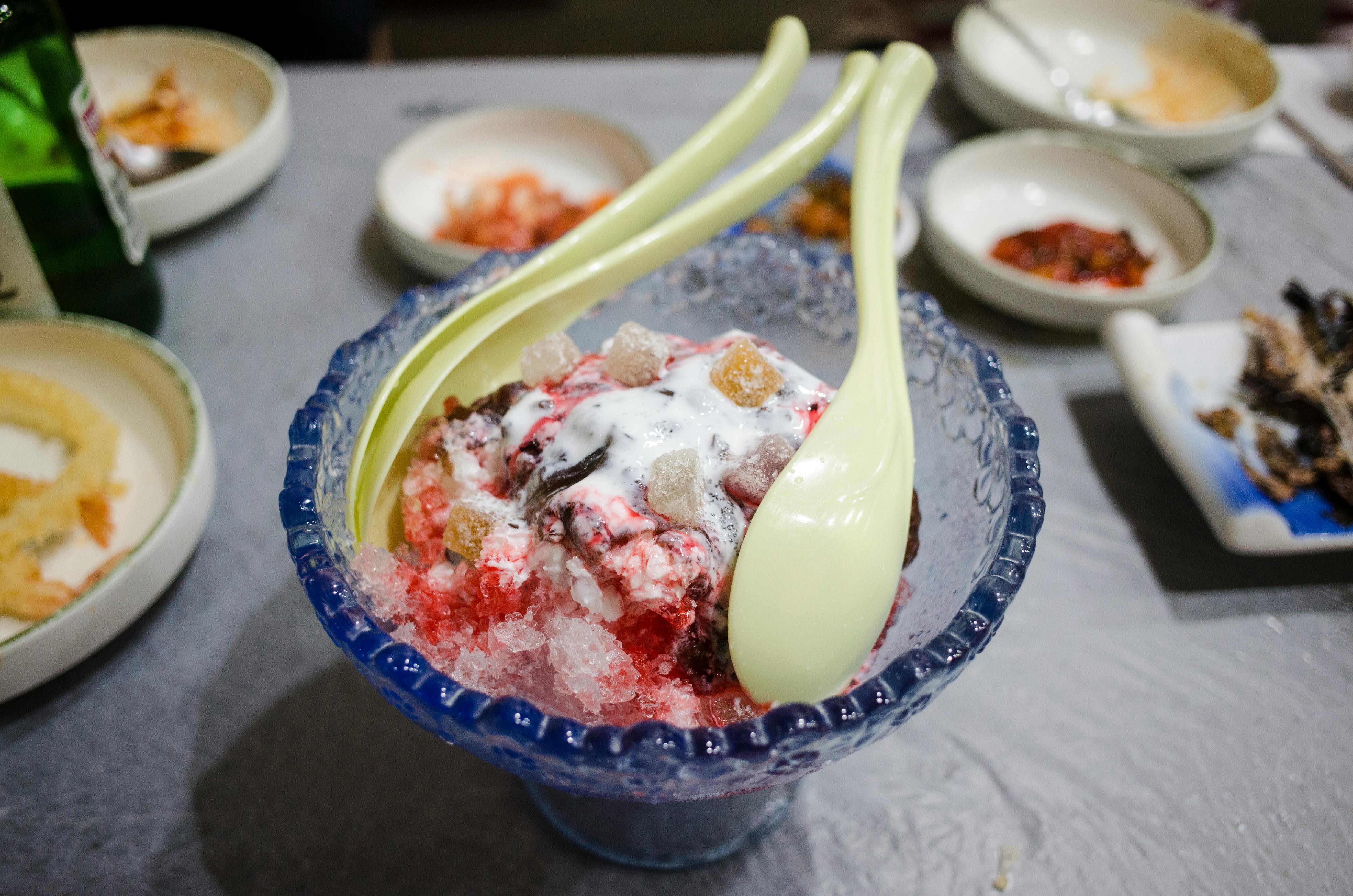
What Is Korean Bingsu? A Real Introduction
At its core, korean bingsu (빙수) is finely shaved ice topped with sweetened ingredients. But calling it shaved ice undersells it completely. Unlike the crunchy slushy ice you encounter at a county fair, Korean bingsu uses milk-based ice — frozen blocks of sweetened condensed milk shaved into paper-thin flakes that dissolve the moment they touch your tongue. The texture is closer to fresh snow than ice.
The history goes back to the Joseon Dynasty, when royalty ate ice shaved from frozen rivers mixed with honey and seasonal fruit. The modern version we know developed through the 20th century, and today bingsu is one of the most photographed foods Korea produces. The hashtag #bingsu has been surging across Instagram every summer without fail — and for good reason. There is nothing else that looks or tastes quite like it.
What separates korean bingsu from Japanese kakigori or Taiwanese shaved ice is the creaminess of the base and the architecture of the toppings. A proper bingsu bowl is layered: ice first, then sweet azuki red bean paste (pat, 팥) in the center, then fruit or rice cakes on top, finished with a drizzle of condensed milk. It is almost sculptural.
Best Korean Bingsu Flavors to Try in 2026
The flavor lineup has expanded dramatically in recent years. Here is what is worth ordering this summer, from the classics to the 2026 trends:
- Pat Bingsu (팥빙수) — The original. Sweetened azuki red bean paste over milk ice, sometimes layered with chewy rice cake pieces and pine nuts. This is what Korean grandmothers grew up eating. Simple and deeply satisfying.
- Strawberry Bingsu (딸기빙수) — The most popular with international visitors. Korean strawberries are noticeably sweeter than what you find in most countries, and a good strawberry bingsu uses fresh whole berries over milk ice. Not jam. Not syrup. Real fruit.
- Injeolmi Bingsu (인절미빙수) — My personal favorite. Topped with injeolmi, which is rice cake dusted in toasted soybean powder (konggaru). Nutty, chewy, and distinctly Korean. Not as Instagram-flashy as strawberry, but the flavor is unmatched.
- Matcha Bingsu (말차빙수) — Strong ceremonial-grade matcha ice paired with sweet red bean and soft mochi balls. Popular in Insadong tea houses. A good balance of bitter and sweet.
- Mango Bingsu (망고빙수) — Influenced by Southeast Asian dessert culture and now fully embedded in Korean cafe menus. Fresh mango, mango sorbet, sometimes a scoop of mango soft-serve on top. Best for people who prefer fruity over creamy.
- Cheese Bingsu (치즈빙수) — The 2026 trend. Whipped cream cheese foam over milk ice, drizzled with honey or berry compote. It sounds unusual. It is genuinely excellent. Every food influencer account in Korea has posted this in the last few months.
Where to Find the Best Korean Bingsu in Seoul
You do not need to travel far in Seoul to find excellent korean bingsu, but some neighborhoods do it better than others.
Insadong and Bukchon: Traditional bingsu territory. The shops here serve classic versions — pat bingsu, injeolmi bingsu, minimal fuss, maximum authenticity. If you are already walking around Gyeongbokgung (easily reachable if you have a T-money card loaded and ready), duck into one of the small shops on Insadong-gil. Lines move quickly and prices are fair, usually 8,000 to 12,000 KRW.
Hongdae: Trendy bingsu for the social media crowd. This is where cheese bingsu and experimental flavor combinations appear first. Expect higher prices — 15,000 to 25,000 KRW — but portions are enormous. Two people can comfortably share one bowl, which is actually how Koreans typically eat it.
Mangwon and Mapo: The local neighborhood choice. Less tourist markup, more regulars. You will find shops that have served the same recipes for 20 or 30 years sitting next to new-wave cafes doing creative fusion versions. This is where I take friends who want to eat the way Seoul residents actually eat.
Han River Parks: Several vendors near Yeouido and Ttukseom stations sell bingsu in summer. Quality is not bad, and it is perfectly convenient if you are already spending a relaxed Sunday afternoon at the Han River the way most Seoulites do when the weather heats up.
For the widest seasonal selection, check Korea’s summer festival lineup for 2026 — many outdoor events bring specialty bingsu vendors with regional flavors you cannot find in ordinary cafes.
How to Make Korean Bingsu at Home
Making korean bingsu at home is more doable than most people expect. You do not need a dedicated bingsu machine — a standard blender with a smoothie or ice-crush setting works well enough for home portions.
Basic milk ice base:
- Mix 400ml whole milk with 2 tablespoons of sugar and 1 tablespoon of sweetened condensed milk
- Pour the mixture into a large zip-lock bag, seal flat, and freeze overnight (minimum 8 hours)
- Break into fist-sized chunks and process in a blender in short pulses until fluffy and snow-like
- Work fast — it melts quickly in warm weather
Toppings to prepare in advance:
- Canned sweetened azuki red beans (available at any Korean supermarket globally)
- Small pieces of mochi or tteok from the frozen section
- Sweetened condensed milk for drizzling over the top
- Fresh seasonal fruit — strawberries in spring, mango or melon in summer
Layer the ice base in a bowl, spoon red bean paste into the center, pile fruit on top, drizzle condensed milk, and serve immediately. The whole thing should be eaten within 10 to 15 minutes before the texture deteriorates.
Korean Bingsu Tips You Need to Know Before You Order
A few things that will save you from common tourist mistakes:
- Bingsu is built for sharing. Most portions are sized for two people. Ordering one per person is how you end up with half a melted bowl and a stomachache. One bowl, two spoons, always.
- Eat it fast. Korean bingsu has a 10 to 15 minute window before the texture degrades significantly. Spend one minute on the photo, the rest on eating.
- Go on weekday afternoons. The 2 to 4 PM slot has the shortest queues. Weekend afternoons at popular spots mean 20 to 40 minute waits.
- Korean convenience stores stock bingsu supplies. CU and GS25 carry canned sweetened red beans and even pre-portioned bingsu kits during summer if you are self-catering.
- Dairy allergy or vegan? Fruit-based shaved ice versions exist at some cafes. You need to ask specifically — the Korean word is 비건 (bi-geon).
For comprehensive food tourism information across Korea’s regions and upcoming seasonal events, the Korea Tourism Organization maintains an English-language guide worth bookmarking before your trip.
Frequently Asked Questions
What is the best korean bingsu flavor for first-timers?
The best korean bingsu for first-timers is strawberry bingsu — it is approachable, visually stunning, and uses Korean strawberries that are noticeably sweeter than imported varieties. If you want something more traditionally Korean, try injeolmi bingsu, which uses toasted soybean powder rice cake for a nuttier, more complex flavor that most foreigners find surprising and enjoyable.
How much does bingsu cost in Seoul in 2026?
Korean bingsu costs between 8,000 KRW and 30,000 KRW in Seoul in 2026, depending on location and ingredients. Traditional neighborhood shops are on the lower end. Trendy cafes in Hongdae or dessert counters inside department stores charge more, but portions are usually large enough for two people to share comfortably.
Is bingsu available year-round in Korea?
Bingsu is primarily a summer dessert in Korea, with most dedicated shops open from May through September. However, larger cafes and department store dessert counters often serve it year-round. Winter bingsu has become a trend at some Seoul cafes, typically using seasonal toppings like yuzu, persimmon, or warm sweet potato.
