
Korean Dining Etiquette: 7 Honest Rules Tourists Break (2026)
Korean dining has a few unwritten rules. As a local, here are the Korean dining habits tourists break most — and how to handle the table politely.
Most tourists walk into a Korean restaurant and immediately make the same five mistakes — and spend the whole meal confused about why the service feels off, the side dishes keep appearing, and nobody brings the check.
Korean dining has its own unspoken rulebook. Nobody hands it to you at the door. And honestly, most Koreans won’t tell you because they assume you already know — or they’re too polite to say. As a Korean dad living just outside Seoul, I can tell you — I’ve watched countless tourists struggle with things that locals handle without thinking. Here are 7 rules that will transform your Korean restaurant experience from awkward to natural. Real talk, not a tourism brochure.
📋 On This Page
Korean dining: The “Call, Don’t Wait” Rule That Changes Everything
The chopstick-standing rule exists because it resembles incense burned for the dead — considered genuinely bad luck at a meal table. My wife still winces when she sees it at a restaurant.
Walk into a Korean restaurant and you’ll notice something immediately: the staff aren’t hovering. No server comes over every five minutes to check if everything is okay. Foreigners often think the service is bad. It’s not. It’s just built on a completely different system.
Korean restaurants operate on a call-based model. You flag the staff when you need something. There’s usually a buzzer button on the table — press it once. Or say “저기요” (jeo-gi-yo, roughly “excuse me”) in a clear voice. Staff respond immediately. This is genuinely better than Western-style hover service — you eat in peace and call only when ready.
After 13+ years living here, here’s my honest take: foreigners who don’t know this rule end up sitting there hungry for 20 minutes with an empty water glass, quietly wondering why nobody cares. Learn this one rule and your entire restaurant experience in Korea improves overnight. Also — nobody tips here. The price you see on the menu is the price you pay. Attempting to tip can actually create an awkward moment at smaller family-run spots.
The Korea Tourism Organization notes Korean dining culture has deep roots in communal eating traditions, which shapes every part of the restaurant experience.
💡 A Tip From a Local: Find the buzzer button as soon as you sit down — usually a small rectangular button near the napkin holder or condiment tray. One press is enough. Don’t press it repeatedly or staff will think there’s an emergency.
Banchan — Free Refills, But There Are Unspoken Rules
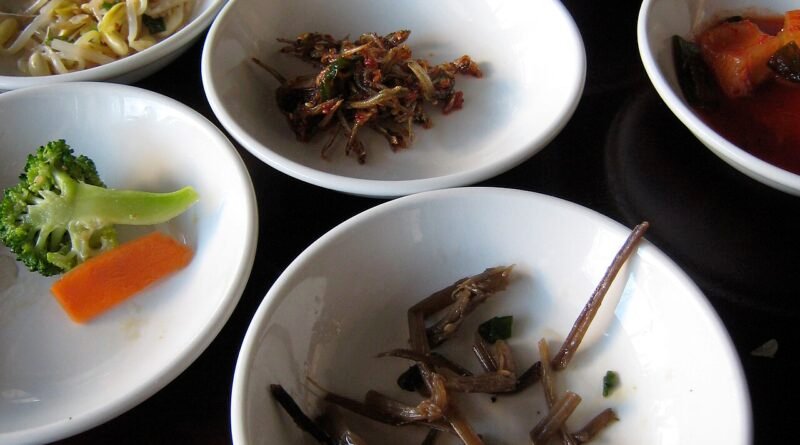
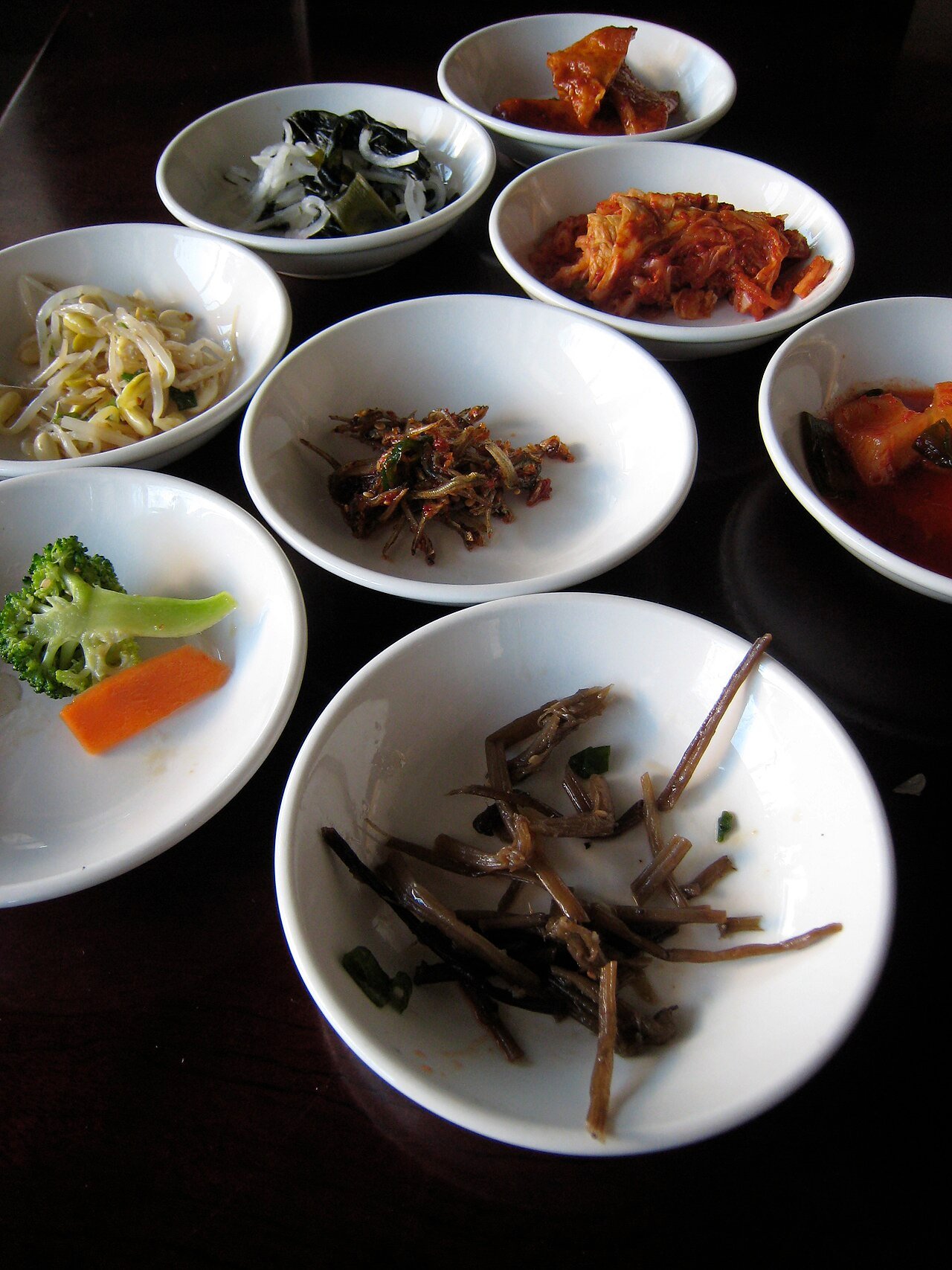
Banchan — those small side dishes that arrive automatically with your meal — might be the best thing about Korean dining. Kimchi, seasoned spinach (sigeumchi namul), bean sprouts, fish cakes, pickled radish, stir-fried anchovies. They arrive before your main dish, they’re included in the price, and yes, most places refill them for free. Just ask.
The catch: you don’t pay separately for banchan, so restaurants expect you not to waste it. The culture is to take small amounts, eat them, and ask for more if you want. Don’t pile your individual bowl with every banchan at once. Take from the shared dishes to your own plate or bowl in small amounts.
Honestly, this is one of those things Koreans never explain to foreigners: the banchan dishes on the table are shared by the whole group. Use the serving spoons provided, or flip your chopsticks to use the clean end when taking from shared dishes. High-end restaurants care about this more than casual spots — but it’s always good form.
A typical Korean set meal with banchan runs ₩8,000–₩15,000 for a simple lunch set (dosirak or jjigae set) and ₩15,000–₩25,000 for a full sit-down dinner. The banchan is already factored into the price. Prices may vary — always check the official site or menu posted at the entrance.
⚠️ Heads Up: Some banchan dishes look similar but taste completely different. That pale yellow cube could be daikon radish (mild, sweet) or fermented tofu (very pungent). When in doubt, try a tiny piece first. The kimchi is almost always spicy — there’s rarely a mild version at standard Korean restaurants.
How Sharing Actually Works at a Korean Table
Korean meals are built around communal eating. Order a jjigae (stew) and it arrives in one big pot for the whole table. Order galbi or samgyeopsal (pork belly BBQ) and the group grills together over a central grill. This is not a culture of individual plates — it’s a culture of eating together from the same pot.
The big pot in the middle is for everyone. Use the ladle or large spoon provided to scoop portions into your individual bowl. Don’t drink directly from the communal pot (it happens, but it’s frowned upon). Rice comes individually. Soup typically comes individually. Main dishes and banchan are shared.
Most tourists get this completely wrong — here’s what actually happens: when someone older or more senior is at the table, you wait for them to pick up their chopsticks or spoon before starting. It takes three seconds and it matters enormously in Korean culture. At a restaurant with strangers, it’s less rigid — but with any Korean host, follow their lead and you’ll immediately earn respect.
Sharing also affects how you order. A single dish that looks small for one person is usually designed for two or three. Don’t over-order — Korean portions, especially combined with banchan, are much more generous than they appear.
| Dish | Average Cost | Best For | Rating |
|---|---|---|---|
| Samgyeopsal (pork belly BBQ) | ₩15,000–₩20,000/person | Groups of 2–4, evening meal | ⭐⭐⭐⭐⭐ |
| Doenjang jjigae set | ₩8,000–₩12,000 | Solo lunch, everyday dining | ⭐⭐⭐⭐⭐ |
| Bibimbap | ₩9,000–₩14,000 | First-timers, vegetarians | ⭐⭐⭐⭐ |
| Galbi (beef short ribs) | ₩25,000–₩45,000/person | Special occasions | ⭐⭐⭐⭐⭐ |
| Sundubu jjigae set | ₩9,000–₩13,000 | Spice lovers, winter | ⭐⭐⭐⭐⭐ |
Ordering Without Speaking Korean — What Actually Works in 2026
Good news: ordering in Korea in 2026 is genuinely easier than ever for foreigners. Most mid-range restaurants in Seoul and tourist areas now have picture menus, tablet-based ordering systems, or QR code menus with English translation. The technology has caught up faster than most guides acknowledge.
At smaller local spots — which are almost always the best ones — here’s what works every time: point at the menu item, hold up fingers for the quantity, and say “이거 주세요” (i-geo ju-se-yo = “this one, please”). That phrase alone handles 90% of ordering situations in Korea. No Korean language class required.
Tablet ordering kiosks are now standard at chain restaurants and many independents. Look for a language toggle button — usually a flag icon. Some displays switch to English, Japanese, or Chinese. If you’re confused, just pick something that looks good. Korean restaurants don’t do “wrong orders” badly — worst case, you discover a new favorite.
As a Korean dad living just outside Seoul, I can tell you — the smaller and more local the restaurant, the more likely the staff will simply smile and bring you what the table next to you ordered. Don’t stress it. Korean hospitality covers a lot of language gaps.
Paying the Bill: Why Splitting Is Rare (And What to Do Instead)
This surprises almost every Western visitor. In Korea, restaurant bills almost never get split at the table. Korean dining culture follows a “one person pays” tradition — typically the oldest, the host, or whoever extended the invitation. It’s not just social convention; it’s almost a point of personal pride to cover the group, with the expectation that others will reciprocate next time.
Don’t expect a server to run six separate credit card transactions. Most Korean restaurants won’t do this, and asking can create visible discomfort. For groups of foreign travelers: use Kakao Pay or Toss to settle among yourselves afterward, or simply rotate who pays across multiple meals. It becomes natural fast.
To pay, you walk to the cashier counter — most restaurants don’t bring the check to the table. When you’re ready, press the buzzer or catch staff attention and say “계산해 주세요” (gye-san-hae ju-se-yo = “bill please”), then head to the front. Cash is accepted everywhere. Card payment is universal. Samsung Pay and Apple Pay work at most modern restaurants. Kakao Pay QR codes are increasingly common.
This is the version I’d tell a friend. Not the tourist brochure version. Go to a neighborhood spot, learn where the buzzer is, and let the banchan keep coming.
Quick Answers
Is it rude to not finish your food in Korea?
Leaving food on your plate is generally acceptable in Korea — unlike some other Asian food cultures, it doesn’t signal disrespect to the cook. However, leaving large amounts of banchan untouched can seem wasteful, especially at smaller family-run restaurants. The better approach: take small portions and ask for refills rather than piling your plate up front. Finishing your rice bowl is appreciated but not strictly required.
Is water free at Korean restaurants?
Yes — water is free at virtually all Korean restaurants. Many places have self-serve water stations near the entrance (look for a dispenser on a low table or counter). Some sit-down restaurants bring water automatically; others expect you to help yourself. Barley tea (boricha) — a light, nutty, caffeine-free tea — is also commonly served free of charge and is the traditional table drink at many Korean restaurants.
How do I ask for less spicy food in a Korean restaurant?
Say “덜 맵게 해 주세요” (deol maep-ge hae ju-se-yo — “please make it less spicy”). Many restaurants, especially for dishes like tteokbokki or kimchi jjigae, can adjust the spice level on request. Some dishes, however, have the heat built into a pre-made base sauce and can’t easily be reduced. When unsure, ask before ordering. Showing the phrase on your phone screen works perfectly if pronunciation feels uncertain.
Do Korean restaurants have vegetarian or vegan options?
Vegetarian dining in Korea is improving but remains tricky. Traditional Korean cooking uses anchovy stock, fish sauce, and fermented shrimp paste in many dishes that look vegetable-based — including some kimchi. Buddhist temple food (사찰음식, sachal eumsik) is fully vegan and genuinely excellent. Look for temple food specialty restaurants in Seoul, Insadong, or near major Buddhist temples. The HappyCow app is useful for locating vetted vegetarian options near you.
Final Thoughts from a Korean Local
Korean dining isn’t complicated — it’s just different. Once you understand the call-button system, the shared banchan culture, and two or three key phrases, everything falls into place naturally. This is the version I’d tell a friend. Not the tourist brochure version. The real experience is warmer, louder, and more generous than any guide can fully capture. Skip the tourist-area franchise and find a neighborhood spot with hand-written menus and ajummas running the kitchen. Sit down, press the button, and let the banchan keep coming. You’ll leave full, happy, and already thinking about tomorrow’s meal. That’s Korea at its best.
Browse more local guides below — written from inside the experience, not outside it.
