
Korean BBQ Guide 2026: Best Honest Tips for Foreigners
If there is one thing I get asked almost every week by foreign visitors to Seoul, it is about the Korean BBQ guide — where to go, what to order, and most importantly, how not to accidentally embarrass yourself at the table. I work as a deputy director at a chemical company in Gyeonggi and regularly take international guests out for Korean BBQ. Even seasoned travellers feel a little lost the first time. So consider this your local friend giving you the full picture before you sit down.
📋 Quick Navigation
What Korean BBQ Actually Is
Korean BBQ tip that actually matters: let the most senior person at the table cut or handle the first piece of meat. Small gesture, noticed every time. My foreign colleague figured this out by accident.
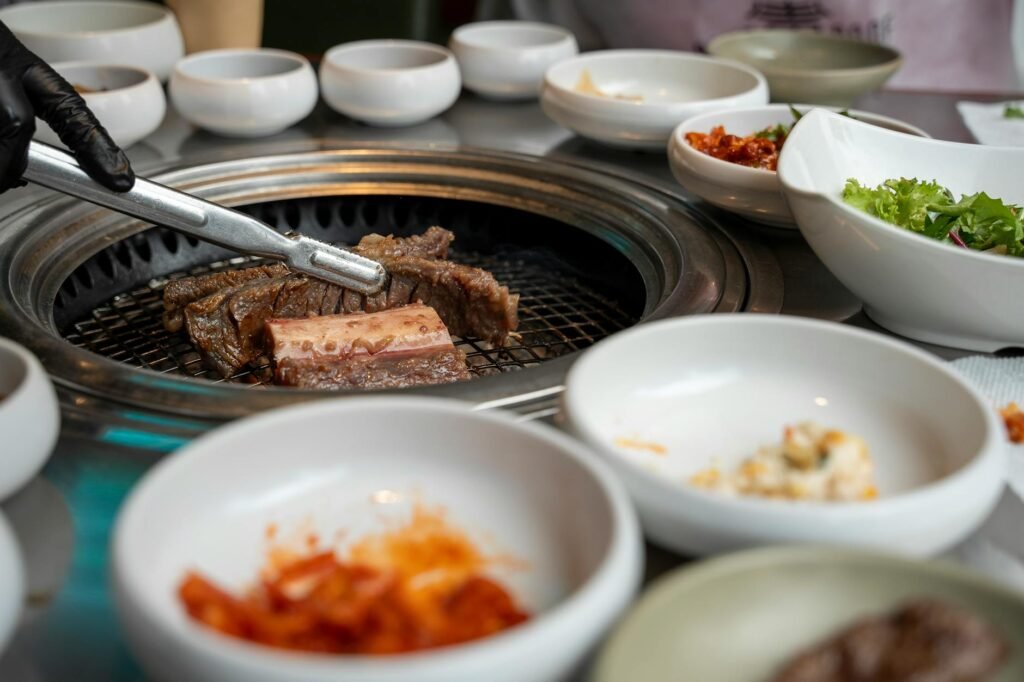
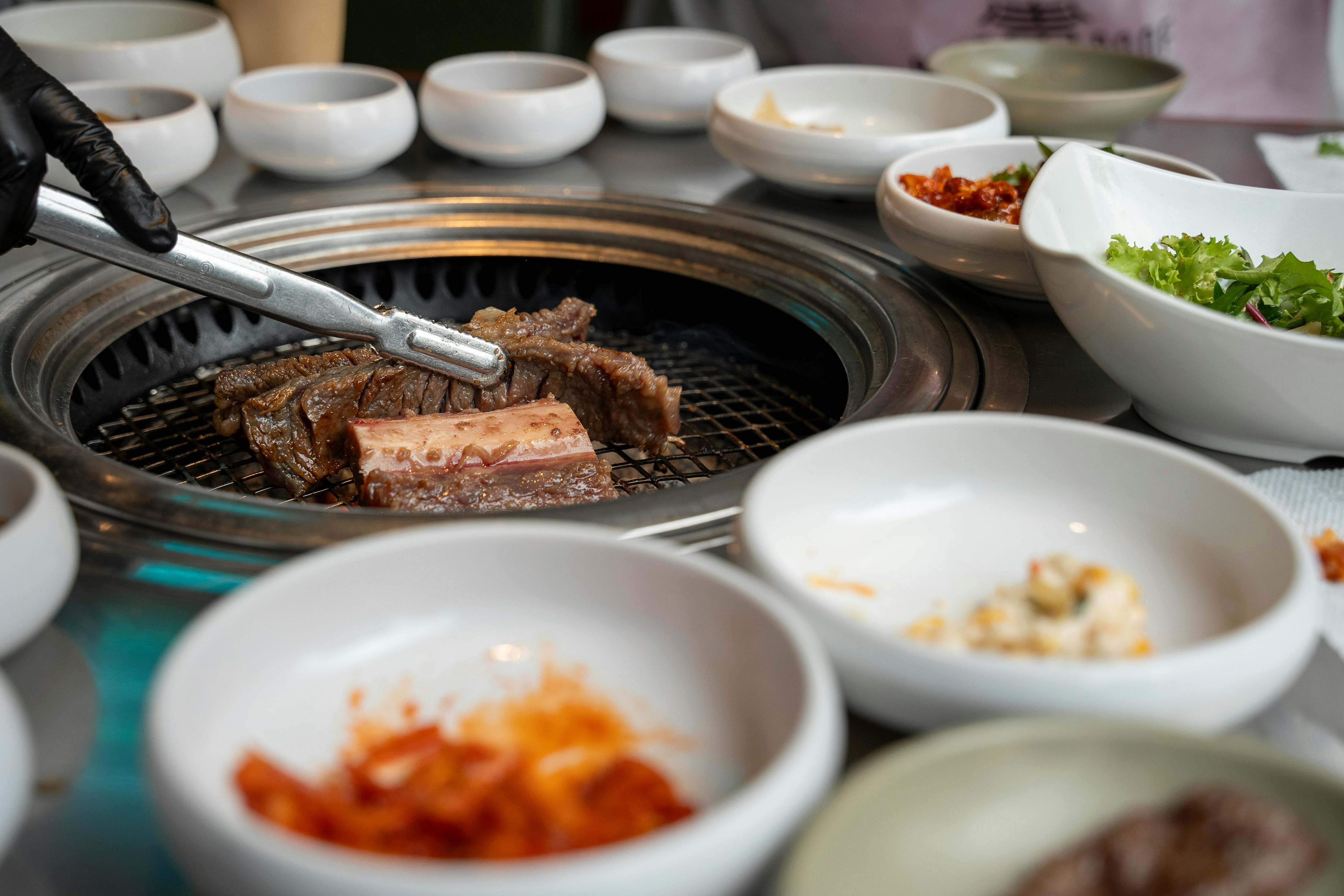
Korean BBQ — called gogi-gui (고기구이) locally — is not a restaurant category. It is a social ritual. You sit around a grill built into the centre of the table, order raw cuts of meat, and cook them yourself while small side dishes called banchan keep arriving automatically. The whole table eats together, pours drinks for each other, and the meal stretches for hours. Nobody is rushing you. This is probably the single biggest cultural shift for foreigners used to Western dining pacing.
Korean social media has been buzzing about specialty cuts this year — particularly hang jeong sal (pork jowl) and chadolbaegi (paper-thin beef brisket) — because these cuts deliver a completely different texture from the pork belly everyone defaults to. If you only try one new thing on your trip, make it one of these.
Essential Meats in This Korean BBQ Guide
Here is what I tell everyone before they order. Do not just point at samgyeopsal because it is the first word you recognise. The menu has a lot more to offer.
- Samgyeopsal (삼겹살) — Thick-cut pork belly. Rich, fatty, and forgiving for beginners. Order saeng samgyeopsal (fresh, not marinated) for the purest flavour.
- Hang jeong sal (항정살) — Pork jowl. Smaller pieces with intense chew and flavour. This cut is genuinely trending in Korean food culture right now and most foreigners have never heard of it.
- Chadolbaegi (차돌박이) — Ultra-thin beef brisket. It cooks in about 15 seconds on a screaming hot grill. The sizzle and the fat rendering in real time is half the experience.
- Galbi (갈비) — Marinated beef short ribs. Slightly sweet from the soy and pear marinade. This is the cut that converts people who claim they do not like Korean food.
- Moksal (목살) — Pork shoulder. Leaner than belly but still juicy. A good second order if you want more volume without doubling down on fat.
How to Grill Korean BBQ — Step by Step
At upscale places, a staff member will manage the grill for you. At neighbourhood spots, you are on your own. This is not complicated once you know what you are looking at.
- Check the heat first. Hold your hand near (not on) the grate. If it radiates strong heat immediately, it is ready. Lay the meat down without crowding.
- Do not keep flipping. Let the bottom sear. You will see the edges turn from pink to grey and the fat start rendering visibly. That is your signal to flip — usually 2 to 3 minutes per side for pork belly.
- Use the metal scissors. Every table has them. Once the meat is mostly cooked, pick it up with tongs and use the scissors to cut it into bite-sized pieces directly over the grill. This is not informal — this is the correct method.
- Build the lettuce wrap. Take a leaf of ssam (perilla or green lettuce), add a chunk of grilled meat, a small dab of ssamjang (a salty fermented paste), a raw garlic slice, and fold the whole thing into one large bite. Eat it in one go. Do not put it back down after biting it in half.
Korean BBQ Etiquette Locals Actually Care About
I have watched foreign guests unknowingly do several things that made the table quietly uncomfortable. This Korean BBQ guide would not be complete without covering these points honestly.
- Never pour your own drink. In Korean dining culture, you pour for others and they pour for you. Watch the glasses around you. If someone’s glass is empty, fill it. This applies to soju, beer, and even water.
- Use two hands when receiving anything from someone older — a glass, a dish, or even a piece of meat they put on your plate for you. One hand underneath, one hand on the side.
- The eldest eats first. Technically. In practice with foreign guests, Koreans will usually just say “let’s eat together” and start together. But the awareness matters.
- Do not take banchan directly from the shared dish into your mouth. Use your chopsticks to transfer a portion to your own plate first.
- Saying “jal meokgesseumnida” (잘 먹겠습니다) before you eat — roughly “I will eat well” — will get you genuine smiles from every Korean at the table.
For a deeper look at how Koreans drink and socialise at dinner, our Korean drinking culture and soju etiquette guide covers the full picture.
Best Korean BBQ Spots in Seoul 2026
These are places I have personally visited in the past twelve months, not entries copied from five-year-old travel articles.
- Palsaik Samgyeopsal (팔색삼겹살), Hongdae — Eight marinades on the same cut of pork belly. Yes, it is popular with tourists. It is also genuinely excellent and a great entry point for first-timers who want variety.
- Maple Tree House, Itaewon — Premium Hanwoo (Korean beef) in a refined setting. Go here once for a special occasion. The difference in quality from standard beef is real and noticeable.
- Wangbijip (왕비집), Mapo-gu — My personal neighbourhood restaurant. Charcoal grill, honest cuts, and every table packed with locals on weekday evenings. No English menu, but the staff are patient.
- Yeontabal (연탄불), Mangwon — Traditional briquette charcoal grill with that deep smoky flavour you cannot replicate on gas. Old school in the best way.
If you are planning a full evening in the neighbourhood, pairing late-night BBQ with a jjimjilbang session is a very Korean thing to do. Our Korean Jjimjilbang guide for foreigners will walk you through that experience.
How to Enjoy Korean BBQ on a Budget
Korean BBQ has a reputation for being expensive, but that perception is mostly built on premium beef and tourist-zone markup. Here is how Koreans actually manage it.
- Go at lunch. Many BBQ restaurants run lunch sets — meat, rice, soup, and unlimited banchan for ₩9,000–₩13,000 per person. This is genuinely one of the best-value meals in Seoul.
- Eat in residential neighbourhoods. Mapo, Dongdaemun, Nowon, and Dobong serve the same quality for noticeably less than Myeongdong. Korean locals do not eat BBQ in tourist areas.
- Order pork, not beef. A full pork belly dinner for two with soju and beer costs around ₩50,000–₩70,000 — one serving (about 200g) now averages over ₩20,000 in Seoul. Hanwoo beef restaurants start at double that per person.
- Aggressively refill the banchan. Side dishes are free and unlimited. Order another round of kimchi, kongnamul (bean sprouts), and japchae. These extend the meal significantly and they are delicious.
For getting around Seoul affordably to reach these neighbourhood spots, the T-money Card guide covers everything you need on transport. And for official restaurant area guides by region, the Korea Tourism Organization website has a well-maintained food map tool.
The most important thing I can tell you: do not rush Korean BBQ. Order slowly, grill slowly, and pour for the person next to you. The experience is the point — the food is just what makes the conversation happen.
Frequently Asked Questions
What should I order as a first-timer using a Korean BBQ guide?
The best starting point in any Korean BBQ guide for first-timers is samgyeopsal (pork belly) paired with one beef cut like chadolbaegi. This gives you a clear contrast between the two main proteins and lets you learn the grilling process without feeling overwhelmed. Add galbi if budget allows — the marinated ribs convert almost everyone.
How much does Korean BBQ cost per person in Seoul in 2026?
A neighbourhood pork BBQ dinner for two with drinks costs around ₩50,000–₩70,000 total (roughly $35–$50 USD). Premium Hanwoo beef restaurants run ₩60,000–₩120,000 per person. Lunch sets at many BBQ restaurants are available for ₩9,000–₩13,000 per person and are an excellent budget option.
Is it acceptable to ask the staff to grill for you at Korean BBQ restaurants?
Absolutely — at most mid-range and higher-end Korean BBQ restaurants, staff regularly come to the table to manage the grill. At casual local spots you are expected to grill yourself, but nobody will mind if you look uncertain. Watch the table next to you and follow their lead. Koreans are generally very patient with foreign diners learning the process.
