
Gyeongju Travel Guide 2026: Best Ancient Sites Worth Seeing
Every foreign visitor I have brought to Gyeongju has said the same thing on the way back to Seoul: “Why didn’t I know about this place?” I am a Korean local from the Gyeonggi area, and I have made this trip at least eight times over the years — for family outings, company retreats, and solo weekend trips when I needed to clear my head. This Gyeongju travel guide is the honest version, not the brochure version. Let me fix the gap between what travel sites tell you and what you actually experience when you show up.
📋 Jump to a Section
What Makes Gyeongju Different from Everywhere Else in Korea
Gyeongju in spring or autumn is the version worth the trip. I went once in July — the heat near the royal tombs is relentless. My daughters stayed near Cheomseongdae mostly for the shade.
Gyeongju is sometimes called “the museum without walls,” and that description is genuinely accurate. The entire city sits on top of the Silla Kingdom, which ruled this area for nearly a thousand years until 935 CE. Burial mounds the size of small hills rise in the middle of city parks. Ancient stone pagodas stand next to convenience stores. Teenagers sit on the steps of UNESCO-listed sites eating ice cream. It is the most unusual meeting of ancient and everyday ordinary that I have encountered anywhere in Korea.
What separates Gyeongju from, say, a standard temple visit in Seoul is that the historical density is overwhelming in the best sense. You cannot walk more than ten minutes in the city centre without bumping into something that is over a thousand years old. That combination — plus the relaxed pace, the excellent local food, and the manageable size — makes Gyeongju one of the places I recommend to every foreigner planning a Korea trip who has more than 48 hours to spare.
Gyeongju Travel Guide: Top UNESCO Sites You Cannot Skip
Gyeongju Historic Areas were designated a UNESCO World Heritage Site in 2000. Within that designation are several distinct clusters of sites. These are the ones that genuinely justify the trip.
Bulguksa Temple (불국사)
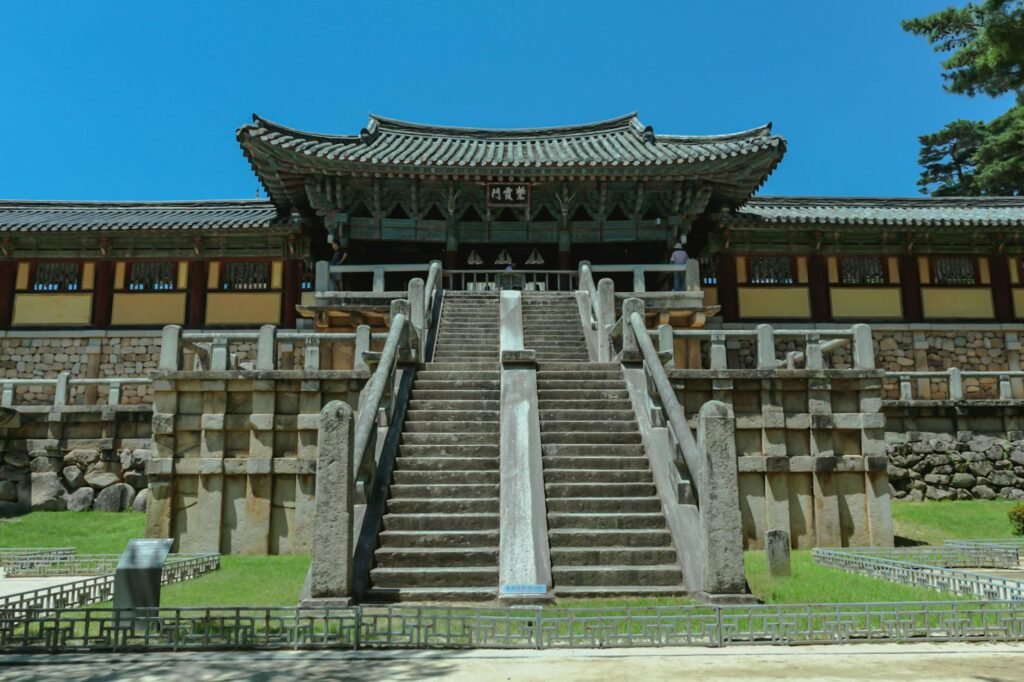
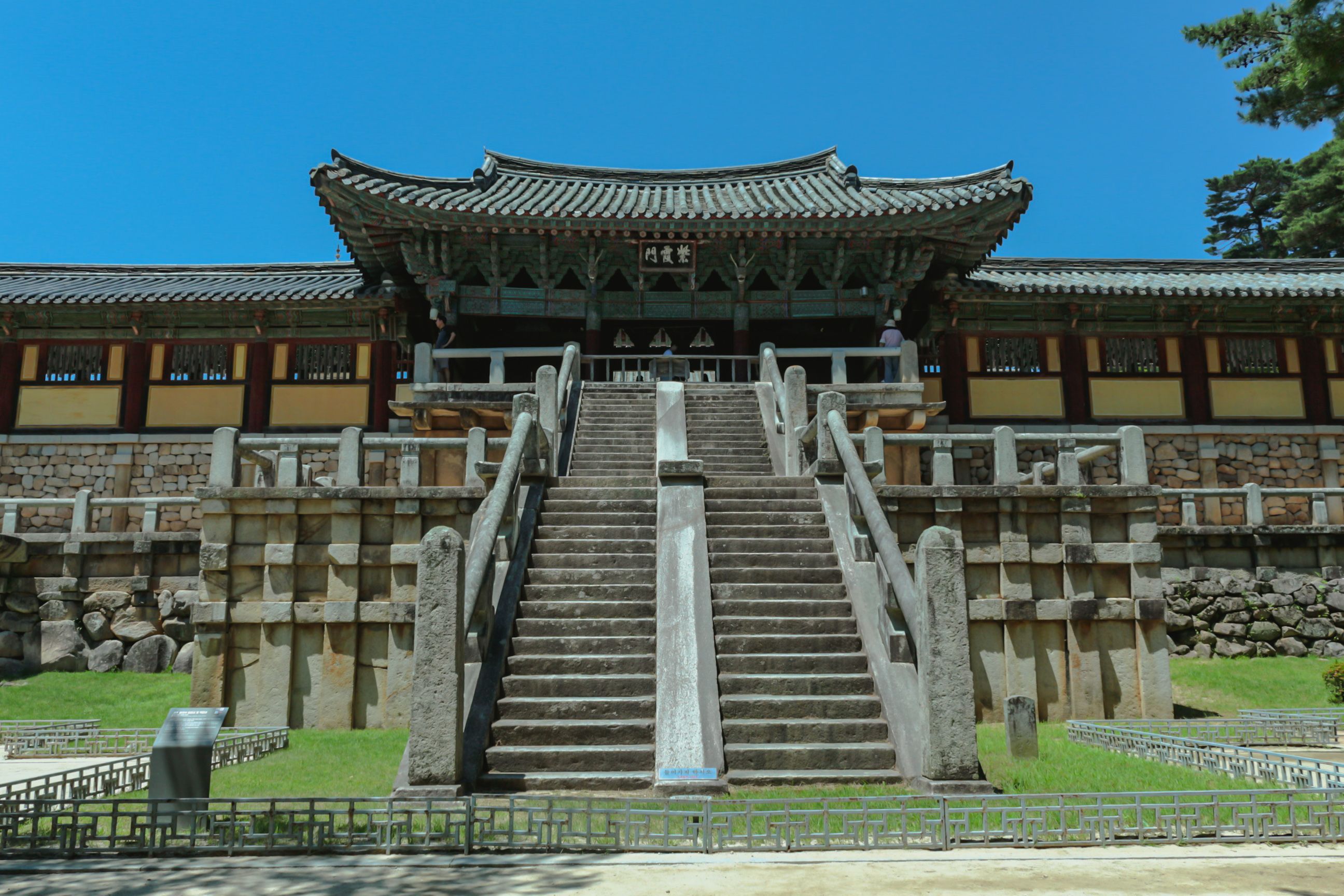
Built in 751 CE during the Silla Kingdom’s golden era. The stone staircases — the Cheongungyo (Bridge of Blue Clouds) and the Baegungyo (Bridge of White Clouds) — are among the most photographed things in Korea. The balance and precision of the stone architecture, constructed without mortar, is remarkable. Arrive early morning on weekdays. In 2026, the temple grounds are well-maintained and the cultural experience area has been expanded. Entry has been free since May 2023.
Seokguram Grotto (석굴암)
A 15-minute bus ride above Bulguksa. An 8th-century granite Buddha seated inside an artificial stone cave. The craftsmanship — the placement, the ratio, the carving quality — is on a level that genuinely surprises people who are not expecting it. The morning light through the entrance is the optimal viewing condition. Go here first before Bulguksa if you take the early bus up the mountain.
Daereungwon Tumuli Park (대릉원)
Twenty-three royal burial mounds of the Silla kings and queens, spread across a large park in the middle of the city. The scale is disorienting — these are not small grave markers, they are enormous earthen mounds, some 20-25 metres tall, covered in grass and surrounded by walking paths. One mound, Cheonmachong, is open for interior viewing. The golden artifacts found inside are now displayed at the Gyeongju National Museum. Park entry is free; the Cheonmachong tomb interior has a small fee.
Anapji Pond (동궁과 월지)
Formally called Donggung and Wolji, but most locals still call it Anapji. A royal pleasure garden and palace complex from the 7th century. The night reflection of the illuminated pavilions in the pond is one of those images that looks like a travel magazine fabrication until you are standing there watching it. Night admission is ₩3,000 and the experience is genuinely worth it.
Hidden Local Spots Most Tourists Miss
Standard travel coverage of Gyeongju does not usually get past Bulguksa and the tumuli park. Here is what the Korean weekend visitors actually do.
- Namsan Mountain (남산) — A wooded mountain just south of the city centre covered in stone Buddha carvings, pagodas, and temple foundations scattered across multiple hiking trails. Over 100 Buddhist artifacts are distributed throughout the mountain. Most foreign tourists completely skip this. Most Korean visitors think it is the highlight of the trip. A half-day hike covering the Samneung Valley trail is the most rewarding route.
- Gyeongju Bread (황남빵, Hwangnam-ppang) — A red bean paste bread unique to Gyeongju that has been made here since 1939. The original bakery in Hwangnam-dong has a permanent queue, but the bread is genuinely worth it — soft, not too sweet, and a very local thing to eat while walking between sites.
- Gyeongju National Museum at Night — The museum stays open into the evening on certain days — check the official site for current late-opening hours. The bronze bell outside the entrance — the Emile Bell, the largest in Korea — is visible from the courtyard at any time.
- Yangdong Folk Village (양동마을) — Another UNESCO site about 20 kilometres north of the city centre. An intact Joseon-era aristocratic village with roughly 150 traditional houses still occupied by descendants of the original families. Extremely quiet on weekdays. One of the most atmospheric places in Korea.
Best Time to Visit Gyeongju in 2026
Spring (March–May) and autumn (October–November) are the peak seasons for good reason — cherry blossoms around the Bomun Lake Resort in April and autumn foliage on Namsan Mountain in October are both exceptional. Summer (June–August) is hot and humid but workable, and accommodation prices are lower outside of the Chuseok holiday period.
June 2026 specifically: the weather is warm (24-29°C), there is moderate humidity, and the crowds are smaller than July-August. The Anapji night visit in early summer is particularly pleasant. Bring light rain gear — afternoon showers are common in June and do not typically last long.
Winter visits are underrated. December through February is cold but the sites are almost empty, the temples in the snow look extraordinary, and accommodation rates are at their lowest. Bulguksa in light snow is one of the most beautiful things I have seen in Korea.
How to Get to Gyeongju from Seoul in 2026
The KTX from Seoul Station to Singyeongju Station takes approximately 1 hour 50 minutes and costs around ₩44,000-₩60,000 depending on timing and seat class. Singyeongju Station sits well outside the city centre (allow 30–40 minutes) — take a local bus (lines 60, 61 from the station forecourt) or a taxi to reach the main sightseeing areas.
Alternatively, intercity express buses from Seoul’s Express Bus Terminal (강남고속버스터미널) to Gyeongju Bus Terminal take about 3.5 hours and cost around ₩20,000-₩25,000. The bus terminal sits more centrally within the city, so for budget travellers this is often the better option.
Once in Gyeongju, renting a bicycle is both practical and atmospheric — many of the main sites are spread across relatively flat ground. Bike rental is ₩5,000-₩10,000 per half day from several shops near the tumuli park. For Bulguksa, city buses 10 and 11 run from the downtown bus terminals (bus 700 comes from Singyeongju Station), and a separate bus climbs from Bulguksa up to Seokguram.
To plan your transit connections in Seoul before the trip, see our guide on the T-money Card which covers intercity bus and train terminal navigation. And for a contrasting day-trip option from Seoul, our Jeju Island summer travel guide covers the other major destination on most visitors’ lists.
Where to Eat and Stay in Gyeongju
Gyeongju has its own distinct regional cuisine. The must-eat dish is ssambap — a set meal with rice, multiple small dishes, and a large assortment of fresh leaves and vegetables for wrapping. The restaurants along the road toward Bulguksa serve this style and the portions are generous. Gyeongju also has a tradition of makgeolli (rice wine) brewing, and the local varieties are lighter and fruitier than Seoul versions.
For accommodation, the Bomun Tourist Complex on the eastern edge of the city offers lakeside hotels and resort facilities, suitable for travellers who want a comfortable base. For a more atmospheric stay, several traditional hanok guesthouses operate in the Hwangnam-dong area near the tumuli park — sleeping in a traditional Korean house within walking distance of the burial mounds is an experience genuinely unlike anything available in Seoul.
The Korea Tourism Organization website maintains an updated Gyeongju accommodation list and current admission prices for all major sites. Prices occasionally change with seasonal adjustments.
My honest recommendation after eight visits: spend two nights minimum. One day for the main UNESCO sites, one day for Namsan Mountain and the slower local pace. Gyeongju rewards people who are not rushing, and the travellers I have seen trying to do it in a single day always leave wishing they had stayed longer.
Questions People Ask Me
How many days does a Gyeongju travel guide recommend for a first visit?
Most Gyeongju travel guide recommendations suggest a minimum of two days. The first day covers the main UNESCO sites — Bulguksa, Seokguram, and Daereungwon — while the second day is better spent on Namsan Mountain and the slower local areas like Hwangnam-dong and the national museum. Travellers with a third day can reach Yangdong Folk Village and Anapji at leisure without feeling rushed.
Is Gyeongju worth visiting in summer 2026?
Yes — June in Gyeongju is warm but not yet at peak summer humidity, crowds are smaller than July and August, and the temple grounds and mountain trails are beautifully green. The main adjustment for summer visits is to plan outdoor hikes for early morning before the midday heat, and to save the Anapji night visit for the evening when temperatures drop. Accommodation rates are also more reasonable than during the spring cherry blossom peak.
Can I do a Gyeongju day trip from Seoul?
Technically yes — the KTX takes under two hours each way — but a day trip leaves very limited time on the ground after accounting for travel and transit within Gyeongju. You can cover Bulguksa and the tumuli park in one day if you start on an early KTX. However, most locals and experienced travellers strongly recommend at least one overnight stay to see Anapji at night and to avoid the fatigue of long return travel after a full walking day.
