
What to Eat at Gwangjang Market Seoul: Honest 2026 Guide
If you have been wondering what to eat at Gwangjang Market Seoul, I can give you a real answer. I have been coming here since I was a student, and now I bring my daughter on Saturday afternoons — she heads straight for the bindaetteok section without any prompting from me. Gwangjang Market (광장시장) is one of Korea’s oldest traditional markets, open since 1905, tucked into the Jongno district between Jongno 5-ga and Changgyeonggung-ro. It is loud, oily, smoky, and absolutely alive in a way that no food court or tourist attraction can replicate.
This guide is not about recreating what you saw on a documentary. It is about eating well, spending wisely, and not getting that look from the harabeoji at the corner stall because you ordered wrong. I will give you real prices as of June 2026, the exact stalls worth seeking out, and a few things that guidebooks consistently miss.
What Is Gwangjang Market and Why It Still Matters
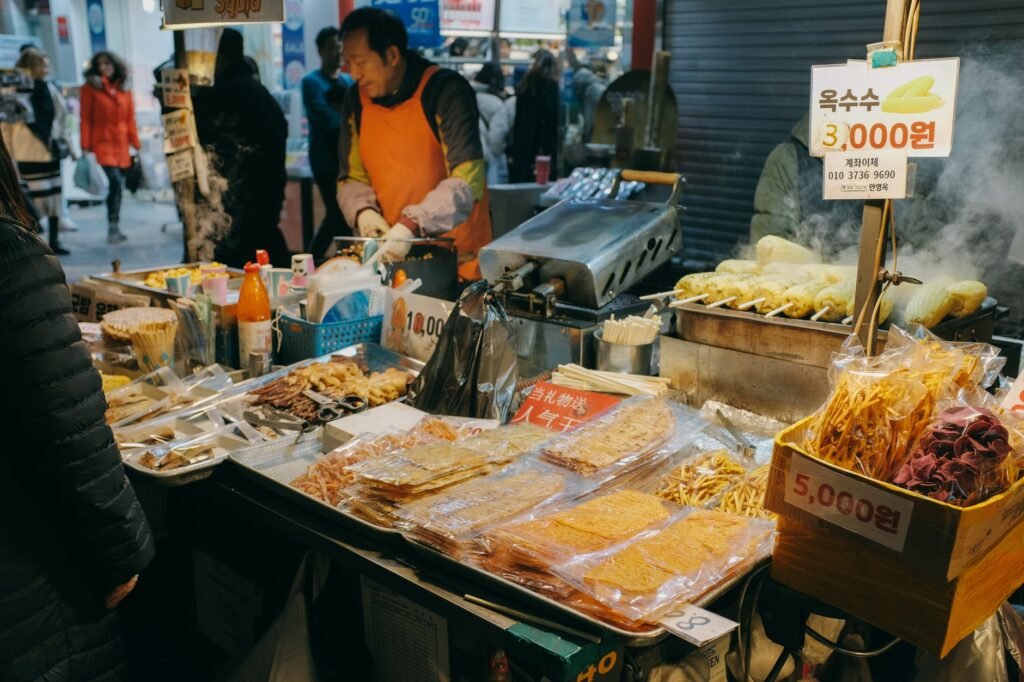
Gwangjang Market spans roughly 42,000 square meters across four city blocks in central Seoul. The market has two main sections: the fabric and vintage section — particularly popular with domestic shoppers hunting for pojagi wrapping cloth, hanbok fabric, and traditional embroidery — and the food hall, which is what most international visitors come for. The covered food alley is a long, narrow passage lined on both sides with stalls and shared low benches, and it is where you want to spend most of your time.
One thing I always remind first-time visitors: this is not a tourist food court. The ajummas running these stalls have been here for decades. Some have passed their spot to a daughter or daughter-in-law. The prices are low not because the quality is low, but because the overheads are low and the volume is enormous. Treat the vendors with genuine interest and you will be treated very well in return. Gwangjang does not cater to tourists — it simply tolerates them gracefully, which is a meaningful difference.
What to Eat at Gwangjang Market Seoul: The Essential Dishes
The market has dozens of vendors selling overlapping menus. Do not feel pressured to try everything on your first visit. Focus on two or three things, eat slowly, and come back another day. Here are the dishes that define the Gwangjang experience, in priority order for a first-timer who wants to eat at Gwangjang Market Seoul without any regrets.
Bindaetteok: The Undisputed King
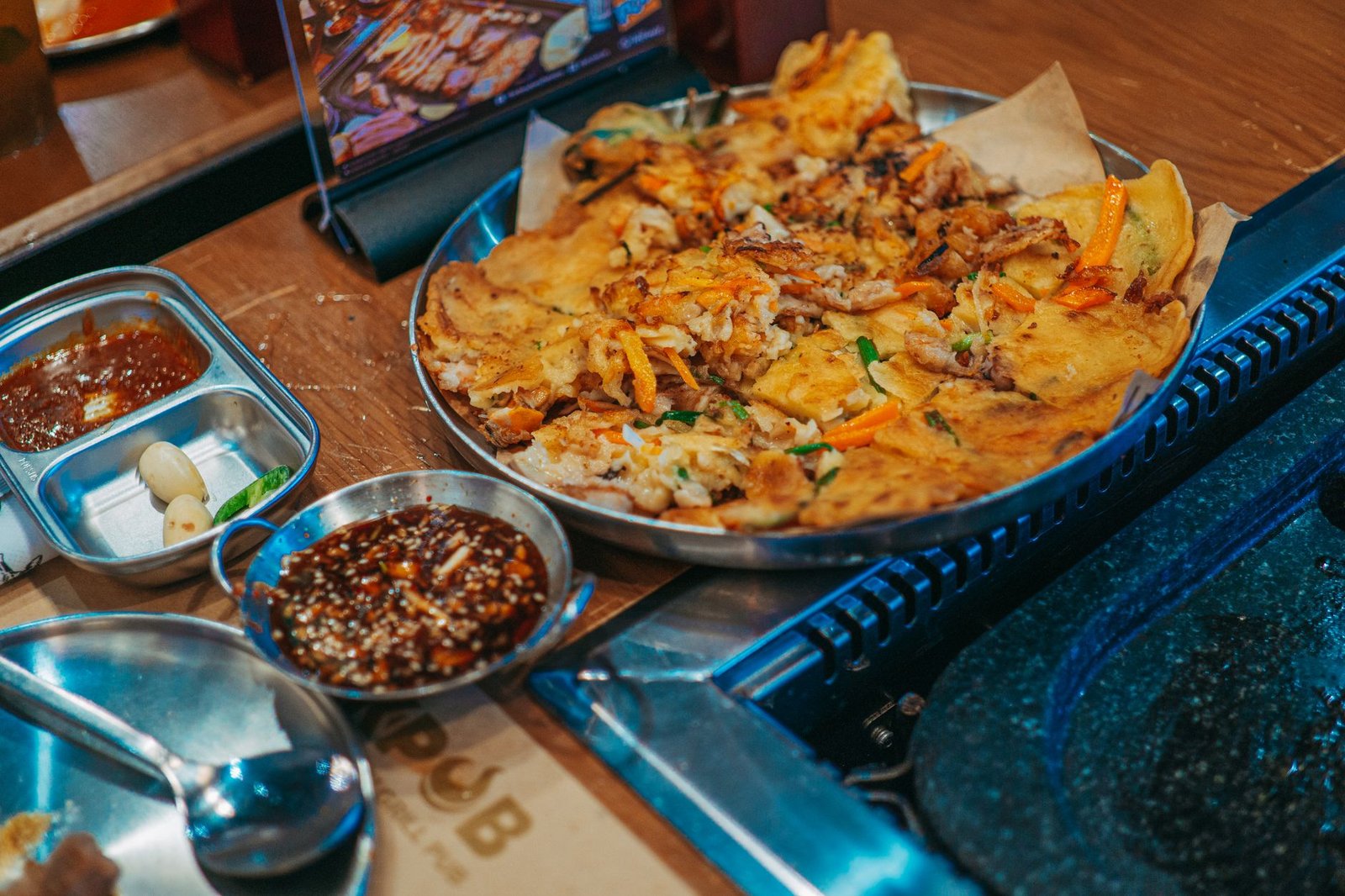
Bindaetteok (빈대떡) is a thick, savory pancake made from ground mung beans (nokdu), mixed with kimchi, bean sprouts, and green onions, then pan-fried in generous amounts of oil until golden brown and crispy on the outside, dense and slightly chewy inside. Each pancake is roughly 20 centimeters wide. One piece costs ₩5,000 as of June 2026, up from ₩4,000 in 2023 due to ingredient inflation. One piece is a solid solo snack; two people sharing two pieces is a complete light meal.
The key marker of a quality bindaetteok stall is the sound. Walk slowly down the food alley and listen for a deep, continuous sizzle coming from cast-iron pans. Look for stalls where the ajumma actively grinds mung beans in a stone or hand mill at the back — freshly ground batter produces a noticeably crispier crust and denser interior compared to stalls using pre-made batter. The stalls clustered near the center of the main covered alley consistently have the highest quality, and the ones with the longest lines at lunchtime are a reliable guide.
Most bindaetteok stalls will offer you a small cup of makgeolli (unfiltered rice wine, ₩2,000 per small cup) as a pairing. This is not a sales trick — this is the traditional way to eat it. The mild sourness of makgeolli balances the fattiness of the pancake perfectly. My father-in-law, who grew up near Jongno in the 1960s, says he can still taste his childhood every time he visits here. That is not marketing language; it is just genuinely true.
Yukhoe, Mayak Gimbap, and the Rest
Yukhoe (육회) is Korea’s raw beef tartare. The beef is sliced thin, seasoned with sesame oil, soy sauce, sugar, and Korean pear (to tenderize the meat), and topped with a raw egg yolk and matchstick-cut Asian pear for crunch. A single serving costs ₩15,000–₩18,000 in 2026. Choose stalls that are consistently crowded: high turnover guarantees fresh meat. Eat it within five minutes of receiving it; the raw egg yolk will begin to cook from the warmth of the beef underneath if you wait too long.
Mayak Gimbap (마약김밥) means “drug seaweed rice rolls,” which tells you everything about how addictive they are. These are finger-length mini rolls filled with seasoned rice, pickled radish, carrot, and sesame seeds, served with a mustard and soy dipping sauce. A basket of about 20 pieces costs ₩3,000. They are the ideal starter to eat while you walk and decide what to order next — and at that price, there is no reason not to grab a second basket.
Kalguksu (칼국수), hand-cut wheat noodle soup, costs ₩9,000 and is the right choice if you visit in the afternoon or evening and need something warming and substantial. The broth is typically anchovy-based and served simply. This is comfort food, not fine dining, and it is exactly as good as comfort food should be.
If you enjoy exploring Seoul’s broader street food culture, our tteokbokki and street food guide covers the wider scene across the city well.
2026 Prices and How to Pay
Many food stalls in Gwangjang Market still prefer cash, and foreign cards don’t always work. This is the single most important practical fact to know before you go. There are ATMs around the market entrances and in nearby convenience stores; look for machines marked “Global ATM” if you have a foreign card. Both accept Visa and Mastercard debit and credit cards.
| Dish | Price (2026) | Notes |
|---|---|---|
| Bindaetteok (1 piece) | ₩5,000 | One piece = generous solo snack |
| Yukhoe (1 serving) | ₩15,000–₩18,000 | Pick busy stalls only |
| Mayak Gimbap (~20 pcs) | ₩3,000 | Cash only; eaten standing |
| Kalguksu (1 bowl) | ₩9,000 | Sit-down; lunch is best |
| Makgeolli (small cup) | ₩2,000 | Traditional bindaetteok pairing |
A solo visitor eating bindaetteok + mayak gimbap + makgeolli will spend about ₩10,000 total. A couple sharing yukhoe + two bindaetteok + two makgeolli + two kalguksu will spend ₩50,000–₩55,000 — roughly the price of one mid-range café meal in Gangnam for the same two people. For broader guidance on eating affordably in Korea, see our Korean BBQ guide for foreigners, which covers ordering etiquette and budgeting in detail.
How to Get There and When to Go
The easiest access is Jongno 5-ga Station (종로5가역), served by Seoul Metro Line 1. Exit 8 brings you directly to the covered food alley entrance in under two minutes of walking. Alternatively, Jongno 3-ga Station (Lines 1, 3, and 5) is the west entrance — slightly longer walk but useful if you are arriving from Insadong or Gyeongbokgung area.
Market hours are roughly 9:00 AM to 10:00 PM, with individual food stalls varying. My recommended visit windows for 2026:
- Weekday lunch (11:30 AM–1:30 PM): freshest ingredients, manageable crowds, fastest service
- Weekday late afternoon (4:00 PM–6:00 PM): relaxed pace, vendors in good spirits before the evening rush
- Avoid Saturday and Sunday afternoon: post-documentary fame has pushed weekend waits to 20–30 minutes at popular bindaetteok stalls
The Korea Tourism Organization provides official visitor information for Gwangjang Market, including current opening hours and directions, updated regularly in English, Japanese, and Chinese.
What Only Regulars Know
Here are things I have learned through years of coming here that I rarely see in English-language guides:
- Point at what the person next to you is eating. If there is a language gap, this works every time. Gwangjang ajummas respond warmly to genuine curiosity — a smile and a pointed finger will get you fed better than any translation app.
- The vintage fabric section closes earlier on weekdays. Most fabric vendors pack up around 6:00 PM. If you want to browse traditional pojagi cloth or hanbok fabric, come on a weekday morning before the food crowd arrives.
- Bring a small water bottle. The food is salty and oily, and while some stalls offer complimentary boricha (barley tea), you will want hydration between dishes. There is no water fountain inside the food alley.
- Do not feel obligated after receiving a sample. Some vendors will push persistently. A polite gwaenchanayo (괜찮아요) — meaning “I’m fine, thank you” — and a gentle wave is sufficient. No hard feelings.
- Friday evenings are the tightest crowds. The alley narrows significantly after 5:30 PM on Fridays. If you have mobility concerns or dislike tight spaces, a weekday lunch visit is far more comfortable.
If you enjoy discovering the quieter side of Seoul’s food culture beyond big markets, our guide to ordering food at Korean convenience stores is one of the most genuinely practical reads on this site.
Frequently Asked Questions
Is Gwangjang Market cash only?
Not all of them, but many food stalls at Gwangjang Market still prefer cash, and foreign cards don’t always work. Bring at least ₩30,000–₩50,000 in ₩5,000 and ₩10,000 notes. For cash, use a “Global ATM” at a nearby convenience store or bank around Jongno 5-ga.
What is the best dish to try at Gwangjang Market for first-timers?
Bindaetteok (mung bean pancake) at ₩5,000 per piece is the essential Gwangjang experience. It is freshly fried, deeply savory, and traditionally paired with a small cup of makgeolli (rice wine, ₩2,000). Start here before exploring other dishes.
Is it safe to eat yukhoe (raw beef) at Gwangjang Market?
Yes, if you choose your stall carefully. Pick vendors with consistently high foot traffic — quick turnover guarantees fresh meat. The yukhoe stalls in the main covered food alley are the most reliable. Avoid any stall that looks unusually quiet on a busy weekday lunchtime.
