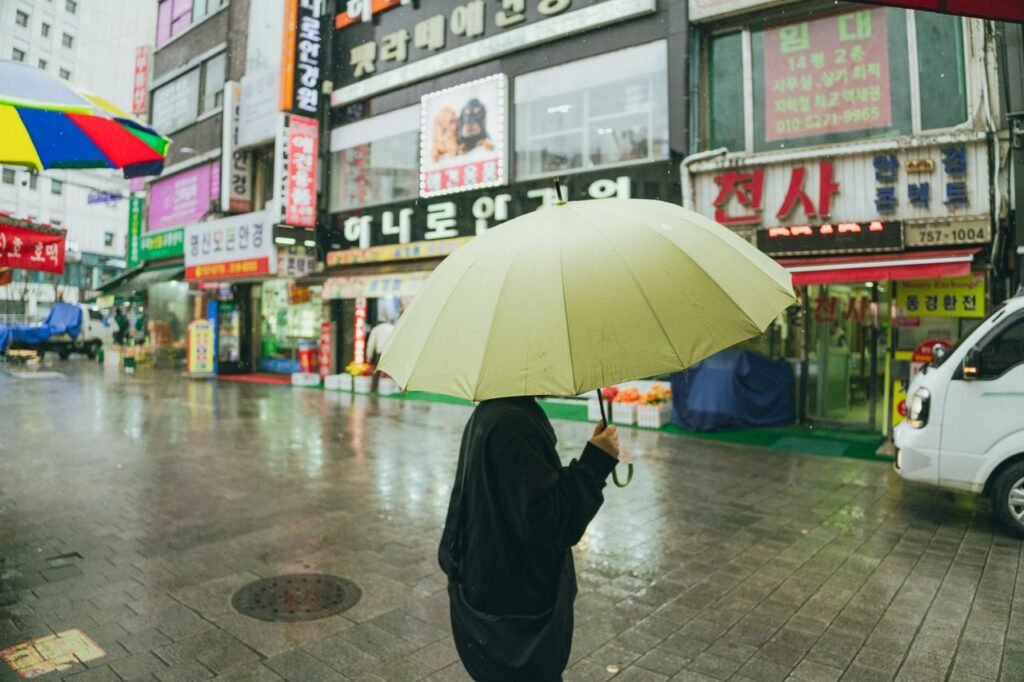
Surviving Korea’s Jangma Season 2026: An Honest Local’s Guide
Every summer, Korea’s skies turn grey and the rain begins — suddenly, heavily, and sometimes for days on end. If you are landing in Seoul this July or August and wondering how to cope, you have come to the right place. I have lived in Gyeonggi Province my whole life, and the Korea jangma season tips for tourists I’m sharing here are what I’d actually tell a friend flying in for the first time. Not recycled travel-blog filler — real, tested advice with prices and names of actual places I use.
What Is Jangma? Korea’s Summer Rainy Season Explained
Jangma (장마) is Korea’s East Asian monsoon season, typically running from late June through late July, though in some recent years it has dragged on into early August (in 2026 it wrapped up in late July). It is not like a light British drizzle. Think sudden downpours that drop 60–80mm of rain in a single hour, followed by a brief break, then another wave.
When I was a child in Incheon, we would watch the sky turn a deep bruised purple before the rain hit. Now, as a parent commuting between Suwon and Seoul for work, I track the KMA app obsessively from late June onward. Foreigners often panic the first time they experience jangma. They don’t need to — they just need a plan.
| Jangma Period | Typical Start | Typical End | Avg. Rainfall (Seoul) |
|---|---|---|---|
| 2026 | Late June | Late July–early August | 280–350mm |
| Historical avg. | June 19–25 | July 24–29 | 250–280mm |
Korea Jangma Season Tips for Tourists: What to Pack and Prepare
First, do not bring a collapsible mini-umbrella from home. They snap in Korean summer wind. Instead, buy a full-size umbrella at any GS25 or CU convenience store for ₩5,000–₩8,000 — Korean convenience store umbrellas are surprisingly sturdy, and I use them myself. Alternatively, check Daiso (₩3,000–₩10,000 for windproof models), which has branches inside most major subway stations. Buy it at Gimpo or Incheon Airport the moment you land if you see grey skies.
- Quick-dry clothes: Cotton holds moisture and makes you miserable all afternoon. Pack polyester blends, or pick up Uniqlo Airism tops in Seoul (₩19,900–₩29,900). There are Uniqlo stores at most underground malls.
- Waterproof shoes: Sneakers get soaked and stay wet for 6+ hours. Rubber sandals or waterproof trail shoes work far better. Crocs-style sandals are ₩20,000–₩35,000 at most department stores or Dongdaemun Market.
- Disposable rain poncho: A ₩2,000 poncho from any convenience store is genuinely useful for outdoor markets or street food stalls where umbrellas get crowded.
- Phone waterproof case: Available at Daiso for ₩2,000. Many tourists overlook this and panic when their phone gets soaked at a monsoon crosswalk.
One local detail most guides miss: set up the KMA alert system on your phone before your trip. During heavy jangma, you will see 호우주의보 (heavy rain advisory) push notifications in Korean — those are days to stay indoors until afternoon. Google Translate on your camera can read these in real time.
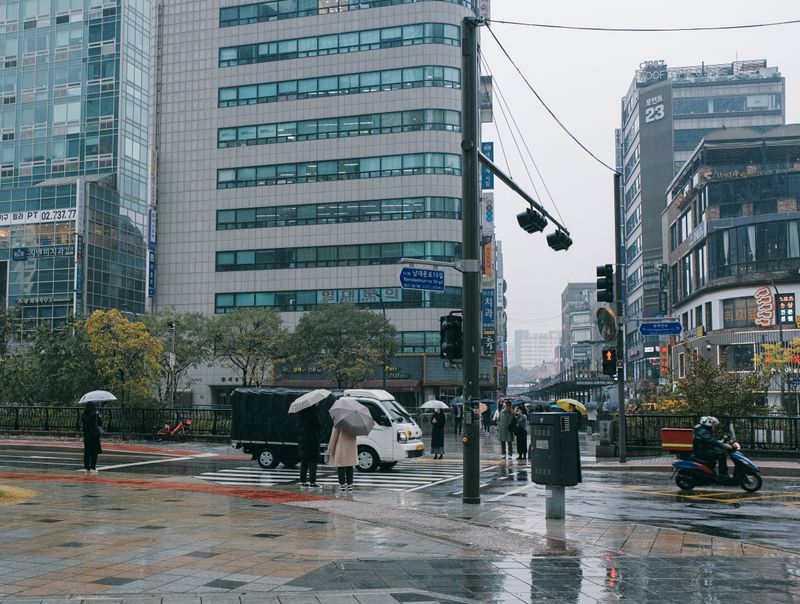
Best Indoor Places in Seoul When It Pours
Seoul’s underground infrastructure is one of the most underrated features of the city. Most foreigners don’t realize you can walk several hundred metres between subway exits without touching rain at major hubs. Here are the spots I personally recommend:
- COEX Mall, Gangnam (영동대로 513): Seoul’s largest underground mall. Take Line 2 to Samseong Station, Exit 5 or 6. The Starfield Library inside COEX is free and genuinely stunning. Plan for 3+ hours — bookstore, aquarium, movie theaters, and 50+ restaurants all without stepping outside.
- The Hyundai Seoul, Yeouido (여의대로 108): Line 5 or 9 to Yeouido Station. The top floor food hall is packed on rainy days — arrive before 11:30 AM to skip lines. The contemporary art installations inside are worth the visit alone.
- National Museum of Korea, Yongsan (서빙고로 137): Free entry, Line 4 to Ichon Station, Exit 2. Plan 2–3 hours minimum. This is my personal quiet refuge on a rainy Saturday with my kids. The main hall’s scale alone is worth the trip.
- Lotte World Adventure, Jamsil: Line 2 or 8 to Jamsil Station. The indoor section is perfect for a full rainy day (check the official site for current day-pass prices and online discounts). Avoid weekends — even in jangma, weekend lines are long.
- Jjimjilbang (Korean sauna bathhouse): The ultimate jangma escape. Entry runs ₩10,000–₩15,000 for common areas; you can sleep there overnight for ₩12,000–₩18,000 extra. Read my full Korean Jjimjilbang Guide 2026 for everything you need to know before going.
Underground walkways worth knowing: Euljiro (Lines 2/3), Gangnam Station (Line 2), and Express Bus Terminal (Lines 3/7/9) all have long underground passages connecting multiple exits and shops — perfect for staying dry while moving between destinations.
Rainy Day Food: What Koreans Actually Eat During Jangma
There is a saying in Korea: 비 오는 날엔 파전에 막걸리 — “On rainy days, it’s pajeon and makgeolli.” Pajeon (파전) is a crispy Korean scallion pancake cooked in sesame oil, and makgeolli (막걸리) is a lightly sparkling fermented rice wine. This combination is so culturally embedded that scallion pancake sales visibly spike during jangma weeks — I notice it every year at the pojangmacha tent stalls near my local station.
For sit-down pajeon, the best affordable spots are around Insadong and Pimatgol Alley near Jongno-3ga Station (Lines 1, 3, 5). Look for signs reading 파전 (pajeon) or 해물파전 (seafood scallion pancake). A full-size haemul pajeon runs ₩12,000–₩16,000; a bottle of house makgeolli is ₩4,000–₩6,000. No tourist markup at the older alley restaurants.
For a quick warm-up, Korean convenience stores are a jangma ritual. My personal combo: cup ramyeon (₩1,500–₩2,500), a hot canned coffee (₩800–₩1,200), and a triangle kimbap (₩1,200). Eat at the in-store table while watching rain stream down the window. It genuinely feels like a Seoul local experience. See the full Korean Convenience Store Food Guide 2026 for must-try items at GS25, CU, and 7-Eleven.
How to Get Around Seoul During Jangma
The single most important Korea jangma season tip for tourists: commit to the subway. Taxis and surface buses get stuck in traffic during heavy downpours — Seoul’s drainage is good but not perfect, and roads around Gangnam and Mapo can flood in extreme rain events. The subway runs on schedule regardless of weather, is air-conditioned, and at major stations connects to underground walkways.
Make sure your T-money card is loaded before heavy rain hits. If you are still figuring out the system, my complete T-money card guide for 2026 covers top-up locations, fare structures, and refunds. During jangma I recommend keeping ₩20,000–₩30,000 on the card — recharging at a convenience store in a downpour is frustrating.
For navigation, Naver Map is essential. During jangma you want to know which subway exits lead to underground passages, and Naver Map shows indoor pathways. The Naver Map Korea 2026 guide covers English navigation from scratch — set it up before you land.
If you must take a taxi during heavy rain, expect 20–40 minute waits at peak hours near tourist areas. Use a taxi app — Kakao T, or K.Ride, Kakao’s app for visitors that takes foreign cards — to book and track your driver — walk-up taxis are nearly impossible to flag on a monsoon afternoon in Gangnam.
The Hidden Upside of Visiting Korea During Jangma
I will be honest: jangma is not ideal for a holiday. But it has real advantages that peak-season travelers miss entirely. Namdaemun Market and Insadong are noticeably less crowded. The line at Gyeongbokgung Palace on a grey Wednesday morning is a fraction of what it is on a sunny August weekend. Airfare and accommodation drop significantly — Seoul hotels that run ₩150,000–₩180,000 per night in peak August often drop to ₩90,000–₩120,000 during jangma weeks.
There is also something genuinely beautiful about Seoul in the rain that no Instagram feed captures. The Han River looks dramatic under low mist. The stone walls of Inwangsan Mountain turn dark and mossy. Bukchon Hanok Village, usually overwhelmed with tourists, becomes quiet and atmospheric in the rain — worth a short visit on a lighter rain morning before 9 AM.
The Korea jangma season tips for tourists I always end with: download the KMA app, load your T-money card, embrace pajeon and makgeolli, and treat the underground mall network as your friend. Jangma is survivable — and for the right traveler, even memorable.
Frequently Asked Questions
When exactly does jangma start and end in Korea in 2026?
Jangma in the Seoul area usually runs from late June to late July; in 2026 it ended in late July, a little shorter than usual. The Korea Meteorological Administration publishes daily updates in English at kma.go.kr/eng. Rainfall is typically heaviest in mid-July.
Is it safe to travel to Seoul during jangma season?
Yes, Seoul is very safe during jangma. The subway and public transport run normally regardless of rain. The main caution is localized flooding in low-lying riverside areas — check KMA heavy rain advisories and avoid Han River parks during 호우경보 (heavy rain warning) alerts.
What is the best umbrella to buy in Korea for the rainy season?
Buy a full-size windproof umbrella at Daiso (₩10,000) or any CU or GS25 convenience store (₩5,000–₩8,000) as soon as you land. Avoid compact fold-up umbrellas from home — they snap in Korean summer wind. Daiso branches near major subway stations stock the best affordable windproof options.
