
Korean Corn Dog 2026: Best Recipe + Where to Find Them
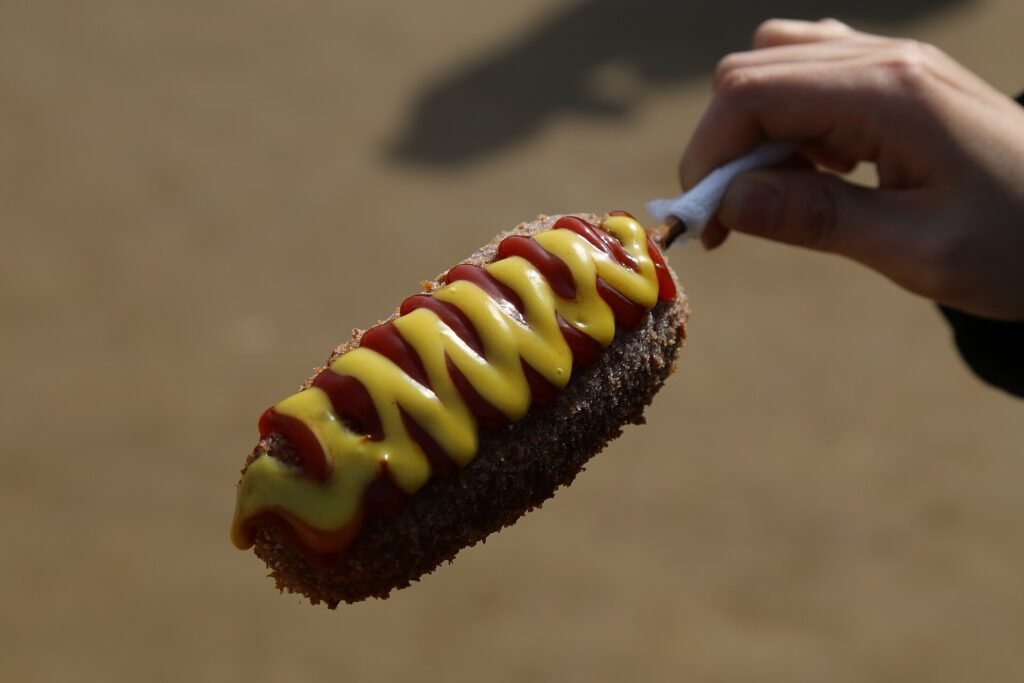
Photo: Corn dog by Tasy Hong, CC0, via Wikimedia Commons
The Korean corn dog has become one of the most recognizable Korean street foods in the world, and honestly I love that. I am a parent in Gyeonggi who has been eating these since I was a university student in the 1990s — back when they were a simple, affordable snack outside subway stations. What has happened to the Korean corn dog in the last decade is a remarkable story of reinvention, and the global food community has absolutely caught on. Let me walk you through everything you need to know in 2026.
📋 Quick Navigation
What Is a Korean Corn Dog?
My daughter’s current obsession. The best I’ve found are from a cart outside Suwon Paldalmun market — not famous, just consistently good. The secret is thin crispy batter, not the cheese pull.
A Korean corn dog is a fried street food consisting of a filling — typically a sausage, a mozzarella cheese stick, or both — on a skewer, coated in a thick batter and deep-fried until golden. What separates the Korean corn dog from its American counterpart is the batter, the fillings, and the toppings that go on afterward.
In Korea, this food is called hotdog (핫도그) colloquially, even though it has little to do with the American hot dog tradition. You will also see it written as corn dog on menus targeting foreigners. Korean food media has been covering the evolution of this snack heavily in 2026, with new variations appearing almost monthly across Seoul’s street food and convenience store scene.
The most important thing to understand about the Korean corn dog is that it is designed to be eaten immediately, fresh from the fryer. The contrast between the crispy outer crust, the pull of mozzarella when you bite in, and the savory sausage or rice cake inside is only at its best in that first two minutes. This is why the best ones are always from street stalls and dedicated shops rather than pre-packaged versions.
Korean Corn Dog vs. American Corn Dog
Most of my foreign visitors are surprised by the difference between the two. Here is a direct comparison:
| Feature | Korean Corn Dog | American Corn Dog |
|---|---|---|
| Batter base | Rice flour + wheat flour (thicker, chewier) | Cornmeal-based (crisper, lighter) |
| Fillings | Mozzarella, sausage, fish cake, rice cake, or combo | Hot dog sausage only |
| Outer coating options | Plain, panko, french fry pieces, ramen noodles, sugar | Plain cornmeal batter only |
| Common toppings | Sugar, ketchup, mustard, mayo, hot sauce | Ketchup, mustard |
| Texture goal | Chewy inside, crispy outside, stretchy cheese pull | Light, crispy, uniform |
The Korean version is more indulgent, more customizable, and — in my biased opinion — significantly more interesting to eat.
Types of Korean Corn Dog Coatings — What You’ll Actually Find
The coating variation is what makes the Korean corn dog scene endlessly interesting:
- Plain batter — The classic. Rice flour and wheat flour batter, fried until golden. This is the baseline version.
- Panko (breadcrumb) coating — A crunchier outer layer added on top of the batter before frying. Very popular because of the extra texture contrast with the stretchy mozzarella inside.
- French fry coating — Small potato pieces pressed into the batter before frying. This creates a lumpy, crispy exterior that has become extremely popular in the last few years. The Myungrang brand specifically popularized this style.
- Ramen noodle coating — Crushed instant ramen noodles pressed into the outer batter. Very crispy, slightly savory, visually striking. A newer trend that went viral on Korean food Instagram.
- Sweet sugar-dusted — After frying, the corn dog is rolled in fine white sugar. The combination of savory sausage and sweet sugar sounds strange but is genuinely addictive once you try it.
The trend in 2026 has been toward extreme customization — shops where you choose your filling, then your coating, then your toppings independently. This assembly-line approach creates hundreds of theoretical combinations from a small ingredient set.
Best Korean Corn Dog Recipe for Home — From My Kitchen
I started making Korean corn dogs at home during the early pandemic years when street food was inaccessible, and the results surprised me. Here is the version I have refined over time.
Ingredients (makes 6):
- 6 mozzarella sticks (or half mozzarella, half hot dog sausage for combo)
- 6 wooden skewers
- 1 cup rice flour
- 1/2 cup all-purpose flour
- 1 tablespoon sugar
- 1/2 teaspoon salt
- 1 teaspoon baking powder
- 3/4 cup cold sparkling water (this is the key to a light batter)
- 1 egg
- Panko breadcrumbs for rolling (optional but recommended)
- Neutral oil for frying (enough for deep frying)
Steps:
- Freeze the mozzarella sticks for at least 2 hours. This is essential — unfrozen cheese will leak out during frying.
- Skewer each filling piece, leaving about 5 cm of skewer exposed as a handle.
- Mix the dry ingredients in one bowl. Whisk the egg and cold sparkling water together, then combine with the dry mix until you get a thick, smooth batter with no lumps. It should coat the back of a spoon thickly.
- Heat oil to 170°C (340°F). Use a thermometer if you have one — temperature control is the difference between soggy and crispy.
- Dip each skewered filling into the batter, rotating to coat completely. If using panko, roll the battered piece in panko immediately.
- Fry for 3-4 minutes, rotating every 45 seconds for even color. The exterior should be a deep golden-brown.
- Drain on a paper towel for 30 seconds, then dust with fine sugar if desired. Serve immediately.
For the cheese pull effect that you see in all the social media videos, use block mozzarella cut into sticks rather than pre-shredded. Block mozzarella stretches longer and more dramatically when hot. You can pair these with other Korean street foods for a full spread — check out my honest tteokbokki guide for another easy street food recipe to serve alongside.
Where to Find the Best Korean Corn Dog in Seoul — 2026 Edition
If you are visiting Korea and want to eat a Korean corn dog rather than make one, here is where I would go:
- Myungrang Hot Dog (명랑핫도그) — The national chain that popularized the french fry coating style. Now has hundreds of branches across Korea. Quality is very consistent, the queue moves fast, and the price is fair. Look for one near any major subway station.
- Insadong street food alley — Traditional tourist area with many corn dog vendors. Prices are slightly higher than local neighborhoods but the atmosphere is fun.
- Hongdae street food market — The area around Hongik University has some of the most creative corn dog variations I have seen. Vendors here experiment more aggressively with new coatings and fillings.
- Night markets in Dongdaemun — Open late, affordable, and with plenty of variety. Good option if you are doing a late-night shopping trip.
Korean convenience stores like GS25 and CU now also sell frozen Korean corn dogs that are reasonably close to the fresh version when heated properly in their in-store microwaves or air fryers. It is not the same experience, but it is a solid option when stalls are closed. For a full guide to convenience store culture, read how to order food at Korean convenience stores in 2026.
For travel planning and finding food markets near major attractions, the Korea Tourism Organization maintains updated regional food guides that cover street food markets by city and season.
Tips from a Korean Local
- The sugar dusting is not optional — try it at least once. I know it sounds wrong. It is not wrong.
- Eat it immediately. A corn dog that has sat for five minutes is significantly less good than one fresh from the fryer.
- The mozzarella-only version is the best starting point. Once you understand the baseline, the variations make more sense.
- Medium size is usually better value than large. The batter-to-filling ratio stays better in the medium format.
- Watch for new seasonal limited editions. Korean food culture moves fast, and vendors regularly release collaborations and limited flavors tied to seasons or events.
Quick Answers
What makes a Korean corn dog different from a regular corn dog?
A Korean corn dog uses a thicker rice flour and wheat flour batter instead of cornmeal, offers a wide variety of fillings including mozzarella and fish cake, and can be coated in panko, french fry pieces, or ramen noodles before frying. It is typically topped with sugar, ketchup, or hot sauce. The signature experience is the stretchy mozzarella cheese pull when you bite into it.
Why do Korean corn dogs have sugar on them?
The sweet-savory combination is a deliberately chosen flavor contrast that is very common in Korean street food culture. The fine sugar dusting adds a subtle sweetness that complements the saltiness of the sausage and cheese. Many first-time visitors are skeptical, but it is consistently one of the most pleasantly surprising flavor combinations they try in Korea.
Can I make a Korean corn dog at home without special ingredients?
Yes. The core recipe uses rice flour, all-purpose flour, egg, and sparkling water for the batter — all easily available outside Korea. The most important substitution note is to use mozzarella sticks (frozen for at least 2 hours before frying) rather than string cheese, which melts too quickly. Korean hot dog sausages are slightly different in flavor but regular pork sausages work well as a substitute.
