
What Koreans Eat on Boknal: The Honest 2026 Samgyetang Guide
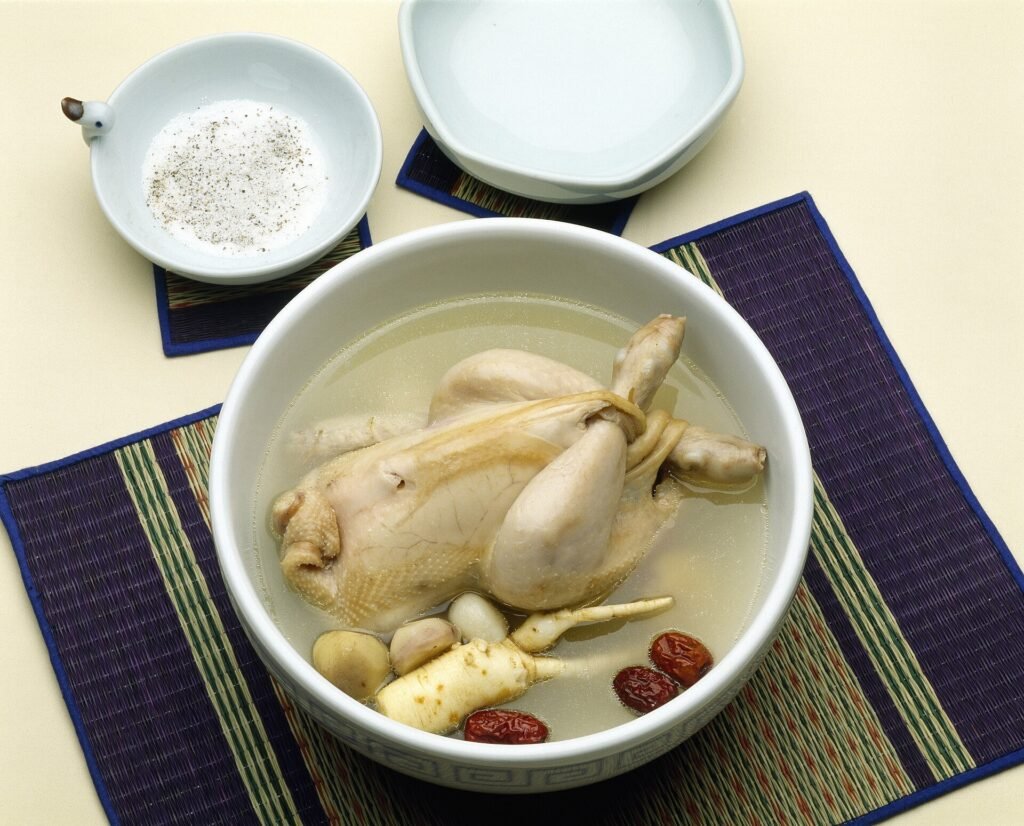
Photo: Samgye-tang 2 by wizdata, CC0, via Wikimedia Commons
Every summer, as soon as the Korean calendar swings into mid-July, my office group chat floods with a single question: “어디서 먹을래?” — “Where are we eating?” On boknal (복날), nobody debates. If you’ve ever wondered what to eat on boknal in Korea and why the answer is always a boiling bowl of soup when it’s 35 degrees outside, this guide has you covered. I’m a Korean who’s lived in the Gyeonggi area my whole life, and I’ve survived more than forty of these sweltering summers. Here’s the honest local version.
Table of Contents
- What Is Boknal? Korea’s Three Hottest Days Explained
- What to Eat on Boknal in Korea: Samgyetang First
- Why Koreans Eat Hot Soup in 35°C Heat
- Best Samgyetang Restaurants in Seoul — 2026 Prices
- How to Order If You Don’t Speak Korean
- Beyond Samgyetang: Other Boknal Foods Koreans Eat
- Frequently Asked Questions
What Is Boknal? Korea’s Three Hottest Days Explained
Boknal (복날) isn’t one day — it’s three. In Korean the collective term is 삼복 (sambok), and the three individual days are 초복 (chobok, the first bok), 중복 (jungbok, the middle bok), and 말복 (malbok, the last bok). They correspond to the three hottest peaks of the Korean summer, calculated using the traditional lunar calendar system of heavenly stems (천간) and earthly branches (지지). The character 伏 (bok) literally means “crouching” — even the heat must bow its head.
In 2026, chobok fell on July 15, jungbok on July 25 and malbok on August 14. These dates shift each year because they follow the traditional day cycle counted from the summer solstice and the start of autumn, so check a Korean calendar app like Naver Calendar for the exact days. What doesn’t shift is the humidity. In Gyeonggi in late July, the air sits at 34–36°C with 75% humidity. My work shirt is soaked through before I reach the subway platform. It is genuinely brutal.
And yet: the restaurants are packed, the queues stretch around the block, and every Korean you know is texting about where to eat samgyetang. If you’re visiting Korea during this period — or if Korea’s summer heat has you confused about why the locals are eating soup — read on.
What to Eat on Boknal in Korea: Samgyetang First
The answer to what to eat on boknal in Korea starts and ends with samgyetang (삼계탕). It’s a whole young chicken — a small 닭 (dak), usually around 500g — stuffed with glutinous rice (찹쌀), garlic cloves, dried jujube (대추), and a fresh ginseng root (인삼). The whole thing simmers for two to three hours in a clay pot until the broth turns silky and the chicken falls apart at a touch. It arrives at your table still bubbling, hot enough to scorch your tongue if you’re impatient.
My Canadian colleague at work ate her first bowl on chobok last year. She stared at the steaming pot, then at me. “You’re serving me boiling soup when it’s 35 degrees?” She ate every drop, drank the complimentary ginseng liquor shot, and texted me that evening asking where to get it again. That’s boknal.
There are four main varieties worth knowing:
- 기본 삼계탕 (gibon samgyetang) — The classic. Chicken, ginseng, rice, garlic, jujube. ₩16,000–₩20,000 most places.
- 흑삼계탕 (heuksamgyetang) — Black chicken (오골계), darker and more mineral-rich in flavor. Around ₩22,000–₩28,000.
- 전복삼계탕 (jeonbok samgyetang) — Premium version with abalone added. ₩28,000–₩40,000. Only order this at a dedicated samgyetang specialist; a regular diner version won’t do the abalone justice.
- 녹두삼계탕 (nokdu samgyetang) — Mung bean version. Thicker and creamier broth. My personal preference after a long day in the office.
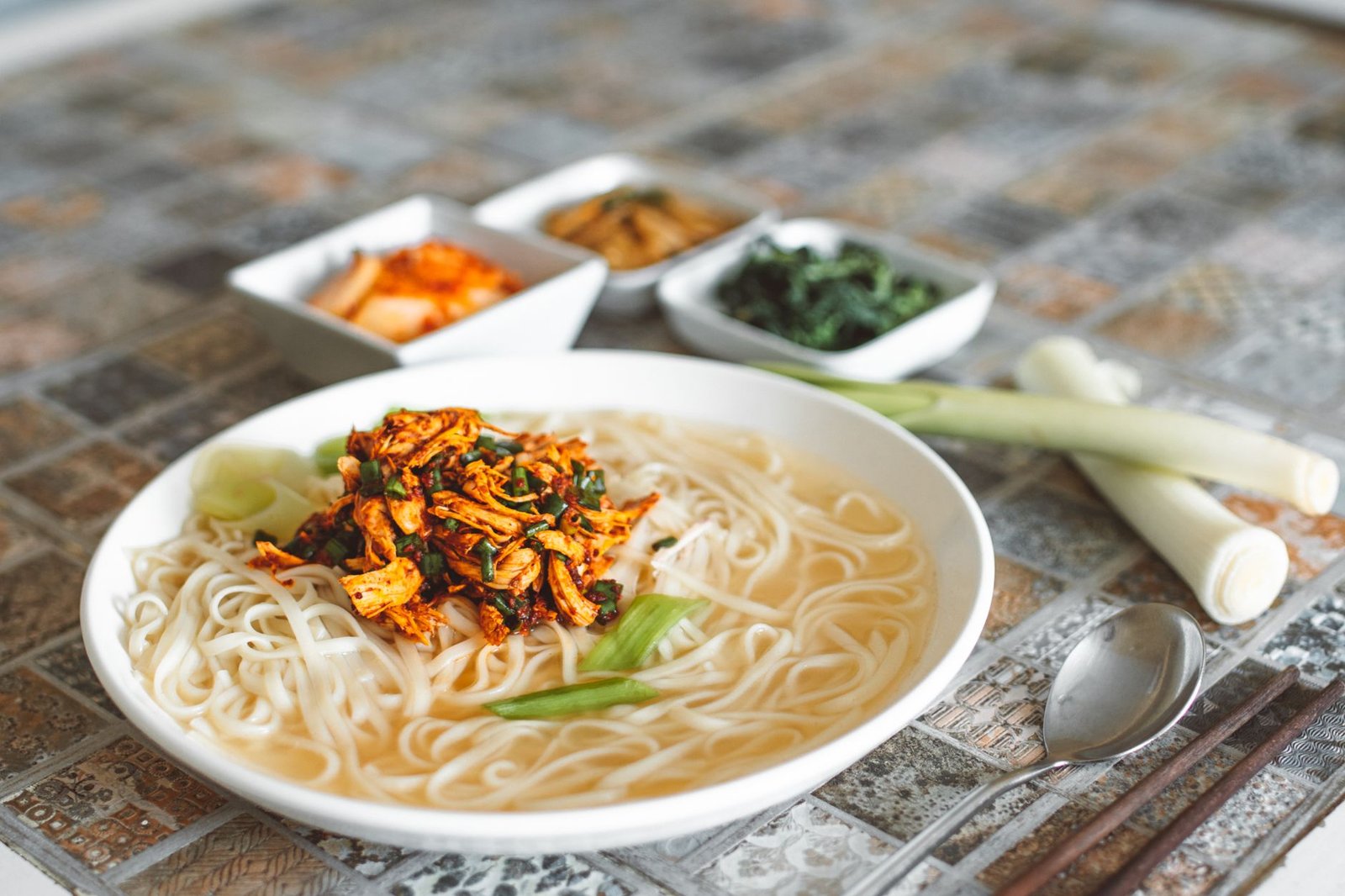
The correct way to eat it: pull the chicken apart inside the bowl with your chopsticks, season lightly with the small dish of salt and pepper that comes on the side, and drink the broth slowly. Don’t attempt to decant the chicken onto a plate. Koreans eat it directly from the pot. The rice inside the chicken body absorbs the ginseng and herb flavors as it cooks — it’s the best bite of the whole dish.
Why Koreans Eat Hot Soup in 35°C Heat
The concept is 이열치열 (iyeol-chiyeol): fight heat with heat. It sounds completely backwards. It is, in fact, one of the most Korean things there is.
Korean traditional medicine (한의학, hanuihak) explains it this way: your body is already spending enormous energy fighting external heat. By eating something warming, nutrient-dense, and rich in restorative ingredients, you replenish that energy rather than letting it drain away. The ginseng root (인삼) is the key ingredient. In Korean medicine ginseng has been used for centuries as an adaptogen — a substance that helps the body regulate stress, whether that stress comes from cold, heat, fatigue, or illness. The garlic supports circulation. The jujube is believed to calm the nervous system. The collagen-rich chicken broth is deeply restorative.
The practical result: after eating a bowl of samgyetang you sweat heavily for about twenty minutes. Then, genuinely, you feel cooler. Whether that’s iyeol-chiyeol or just biology sorting itself out, I couldn’t tell you. But my father — who spent forty years doing physical outdoor labor in Gyeonggi summers and ate samgyetang every chobok — is 72 years old and still runs circles around most people I know.
Best Samgyetang Restaurants in Seoul — 2026 Prices
| Restaurant | Location / Station | Price per Bowl | Notes |
|---|---|---|---|
| 토속촌 (Tosokchon) | Jongno-gu · Gyeongbokgung Stn (Line 3, Exit 2), 5 min walk | ₩19,000 | Most famous; milky broth from 30+ herbs; 30–90 min wait on boknal days |
| 고려삼계탕 (Goryeo Samgyetang) | Jung-gu · City Hall Stn (Line 1/2, Exit 4), 8 min walk | ₩17,000 | Michelin Bib Gourmand; open since 1960; cleaner, lighter broth |
| 백제삼계탕 (Baekje Samgyetang) | Mapo-gu · Hongdae Stn (Line 2, Exit 9), 7 min walk | ₩16,000 | Less touristy; popular with students and local families |
| 편의점 삼계탕 (Convenience Store) | GS25 or CU, everywhere | ₩8,500–₩10,000 | Microwaveable; surprisingly decent; local secret for busy lunch days |
Local-only timing tip: Tosokchon opens at 10:00 AM. On chobok day, I arrive at 9:50 AM, get into the first seating, and I’m done eating by 10:45 AM before the tourist queues form. After 11:30 AM the wait can hit 90 minutes. No joke.
For a truly un-touristy bowl, take Line 4 to 수유역 (Suyu Station) in Gangbuk-gu, Exit 2, and look for any small neighborhood restaurant with 삼계탕 handwritten in the window. Prices run ₩14,000–₩15,000, the stock is made fresh that morning, and you will almost certainly be the only non-Korean in the room. There’s a place near Suyu called 할매삼계탕 (Grandma’s Samgyetang) that’s been running since the 1980s, seats about fifteen people, and has never, to my knowledge, appeared on any English-language blog. I’m mentioning it here partly because it deserves to exist in writing.
If you love eating like a Seoul local, my guide on what to eat at Gwangjang Market covers vendors who’ve been cooking in the same stall for decades — same spirit, different food.
How to Order If You Don’t Speak Korean
Most samgyetang restaurants post menus with photos. But just in case:
- Point to the menu and say: “삼계탕 하나 주세요” (samgyetang hana juseyo) — “One samgyetang please.”
- For two people: “삼계탕 둘 주세요” (samgyetang dul juseyo)
- Your server may ask: “인삼주 드릴까요?” (insamju deurilkayo?) — “Would you like a ginseng liquor shot?” Say yes. It’s usually free and it’s part of the authentic boknal experience.
Cash is still expected at many traditional samgyetang restaurants, especially older ones. Bring at least ₩20,000–₩25,000 per person. Cards and KakaoPay are accepted most places, but I’ve been caught short at small neighborhood spots before.
After a steaming bowl of samgyetang you’ll want something cold. My honest guide on Korean bingsu flavors and where to eat them in Seoul covers the best summer dessert stops — the perfect follow-up to the sweatiest meal of your summer.
Beyond Samgyetang: Other Boknal Foods Koreans Eat
Samgyetang leads, but boknal has a wider menu:
- 장어구이 (jangeogui) — Grilled eel. Second most popular boknal food. Considered a top stamina dish in Korean tradition. Expect ₩30,000–₩50,000 per portion at a dedicated eel restaurant (장어집). Worth it if the budget allows.
- 전복죽 (jeonbokjuk) — Abalone porridge. Gentle and easy to digest. Good if the heat has killed your appetite but you know you need calories.
- 추어탕 (chuotang) — Loach fish soup. Traditional stamina food, earthier in flavor. More common in Jeonju and the Jeolla region; harder to find in central Seoul.
- 수박 (subak) — Watermelon. After any boknal meal, every Korean family cuts open a cold watermelon. This is non-negotiable and costs around ₩8,000–₩15,000 for a half at a supermarket in July.
Boknal is also when naengmyeon restaurants are at their longest queues — Koreans sometimes do both, samgyetang for lunch and cold buckwheat noodles for dinner. If you want to complete the full summer food circuit, my guide on how to eat naengmyeon in Seoul in 2026 explains what to order and which style suits you.
And if you’re trying to understand Korea’s summer weather more broadly — the jangma rainy season comes before boknal, and the post-jangma heat is when boknal arrives — the surviving Korea’s jangma season guide explains the full seasonal rhythm.
The Korea Tourism Organization’s English portal at visitkorea.or.kr has a useful overview of Korean food traditions if you want official context — though for boknal, nothing replaces showing up at a samgyetang restaurant in the heat and eating the thing yourself.
Frequently Asked Questions
What do Koreans eat on boknal?
The traditional boknal food is samgyetang (삼계탕) — a whole young chicken stuffed with glutinous rice, ginseng, garlic, and jujube, simmered in clear broth. Other common boknal foods include grilled eel (장어구이), abalone porridge (전복죽), and cold watermelon for dessert after the meal.
When is boknal in 2026?
In 2026 the three boknal days were July 15 (chobok/초복), July 25 (jungbok/중복) and August 14 (malbok/말복). Exact dates shift each year based on the traditional lunar calendar. For other years, check Naver Calendar for the exact dates.
Why do Koreans eat hot soup on the hottest summer days?
The tradition follows the Korean philosophy of iyeol-chiyeol (이열치열), meaning fight heat with heat. Eating hot nutrient-dense samgyetang on the hottest days replenishes energy spent fighting external heat. The ginseng acts as an adaptogen, the garlic supports circulation, and the sweating induced by the hot soup helps the body regulate temperature. It sounds counterintuitive but Koreans have practiced it for centuries.
