
How to Order Food at a Korean Restaurant (2026 Guide)
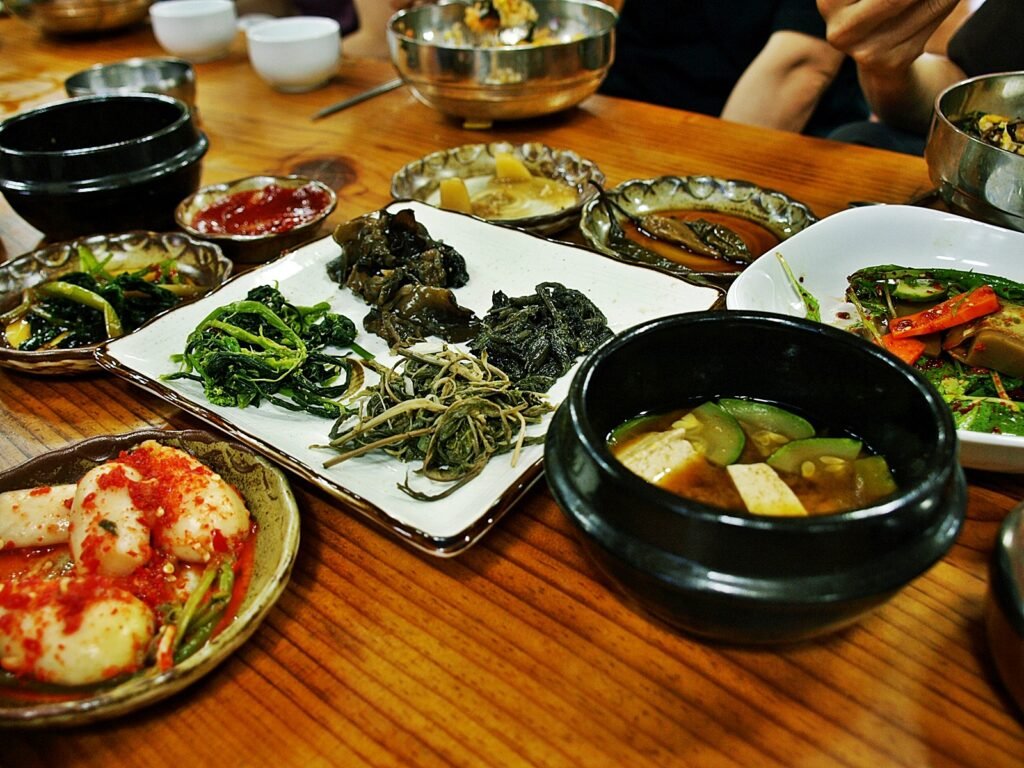
Photo: Korean cuisine-Banchan and doenjang jjigae-01 by magicinprogress, CC BY 2.0, via Wikimedia Commons
You’re sitting inside a packed Korean restaurant, the staff don’t speak English, the menu looks like beautiful hieroglyphics — and your stomach is growling. Now what?
Don’t panic. As a Korean dad living just outside Seoul in Gyeonggi-do, I’ve watched plenty of foreign visitors freeze up the moment a server drops a laminated menu in front of them. But here’s the truth: ordering food in Korea in 2026 is genuinely easier than it’s ever been, and you honestly don’t need to speak a single word of Korean to eat incredibly well. Kiosks, photo menus, QR codes, and a few smart tricks will get you through almost any situation. Let me walk you through exactly how it works.
📋 Quick Navigation
1. Understanding How Korean Restaurants Work
Before you worry about the menu, it helps to understand the setup. Korean restaurants usually fall into one of three styles: sit-down with a server, self-order kiosk at the entrance, or tabletop ordering via a button or QR code. In 2026, the kiosk model has become dominant — even local 8,000 won (about $6 USD) gimbap joints near my office in Suwon have switched over.
Most places also serve banchan — those small free side dishes that arrive automatically. You don’t order them. They just appear. New visitors often try to pay for banchan or worry they ordered wrong when the table fills up with little plates. You didn’t. That’s just how it works.
Water is almost always self-serve. Look for a dispenser near the entrance or a button on the table marked 물 (mul = water). Restaurants generally don’t charge for water or banchan refills. And if you need to call a server the old-fashioned way, there’s usually a small call button on the table — press it once and someone will come over quickly.
💡 Hellokoreaguide’s Tip:
Before you sit down, scan the restaurant entrance. If there’s a big touch-screen machine near the door, that’s the kiosk — you order and pay there first, then find a seat. Skipping it and sitting down first is the most common beginner mistake.
2. Using Kiosks and QR Code Menus
This is genuinely the biggest game-changer for foreign visitors ordering food in Korea right now. Kiosks at fast-food chains like Lotteria and Mom’s Touch, and at many independent restaurants, now have an English-language button right on the home screen. Look for “ENG” or a little flag icon in the top corner — tap it and the entire interface switches over.
For QR code menus (you’ll see a small square code on the table), scan it with your phone camera and it opens a mobile menu. Many of these also offer English. If not, Chrome on Android and Safari on iPhone will offer to translate the whole page automatically — just tap “Translate” when prompted. The photo-based ordering is genuinely foolproof: every item has a picture, a name, and a price.
Payment at kiosks accepts credit cards, Kakao Pay, Naver Pay, and cash. Foreign Visa and Mastercard cards work at most kiosks, though the odd small-shop machine only takes Korean cards, so carry a little cash. Just insert or tap your card at the end. Your food number appears on a screen or receipt and they’ll call it out — watch the display board rather than waiting for your name, since staff often just shout the Korean number.
⚠️ Watch Out:
Some traditional Korean restaurants — especially old-school sundubu jjigae or samgyetang spots popular with older locals — have no kiosk and no English menu at all. I’m talking hand-written signs on the wall, cash only, and a grandma who’s been running the place for 30 years. These are actually the best meals you’ll have. See Section 3 for how to handle them.
3. Essential Phrases and Pointing Strategies
You don’t need to master Korean to order food in Korea. You need about four sentences and a confident finger-point. Here’s my honest shortlist that works in real life, not just in a textbook.
First: “Igeot juseyo” (이거 주세요) — “This one, please.” Point at what you want on the menu and say this. It works 100% of the time. Second: hold up fingers to show how many portions. Koreans use the same hand signals for numbers, so one finger = one, two fingers = two. Third: if you have allergies, show a card. Before you travel, get a Korean allergy card from a translation-card service such as Equal Eats and keep it on your phone. A nut allergy or shellfish allergy card shown to a server is understood immediately.
Google Translate’s camera mode (the live translation feature) is your best friend at restaurants with no photos. Just hover your phone over the menu and it translates in real time. It’s not perfect, but “pork belly set meal” is close enough to “samgyeopsal set” that you’ll get the idea.
4. Handling Payment and Common Extras
Once the food arrives, you don’t need to do much — but knowing how payment works saves you an awkward moment at the end. Unlike many countries, Koreans typically pay at the counter near the exit, not at the table. When you’re done eating, just walk to the register near the front with your receipt (or tell them your table number) and pay there.
Tipping is not a thing in Korea. Don’t tip. It causes genuine confusion and can even feel rude in some contexts — as if you’re implying the restaurant needs charity. Just pay the bill and a simple “masiteoyo” (맛있어요 — “it was delicious”) as you leave makes everyone’s day.
Watch out for add-ons at grilled meat restaurants (samgyeopsal, galbi). The menu price is per portion of meat, but rice, lettuce wraps, and egg side dishes are often ordered separately and cost an extra 1,000–3,000 won each. If you see a server bring something you didn’t ask for, it might be included or it might be an optional paid extra — if you’re unsure, just ask by pointing and tilting your head with a questioning face. They’ll tell you yes (yes, free) or quote you a price.
5. Best Types of Restaurants for Beginners
As a Korean dad living just outside Seoul, I always recommend the same starter restaurants to foreign friends visiting for the first time. Some places are genuinely foreigner-friendly by design; others just happen to be easy because of how the food works.
| Restaurant Type | Difficulty for Beginners | Average Cost | Why It’s Great |
|---|---|---|---|
| Korean BBQ (samgyeopsal) | Easy ⭐⭐ | 13,000–18,000 won/person | You cook it yourself, staff helps, very visual |
| Bibimbap restaurant | Very Easy ⭐ | 9,000–13,000 won | One-bowl meal, photo menus everywhere |
| Ramyeon/Noodle shops | Easy ⭐⭐ | 7,000–11,000 won | Usually kiosk-based, pictures on everything |
| Korean fried chicken | Very Easy ⭐ | 20,000–28,000 won (half chicken) | App ordering (Baemin, Coupang Eats) with English |
| Traditional home-style (백반) | Hard ⭐⭐⭐⭐ | 8,000–12,000 won | Best food, but cash only and Korean menus common |
My personal beginner recommendation is always a galbi or samgyeopsal BBQ place. The servers are used to foreign guests, they’ll help you work the grill, and the entire experience is interactive enough that the language barrier just melts away over the flame.
Frequently Asked Questions
Can I order food in Korea without speaking Korean?
Yes, absolutely. In 2026, most Korean restaurants — especially in Seoul and Gyeonggi-do — use touchscreen kiosks or QR code menus that offer English language options. Even without English menus, Google Translate’s camera feature, photo menus, and the simple phrase “igeot juseyo” (this one, please) while pointing gets you through almost any situation. Fast-food chains like Lotteria and most food-court kiosks support English ordering.
How do you pay at a restaurant in Korea?
In most Korean restaurants, you pay at the front counter near the exit after finishing your meal — not at the table. Simply take your receipt or remember your table number and pay on the way out. Foreign Visa, Mastercard, and Amex credit cards are widely accepted. Tipping is not customary in Korea and is generally not expected or practiced.
What are the best restaurants in Korea for tourists who don’t speak Korean?
Korean BBQ restaurants (samgyeopsal or galbi) are the most foreigner-friendly because the cooking is tableside, staff are very interactive, and most places in tourist-heavy areas have photo menus or English menus available. Bibimbap restaurants and Korean fried chicken shops are also excellent beginner choices — they typically use kiosk ordering with English options and have clear photo-based menus. Food courts inside large malls like COEX or Times Square also offer easy visual ordering with English pricing displayed.
Ready to Eat Like a Local?
Ordering food in Korea is one of those things that sounds intimidating before you try it and feels completely natural the moment you do. As a Korean dad who’s watched this country go increasingly digital over the past decade, I can honestly say the systems in place right now — kiosks, photo menus, translation apps — make eating out in Korea more accessible than ever. Pick a BBQ spot, tap the English button on the kiosk, point at the thick slices of pork belly, and just enjoy it. The banchan will handle itself.
Have you already eaten out in Korea? Did something confuse you or go unexpectedly well? Drop your story in the comments — I read every single one and love hearing about your real experiences.
