
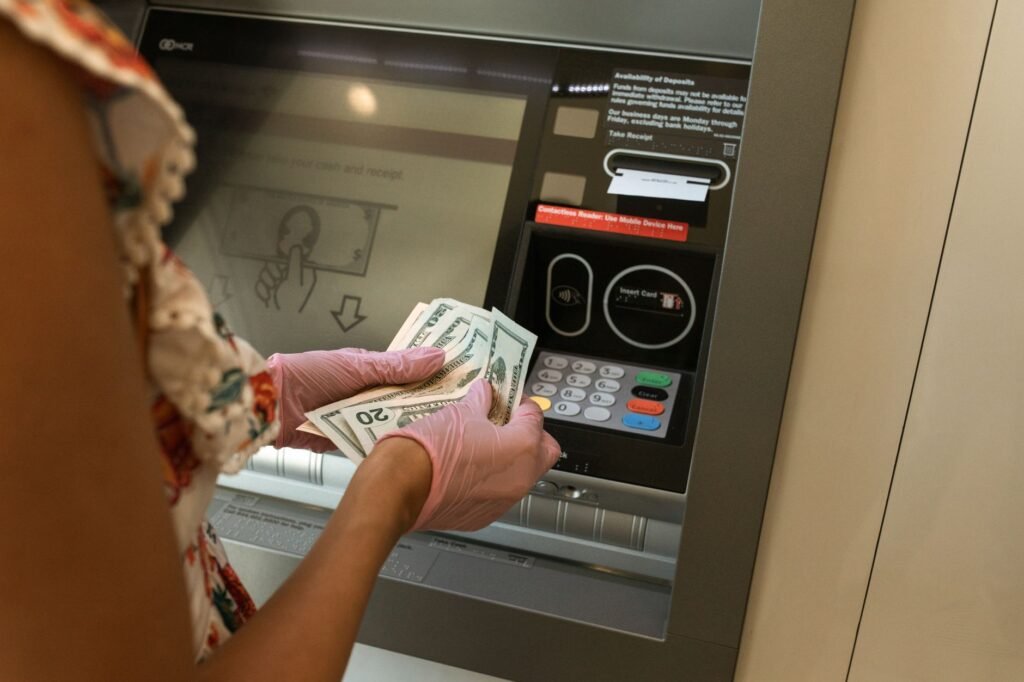
Which ATMs in Korea Accept Foreign Cards: 2026 Honest Guide
When my German colleague visited last summer and couldn’t pull cash from any ATM in Myeongdong, I got a frantic voice note at 10 PM. I’ve worked in the chemical industry in Gyeonggi for over a decade and commute through Seoul every day — I know every shortcut in this city — but I forget how confusing Korean banking can be for foreigners. Knowing which ATMs in Korea accept foreign cards is one of the most critical things to figure out before your trip, because a large number of Korean machines will simply reject your international card with no explanation. Here is everything I wish I had told him in advance.
The Hard Truth About Korean ATMs
Let me be direct: a large number of Korean ATMs do not accept foreign-issued cards. Most machines inside Korean bank branches — especially smaller local branches in residential neighborhoods — are set up only for domestic cards. The network compatibility is simply different, and if your card uses the international Visa, Mastercard, Maestro, or American Express network on a foreign bank account, many machines will return your card or time out silently.
The good news is that the situation has improved significantly in 2026, especially in tourist-heavy areas. The key is knowing which machines to approach — and which to walk straight past. Once you know the patterns, getting cash in Korea is actually very easy.
Which ATMs in Korea Accept Foreign Cards — The Full 2026 List
After years of guiding visiting colleagues from Europe and North America, here is my confirmed list of which ATMs in Korea accept foreign cards reliably:
1. Convenience Store Global ATMs (GS25, CU, 7-Eleven, Emart24)
These are your single best option. Nearly every GS25, CU, and 7-Eleven convenience store in Korea has a standalone machine labeled “Global ATM” (글로벌 ATM). These are specifically designed for international cards and support full English menus. They display Visa / Mastercard / PLUS / Cirrus logos clearly on the fascia. GS25 is especially ubiquitous — you’ll find one within five minutes of almost every subway station in Seoul and Gyeonggi. If you remember nothing else from this post, remember: find a GS25 Global ATM.
2. Korea Post (우체국, Woocheguk) ATMs
Post office ATMs are criminally underrated by tourists. Most Korea Post branches have machines that accept most international cards, and the branch hours (usually 9 AM – 6 PM weekdays) are often more predictable than bank branches. Look for the red and yellow 우체국 sign. In smaller towns outside Seoul — say, if you’re exploring Gyeonggi-do or taking a day trip — Korea Post may be your most reliable fallback after convenience stores.
3. Shinhan Bank (신한은행)
Shinhan is one of Korea’s big four banks and has solid global ATM support. Their machines at major branches — Myeongdong, Gangnam, Hongdae, and Itaewon — accept foreign Visa and Mastercard with full English menus. Shinhan also operates ATM kiosks inside many Homeplus supermarkets, which is handy if you’re doing a grocery run.
4. Hana Bank (하나은행)
Hana Bank (called KEB Hana until 2020) has one of the strongest international track records among Korean banks, partly because it absorbed Korea Exchange Bank — historically the specialist in foreign currency. Their airport branches and major city-centre ATMs are consistently reliable. Look for the teal-and-blue branding. The Hana Bank branch inside Incheon Airport is where I always point arriving visitors first.
5. Woori Bank and IBK (Industrial Bank of Korea)
Both have selective international ATM support. At larger city-centre branches you’ll usually be fine, but I wouldn’t rely on a small local IBK branch in a Gyeonggi industrial suburb — those machines are set up for domestic business customers. IBK’s main Jongno and Yeouido branches are much safer bets.
6. Citibank Korea
If you already hold a Citibank account at home, Korean Citibank ATMs are essentially fee-free for Citi customers. The network is smaller — major locations at Gangnam Station, City Hall, and Incheon Airport — but the fee savings can add up over a longer trip.
Where to Find Foreign-Friendly ATMs in Seoul
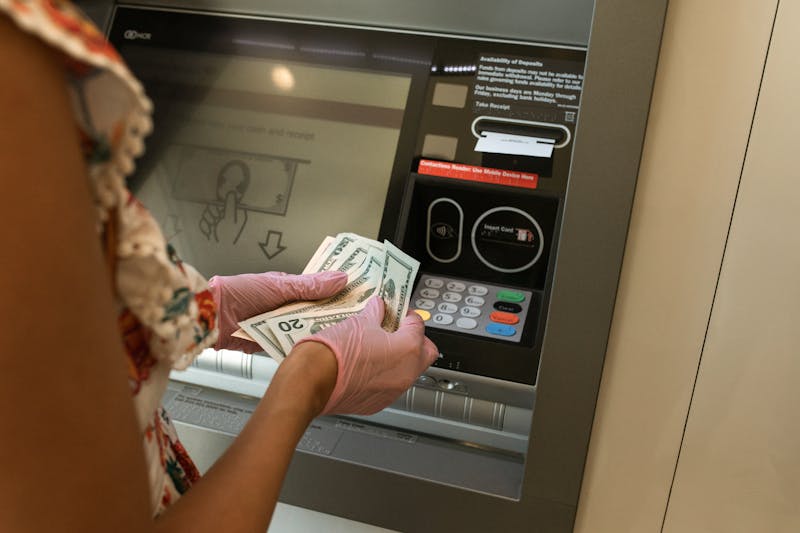
Knowing which ATMs in Korea accept foreign cards is one thing — finding one fast when you need cash is another. Here’s where I send visitors first, ranked by reliability:
- Incheon Airport Arrival Hall (B1 and 1F, both terminals): Bank ATMs, including Hana Bank’s, sit near the arrival exits in both T1 and T2. These are the safest first withdrawal point. I always recommend pulling ₩100,000–₩300,000 here before you board the AREX train. While you’re sorting out money, sort out your transit card too — my full guide on how to use a T-money card in Korea explains exactly how to top it up.
- Myeongdong (명동): The most tourist-dense street in Seoul has an exceptional density of bank branches and GS25 stores. Walk the main shopping strip and you’ll pass multiple Global ATMs within one block.
- Hongdae (홍대) and Sinchon (신촌): University area with reliable CU and GS25 ATMs. Good base if you’re staying on the western side of Seoul near Lines 2, 6, or A’REX stops.
- Gangnam Station (강남역) area: Several big bank branches around the station, including Shinhan and Hana, have global ATMs. Also handy if you’re coming from COEX or heading to the Express Bus Terminal.
- Most large subway stations: Many larger stations have a convenience store with an ATM that takes foreign cards. Look for the 글로벌 ATM sticker on the machine.
A note on arrival: if you’re picking up a SIM at the airport, you may want to pay by card — but always have a small amount of Korean won in cash too. My guide to getting a Korea SIM card at Incheon Airport covers which counters accept which payment methods.
Step-by-Step: Using a Foreign Card at a Korean ATM
Once you’ve found a Global ATM, here’s the exact process:
- Press “English” — usually a physical button in the top-right corner, or the first screen option.
- Insert your card chip-side first, face up.
- Select “Withdrawal” (출금). Never select Transfer (이체) by mistake.
- Choose account type — if asked, select “Checking” or “Savings.” If you have a debit card, Checking usually works. If the first option fails, try the other.
- Enter your PIN. Korean ATMs use chip-and-PIN. A magnetic-stripe-only card may not work at all machines — confirm with your bank before traveling.
- Enter the amount. Standard presets are ₩100,000, ₩300,000, or ₩500,000. You can type a custom amount too.
- When asked about currency: always choose Korean Won (KRW). See the fees section below — this is critical.
- Collect your cash and receipt. The machine will return your card first at most Korean ATMs, then dispense cash.
Fees and Withdrawal Limits You Must Know
| Fee Type | Typical Amount | Charged By |
|---|---|---|
| Korean ATM usage fee | About ₩3,000–₩4,500 per transaction | Korean bank / ATM operator |
| Home bank international fee | 1% – 3% of withdrawal amount | Your bank abroad |
| DCC markup (avoidable) | 3% – 5% extra | ATM operator — only if you say yes |
The DCC warning — read this carefully. When a Korean ATM detects a foreign card, it may ask whether you want to be charged in your home currency (e.g. USD, EUR, GBP) or in Korean Won. This is called Dynamic Currency Conversion (DCC). Always choose Korean Won (KRW). Choosing your home currency sounds convenient but the exchange rate used by the ATM operator is typically 3–5% worse than what your own bank would apply. On a ₩300,000 withdrawal, that’s ₩9,000–₩15,000 thrown away for no reason.
Per-withdrawal limits vary by machine, from about ₩300,000 to ₩1,000,000, and your home bank sets its own daily cap. For most tourist budgets, ₩200,000–₩300,000 every few days is plenty — Korea’s T-money transit system and card-accepting restaurants mean you rarely need large cash amounts.
For currency exchange as an alternative, Korea Tourism Organization’s official airport guide lists licensed exchange booths at Incheon with competitive rates — useful if you arrive with a stack of foreign notes.
My Tips as a Gyeonggi Local
Years of commuting from Gyeonggi to Seoul and hosting visiting foreign colleagues have taught me a few things that don’t appear in standard travel guides:
- Withdraw your first ₩200,000–₩300,000 at Incheon Airport, before the AREX train. Jet-lagged and hunting for a working ATM near your hotel at midnight is not how you want to start a Korea trip.
- GS25 Global ATMs are your safest fallback, always. I have never seen one fail for a Visa or Mastercard from a major international bank. Find a GS25 first, not a bank branch.
- Avoid branch ATMs in residential side streets, especially in Gyeonggi suburbs. These machines serve local commuters and often lack international network support — and there’s no helpful error message, just a card return.
- Friday nights after 11 PM and Sunday mornings can be a problem. Some bank systems run scheduled maintenance windows. Convenience store ATMs are more reliable during these gaps.
- Notify your home bank before flying. Fraud-detection algorithms flag overseas ATM withdrawals constantly. One call before departure prevents your card being blocked at the worst possible moment.
- Naver Pay has started accepting some overseas cards, but it doesn’t work with every card or shop yet, so don’t count on it. This is a useful supplement to cash, though not a full replacement — many small restaurants and market stalls are still cash only.
Frequently Asked Questions
Do Korean ATMs work with Visa and Mastercard foreign cards?
Yes, but only at specific machines labeled “Global ATM.” GS25, CU, and 7-Eleven convenience store ATMs, Korea Post ATMs, and major bank branches in tourist areas (Shinhan, Hana) reliably accept Visa and Mastercard foreign-issued cards. Standard Korean bank ATMs in residential neighborhoods often do not.
Is there a fee to withdraw money from a Korean ATM with a foreign card?
Yes. Korean ATMs typically charge a few thousand won per withdrawal (about ₩3,000–₩4,500 at many machines), so check the screen before you confirm. Your home bank will also charge an international transaction fee of 1–3%. To avoid an additional 3–5% markup, always choose to be charged in Korean Won (KRW) rather than your home currency when the ATM offers a choice — selecting your home currency activates Dynamic Currency Conversion (DCC).
Where is the best place to withdraw cash at Incheon Airport?
Bank ATMs in the arrival halls of both Terminal 1 and Terminal 2 (Hana, Woori, Shinhan and others) are the most reliable at Incheon Airport. There are also Global ATMs near the currency exchange counters and inside convenience stores at the departure lounges. Withdrawing ₩100,000–₩300,000 upon arrival covers your first day of transport, food, and incidentals comfortably.
