
Korean Convenience Store Food: 12 Must-Try Items 2026
The most underrated food experience in Korea isn’t at a restaurant. It’s at a glowing convenience store at 11 PM — and it costs under $5.
I’ve been eating from Korean convenience stores my entire life. As a Korean dad living in Gyeonggi-do and commuting into Seoul for over a decade, the local GS25 and CU have fed me more times than I can count — early mornings before a long meeting, late nights after overtime, Saturday outings with my kids when we needed something quick between stops. Foreigners always assume Korean food culture means sit-down restaurants and BBQ tables. And yes, those experiences are incredible. But the convenience store — what Koreans call a pyeonuijeom (편의점) — is where daily Korean food culture actually lives. Over 55,000 of them exist nationwide, one for every thousand people. This is your 2026 guide to what’s actually worth buying.
📋 In This Guide
- GS25 vs CU vs 7-Eleven: Which Chain Is Best for Tourists?
- The Must-Try Hot & Warm Foods
- The Must-Try Snacks & Ready-to-Eat Meals
- Drinks You’ll Find Nowhere Else on Earth
- 2026 Trending Items & Seasonal Picks
GS25 vs CU vs 7-Eleven: Which Chain Is Best for Tourists?
The CU near my daughters’ school is their after-class stop. Their current favorites: cream cheese bun and banana milk. Mine is the triangle kimbap with kimchi. We disagree about this constantly.
Korea has three dominant convenience store chains and the debate over which is best is a genuine cultural conversation here. GS25 and CU are neck-and-neck with around 17,000 stores each, making both chains practically inescapable in any city or neighborhood. 7-Eleven has around 13,000 stores and remains a strong third. Here’s my honest breakdown based on years of daily visits.
GS25 is where I go when I want something fresh and high-quality. Their in-house coffee machine — called Café25 — makes a genuinely decent Americano for ₩1,500 (about $1.10), and their dosirak lunchboxes are consistently excellent. GS25 also runs the most K-pop and pop-culture brand collaborations, so if you’re looking for a limited-edition Pokémon Cream Bread or a character-themed drink, start here. CU is where I go for hot snacks. Their 핫스낵 코너 (hot snack counter) is legendary — fish cake skewers, tteokbokki cups, corn dogs, fried chicken bites. CU’s loyalty app is also the most aggressive with coupons and 1+1 deals, so if you plan to visit multiple times (you will), downloading it is worth five minutes of setup time. New items drop at both chains on Tuesdays and Thursdays — worth timing a visit if you’re a snack hunter.
💡 Insider Tip: Most GS25 and CU stores have a microwave, hot water dispenser, and either stools or a small table. This is not a grab-and-go culture — Koreans sit down and eat right there. Pull up a stool, heat your food, and eat like a local. It’s one of the most genuinely Korean experiences you can have for under ₩5,000.
The Must-Try Hot & Warm Foods
The hot food section is what separates Korean convenience stores from anything you’d find elsewhere in the world. These aren’t sad rotating hot dogs under a heat lamp. These are freshly prepared items that locals — myself included — eat as actual meals.
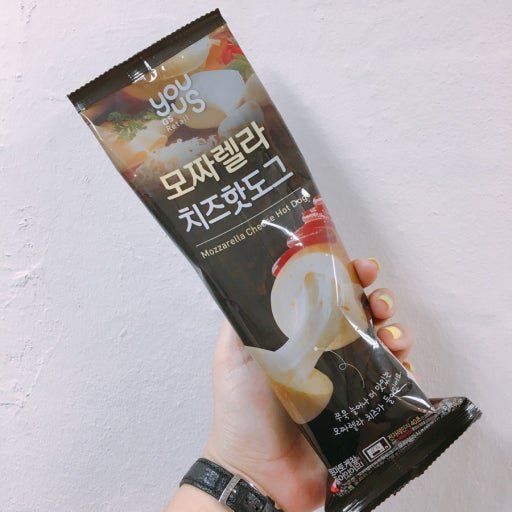
Mozzarella Corn Dog (모짜렐라 핫도그): A Korean-style corn dog coated in crispy batter with stretchy mozzarella inside. Some versions are rolled in sugar and dipped in ketchup-mustard. Around ₩2,000–₩2,500. This is one of the first things I give my kids when they visit a convenience store, and they have never once turned it down. Fish Cake Skewers (어묵/오뎅): Thin sheets of processed fish cake on skewers, simmered in a lightly savory broth that you can sip for free at the counter. Around ₩500–₩1,000 per skewer. Best in autumn and winter when the broth hits differently in the cold. Tteokbokki Cup (컵 떡볶이): Chewy rice cakes in a sweet-spicy gochujang sauce, microwaved right there in the store. Around ₩2,000. It’s not as deep as market tteokbokki, but it captures the essence at a fraction of the price. Cup Ramyeon: Buy a pack from the shelf, use the in-store hot water dispenser, and eat at the counter. Shin Ramyun (₩1,500) is the classic — bold, spicy beef broth. Buldak Bokkeum Myun (the fire chicken one in the black and red packet, ₩2,200) is the viral one that foreigners always challenge themselves with. It is genuinely very spicy. The carbonara and cheese versions are more forgiving.
| Hot Item | Price (approx.) | Spice Level | Best Chain |
|---|---|---|---|
| Mozzarella Corn Dog | ₩2,000–₩2,500 | None | All chains |
| Fish Cake Skewer (odeng) | ₩500–₩1,000 | None (mild broth) | CU (wider selection) |
| Tteokbokki Cup | ₩2,000–₩2,500 | Medium | CU & GS25 |
| Shin Ramyun Cup | ₩1,500 | Medium-Hot | All chains |
| Buldak (Fire Chicken) | ₩2,200 | Very Hot 🔥🔥 | All chains |
The Must-Try Snacks & Ready-to-Eat Meals
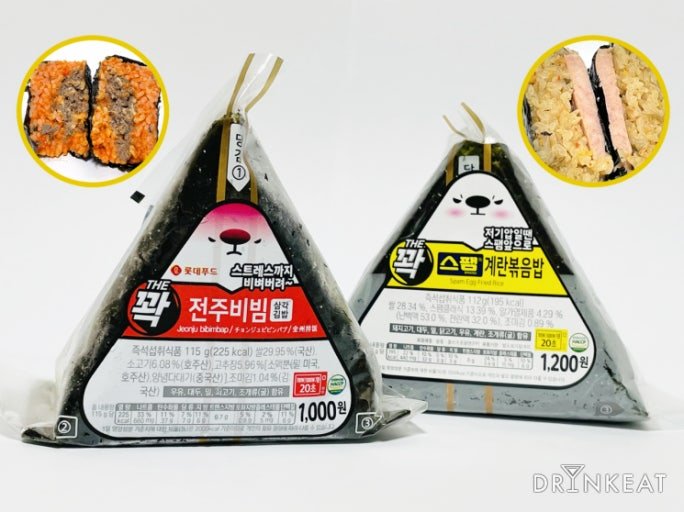
Samgak Gimbap (삼각김밥 / Triangle Kimbap): This is the icon of Korean convenience store food. A triangle of seasoned rice wrapped in crispy seaweed with a filling at the center. Tuna mayo is the safest and most popular. Bulgogi, kimchi, spam and cheese, and spicy tuna are also excellent. The packaging has a clever three-step opening system that keeps the seaweed crispy until you eat it — most tourists struggle with it the first time. Watch a local, then copy. Around ₩1,200–₩1,800. Combine one with a cup of ramyeon and you have the quintessential Korean convenience store combo meal for about ₩3,000.
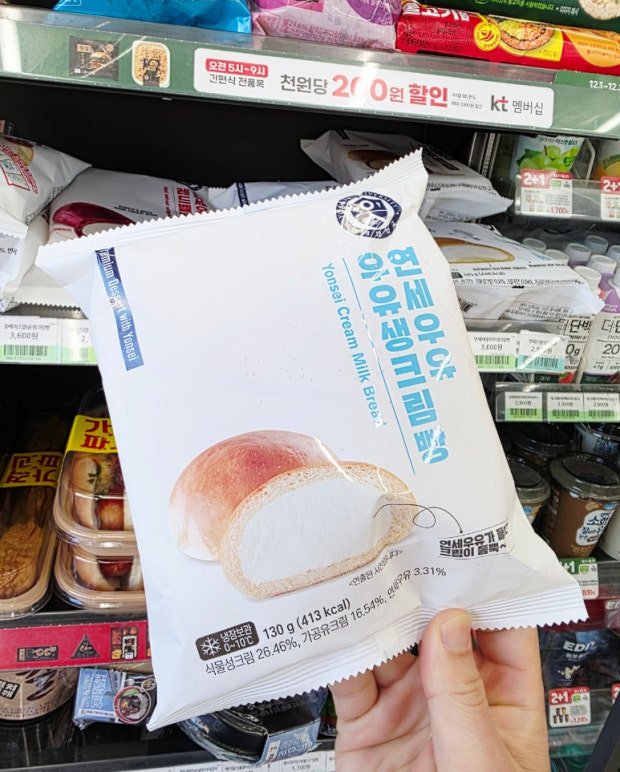
Dosirak Lunchbox (도시락): Full-portioned meal boxes with rice, a protein (usually bulgogi, chicken, or egg), and multiple banchan side dishes. GS25 leads here. Around ₩3,500–₩5,500. This is what Korean office workers and delivery drivers eat for lunch every day. It’s filling, balanced, and actually very good. Yonsei Milk Cream Bread (연세우유크림빵): Pillow-soft bread stuffed with cold, thick milk cream from Yonsei University’s famous dairy. This became one of Korea’s most viral convenience store items in 2024 and the lines haven’t stopped since. Available in vanilla cream, matcha, and seasonal flavors. Around ₩2,000–₩2,500. My kids fight over these. Honey Butter Chips (허니버터칩): The original Korean snack obsession that launched a thousand viral moments in 2014 and never lost its following. Buttery, sweet, and impossibly addictive. One bag is never enough. Around ₩1,500.
⚠️ Watch Out: Dosirak lunchboxes and triangle kimbap have same-day expiry times printed on the packaging. Korean convenience stores rotate fresh stock frequently, but always check the timestamp before buying — especially for items near the back of the shelf. Most stores restock in the morning and again in the early afternoon.
Drinks You’ll Find Nowhere Else on Earth
The drinks section alone is worth a dedicated stop. Banana Milk (바나나 우유): Binggrae’s squat, bullet-shaped brown bottle has been in Korean refrigerators since 1974. Sweet, creamy, unmistakably artificial banana flavor — and somehow perfect. This is one of the most emotionally significant packaged drinks in Korea. Every Korean has a childhood memory attached to it. Try the original first, then explore the strawberry and melon variants. Around ₩1,500–₩1,800. Sikhye (식혜): Traditional sweet rice punch. Slightly fizzy, cold, with floating grains of rice at the bottom. It sounds strange and tastes unlike anything in Western food culture. Refreshing in a way that’s hard to describe. Around ₩1,200–₩1,500. Makgeolli Can (막걸리캔): Fizzy, lightly sweet Korean rice wine at around 6% alcohol. Available in cans at most chains. A great introduction to Korean drinking culture at convenience-store prices. Around ₩1,500–₩2,000. Café25 / HEYROO Americano: The in-store espresso machine coffee at GS25 and CU. Genuinely good. Many Koreans have stopped going to cafes for their morning Americano entirely. Around ₩1,000–₩1,500 — significantly cheaper than any café chain.
2026 Trending Items & Seasonal Picks
Korean convenience stores update their inventory constantly, and 2026 has some genuinely exciting trending items. Dubai Chewy Cookie (두바이 초콜릿 쿠키): The viral pistachio-and-kataifi-filled chocolate cookie that took social media by storm globally. CU’s own version has been flying off shelves since early 2026 — if you see it in stock, grab it immediately. Croffles (크로플): A croissant pressed into a waffle iron until it’s crispy on the outside and flaky-buttery inside. The CU concept store in Seongsu-dong launched a dessert-forward lineup featuring these in February 2026. If you’re in that area, it’s worth a visit specifically for this. Spring Seasonal Items: Right now in April 2026, look for cherry blossom packaging on GS25’s house drinks and the spring strawberry-banana milk from CU. These are genuinely seasonal and won’t be here past May. Fruit Sandwiches (과일 샌드위치): Thick-cut white bread with whipped cream and fresh seasonal fruit inside. Photogenic, surprisingly delicious, and a 2025–2026 staple. Around ₩3,000.
Questions People Ask Me
Are Korean convenience stores open 24 hours?
Yes — virtually all GS25, CU, and 7-Eleven locations in Korea operate 24 hours a day, 7 days a week including public holidays. Some rural residential locations may close between midnight and 6 AM, but this is uncommon in any city or tourist area. Late-night convenience stores are a core part of Korean culture; hot food, alcohol, and basic medicine are all available at 3 AM.
How much does it cost to eat a full meal at a Korean convenience store?
A satisfying meal at a Korean convenience store costs ₩2,500–₩5,000 ($1.80–$3.70). A triangle kimbap plus a cup of Shin Ramyun is the classic combo at around ₩3,000. A full dosirak lunchbox with sides runs ₩3,500–₩5,500. With the frequent 1+1 and 2+1 promotions on drinks and snacks, it’s realistic to eat three daily meals from convenience stores for under ₩15,000 ($11).
What is the best thing to buy at a Korean convenience store for a first-timer?
Start with the non-negotiable four: samgak gimbap (triangle kimbap), mozzarella corn dog, banana milk, and Melona bar (melon-flavored ice cream). For 2026 trending items, look for the Dubai Chewy Cookie at CU and the Yonsei Cream Bread at GS25. Together these five items give you a solid introduction to Korean convenience store culture for under ₩8,000 total.
Final Thoughts from a Korean Local
I’ve walked past this GS25 near my apartment every day for years before I fully appreciated what it represented — not just a store, but a compressed version of how Koreans actually feed themselves and connect with each other. The grandmother eating triangle kimbap at the standing counter. The college students sharing a bag of honey butter chips on the stools outside at midnight. The salaryman with his dosirak and canned coffee at 7 AM before the first subway. Korean convenience stores are a democratic institution. Everything good about Korean food culture — the freshness, the variety, the social ease of eating anywhere — is captured in miniature inside every GS25 and CU. Don’t wait until your last day to try them seriously. Walk in on day one, grab something from this list, and eat it right there at the counter. That’s how Koreans do it. Questions about what to try or what to avoid? Drop them in the comments below.
📚 You might also like:
- Korean Street Food Guide 2026: What to Eat, Where to Go, and How Much It Costs
- T-Money vs Climate Card vs WOWPASS: Which Transit Card Should You Get?
- 10 Apps You Need Before Visiting Korea in 2026
For the latest seasonal releases and limited-edition items, the Visit Korea official portal occasionally covers major food culture trends worth checking before your trip.
