
Korean Work Culture 2026: Honest Complete Guide for Foreigners
I spent twelve years in export logistics before I started this blog. Long hours, obligatory team dinners, a group chat that never went quiet past midnight. I’m not complaining — it shaped how I work. But whenever a foreign friend asks me “is Korean work culture really that intense?”, I always give the same answer: yes, and also no. Here’s the full version.
📋 Quick Navigation
The “빨리빨리” (Ppali Ppali) Mindset
I once missed my daughter’s school performance because of a mandatory team dinner. Not unusual here. Things are changing slowly — knowing the unwritten rules upfront saves real confusion.
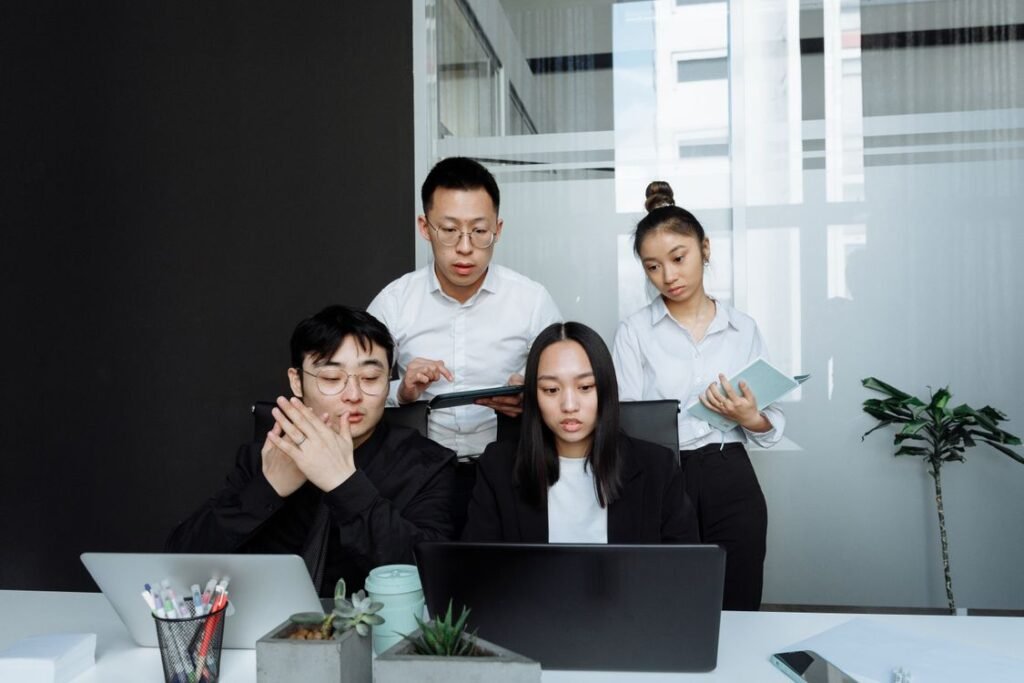
The most immediate thing any newcomer notices in Korean workplaces is the speed. “빨리빨리” (ppali ppali) — literally “hurry hurry” — is not just a phrase. It is a reflex. Emails are answered within minutes, not days. Reports that might take a week in other cultures are expected by tomorrow morning. Decisions that would require three meetings elsewhere get made over one phone call. Korean infrastructure, manufacturing, and technology industries have all been built on this tempo, and it shows.
This urgency grew from necessity. Korea transformed from one of the world’s poorest countries in the 1950s into a global technology and manufacturing leader within a few decades. That compressed development rewired the culture’s relationship with time. In Korean workplaces today, being slow is still associated with being uncommitted — and that perception carries real professional consequences.
Korean Work Culture and Hours: The Honest Reality
Before the labor reform laws took hold, 60-to-70-hour weeks were standard at large Korean corporations (대기업, daegieop). Even now, South Korea ranks among the highest in the OECD for annual hours worked — about 1,833 hours per worker in 2025, sixth-highest in the OECD, against an OECD average of around 1,700.
What makes Korean working hours particularly distinctive is the culture of visible presence. Finishing your actual tasks early does not necessarily mean you can leave. If your direct senior (상사, sangsa) is still at their desk, most employees stay too — scrolling through documents, checking emails again, making themselves look productive. I have done this myself more times than I can count, and most Koreans I know have the same story.
This is slowly changing. The MZ generation (Millennials and Gen Z) is the first cohort in Korean corporate history to openly push back on the idea that long hours equal loyalty. They are demanding outcomes-based evaluation over time-based presence — and the smarter companies are listening.
How Hierarchy and Titles Define the Workplace
Korean workplaces run on a formal hierarchy that ties together age, seniority, and title in a way that is deeply unfamiliar to most Western professionals. Job titles follow a defined ladder: 사원 (sawon, entry-level) → 대리 (daeri, assistant manager) → 과장 (gwajang, manager) → 차장 (chajang, senior manager) → 부장 (bujang, general manager) → 임원 (imwon, executive). Your title determines not just your pay grade but also how people speak to you, whether your opinion is solicited in meetings, and where you sit at the dinner table.
Parallel to the official title system runs the age-based honorific structure. Seniors (선배, seonbae) are addressed in formal speech (존댓말, jondaemal). Juniors (후배, hubae) receive casual speech in return. For foreigners in Korean offices, accidentally using casual speech with someone older is one of the fastest ways to create an awkward dynamic — even unintentionally. Understanding this underlying logic helps more than any workplace training manual. See our deeper look at Korean culture rules foreigners often break for how hierarchy operates outside the office too.
The 52-Hour Reform: How Korean Work Culture Is Changing in 2026
The maximum 52-hour work week law (주 52시간 근무제) officially took effect for large companies in 2018 and was extended to smaller businesses over subsequent years. Its impact has been real but uneven. At global technology companies and larger multinationals operating in Korea, the change has been significant. Teams leave at 6 p.m. without embarrassment. Flexible start times are common. Remote work, accelerated by the pandemic years, has stuck in many white-collar environments.
In traditional industries — manufacturing, chemicals, construction — the shift is slower. The law sets a ceiling but does not address the cultural pressure to “volunteer” overtime. Unpaid overtime disguised as personal initiative is still widespread in sectors where plant operations run around the clock.
The strongest force for change is generational, not legislative. When young Korean professionals can choose between a company that expects 70-hour weeks and a startup offering outcome-based flexibility, growing numbers are choosing the latter. Korean work culture in 2026 is not the monolith it once appeared — it depends heavily on company size, sector, and the age of leadership.
Hoesik (회식): The Office Dinner Culture That Defines Teams
No guide to Korean work culture would be complete without hoesik (회식) — the mandatory team dinner and social drinking event. Hoesik is where promotions are discussed informally, where bosses reveal their personalities outside the office, and where team bonds are forged in ways that regular work hours never produce. Missing hoesik without a compelling reason signals that you are not invested in the team.
The format is consistent: first stop is dinner, usually Korean BBQ, seafood, or a jokbal restaurant chosen by the senior person. The second venue (2차, icha) tends to be a norebang (karaoke room) or a bar. Sometimes there is a third. The senior member pays for at least the first round. Glasses are refilled by others — you do not pour your own drink in Korea. Declining alcohol is acceptable with the right framing (health reasons, medication, early morning driving), but consistently skipping the rounds draws quiet notice.
In 2026, hoesik culture is moderating noticeably. Monthly full-night sessions are becoming lighter team dinners. Many managers end the event after the first venue. The younger generation’s comfort with saying “I have plans after this” has shifted what is considered reasonable to expect. For the etiquette details that apply at these dinners — and at Korean dining generally — our guide to Korean dining rules that foreigners often break covers what you need to know at the table.
Practical Tips for Navigating Korean Work Culture as a Foreigner
The foreigners I have seen thrive in Korean workplaces consistently do a few things right. First, they invest in basic Korean — not fluency, but enough to use the right honorific forms, greet seniors properly, and express gratitude in Korean. This signals respect in a way that no amount of professional competence alone can replicate.
Second, they match the ppali ppali tempo in communication. Replying to messages quickly, arriving to meetings five minutes early, and demonstrating responsiveness earns trust faster than any formal introduction. Being slow to respond is interpreted as indifference, regardless of your actual reason.
Third — and this is advice I give every foreign colleague who joins our team — they show up outside of work hours. The mountain hike on Saturday with two colleagues from accounting tells them more about who you are than six months of desk interaction. Koreans do not fully separate the personal and professional; the relationship you build over a shared meal, a walk along the Han River on a Sunday afternoon, or a team norebang session is the relationship they bring back to the office Monday morning.
Korean work culture can be demanding, but it is also extraordinarily communal. The same environment that expects you to stay until 9 p.m. will also remember your child’s exam week, bring you home-cooked side dishes when you look tired, and celebrate your smallest achievements with genuine enthusiasm. The system rewards commitment — and it shows you that commitment in return. For broader cultural context and resources about living and working in Korea, the Korea Tourism Organization offers helpful orientation guides for international visitors and workers.
Frequently Asked Questions
What is Korean work culture like for foreigners in 2026?
Korean work culture for foreigners in 2026 involves adapting to a fast-paced environment, a strong age-and-title-based hierarchy, longer working hours than the OECD average, and mandatory office social dinners called hoesik. Most Korean companies adjust expectations somewhat for foreign employees, but learning basic honorific Korean and showing responsiveness in communication greatly accelerates trust-building and integration into the team.
Is work-life balance improving in Korea?
Yes, gradually. The 52-hour maximum work week law has reduced extreme overtime at large Korean companies, and the MZ generation is vocal about demanding better work-life balance. Technology firms and startups are leading the change, while traditional manufacturing and financial sectors adapt more slowly. Your experience in 2026 will depend heavily on the company size, industry, and age of the leadership team you join.
Do I have to drink alcohol at Korean office dinners?
No. While alcohol plays a central role in hoesik (office dining culture), it is increasingly acceptable to decline alcohol by citing a medical reason, medication, religion, or driving obligations. What matters more than drinking is showing up and participating in the communal spirit of the event. Attendance and engagement count far more than whether you are holding a soju glass.
