
How to Book KTX in 2026: SRT Merger, Korail+ and the New 2-Month Window
Updated September 27, 2026
Booking a KTX in Korea changed twice this autumn. On September 1, 2026, SRT merged into KTX, so every high-speed train now runs under one name and one booking system. And from October 1, 2026, you can book KTX tickets two months before departure instead of one — early enough to book your train when you book your flight.
Here is what that means if you are visiting: which app or website to use, what happened to the trains from Suseo, what tickets cost now, and how to book with a foreign card.
What changed: KTX and SRT are one system
Korea had two high-speed rail operators for about a decade: Korail ran KTX from Seoul Station and Yongsan, and SR ran SRT from Suseo in southeast Seoul. As of September 1, 2026, the two are integrated and all high-speed trains carry the KTX name.
- One app: the separate KorailTalk and SRT apps were replaced by Korail+ (코레일+), which opened on August 3, 2026. From September 1, bookings for both networks go through Korail+ or Korail’s website.
- More seats: the government says the merger adds more than 17,000 seats a day, with about 30% more seats on the Suseo line.
- Cheaper fares on the old KTX routes: KTX fares were cut by about 10% on average to match what SRT used to charge (details below).
If you signed up for SRT on a past trip, note that SRT-only members have to register again on Korail+; Korail members are moved over automatically.
Book KTX up to two months ahead
From October 1, 2026, KTX tickets go on sale two months before the travel date. Until now the window was one month, which meant many visitors had their flights booked long before they could buy a train seat. The Ministry of Land, Infrastructure and Transport and Korail announced the change on September 20, 2026, citing the jump in foreign riders: 6.69 million foreign passengers took the KTX between January and August 2026, up 68% on the year before.
Tip: Chuseok and Seollal tickets are sold in a separate holiday sale on dates Korail announces in advance. If your trip overlaps a holiday, check Korail’s notices early — seats on popular routes can go within hours.
Where to book KTX as a visitor
- Korail’s website for foreigners (korail.com/global) — the simplest option if you don’t have a Korean phone number. As of September 2026 it runs in seven languages, with French, German and Mongolian planned by the end of the year, and it accepts overseas Visa, Mastercard and UnionPay cards. Korail says WeChat Pay and Alipay support is in development.
- The Korail+ app — has an English mode, but some visitors report trouble with sign-up and foreign card payment. If it fails, switch to the website rather than retrying the same card.
- Station ticket counters and machines — fine for same-day trips outside peak times; risky on Friday evenings, weekends and holidays.
- Travel platforms such as Klook sell KTX tickets too, usually with a booking fee.
Fares after the merger
The fare cut applies to the routes Korail already ran, bringing them down to the old SRT level. The example the government gave:
| Route (standard class) | Before | After Sept 1, 2026 |
|---|---|---|
| Seoul – Busan | ₩59,800 | ₩54,400 |
Other fares vary by route and train, so check the exact price on Korail’s site when you book (as of September 2026). Online booking discounts and mileage that used to apply only to KTX now also cover the former SRT routes.
Seoul Station or Suseo: which one to use
The stations did not move. Trains from Seoul Station (and Yongsan for the Honam line) suit you if you are staying in central Seoul, Myeongdong or Hongdae. Trains from Suseo Station (the former SRT trains) are closer to Gangnam, Jamsil and the southern suburbs, and they stop at Dongtan and Pyeongtaek-Jije on the way south.
Both now appear in the same search results, so compare departure stations as well as times. If your hotel is south of the river, a train from Suseo can save you a long subway ride across the city.
Tips for busy dates
- Book as soon as your dates are fixed. With the two-month window, weekend trains to Busan, Gyeongju and Gangneung will sell earlier than before.
- Carry your passport. Tickets booked on the foreigner site and rail passes can be checked on board.
- Standing tickets and unreserved cars appear when seats sell out on some routes — cheaper, but not fun for a two-hour trip with luggage.
- Leave time at Seoul Station. It is big, and the KTX platforms are a walk from the subway exits.
- Connecting on arrival: most KTX stations link to local subways or buses that take a T-money card.
Planning where to go? See our guides to Gyeongju, Jeonju Hanok Village and Korea’s East Coast — all good KTX trips from Seoul.
Quick answers
Is SRT still running in Korea?
The trains and the Suseo station are still there, but since September 1, 2026 they run as KTX and are booked through Korail+ or Korail’s website. The separate SRT app no longer sells tickets.
How far in advance can I book KTX?
Two months before departure from October 1, 2026 (it was one month before). Holiday periods have separate sale dates.
Can I book KTX with a foreign credit card?
Yes, on Korail’s website for foreigners, which accepts Visa, Mastercard and UnionPay as of September 2026. The Korail+ app can be less reliable with foreign cards.
Is KTX cheaper now?
On the routes Korail already ran, fares dropped about 10% on average. Seoul to Busan in standard class fell from ₩59,800 to ₩54,400.
Does the Korea Rail Pass cover the former SRT trains?
Check Korail’s Korea Rail Pass page for the current rules before relying on it for a Suseo departure.
Sources
Checked September 27, 2026. Details change — confirm dates and prices before you go.
- The Korea Times — KTX bookings to open 2 months in advance (Sept 20, 2026)
- SBS News — KTX tickets available two months in advance from October 1
- Kyunghyang Shinmun — High-speed rail bookings move to the Korail+ app
- Korea Policy Briefing — KTX and SRT integration from September
- Korail — official website for foreigners
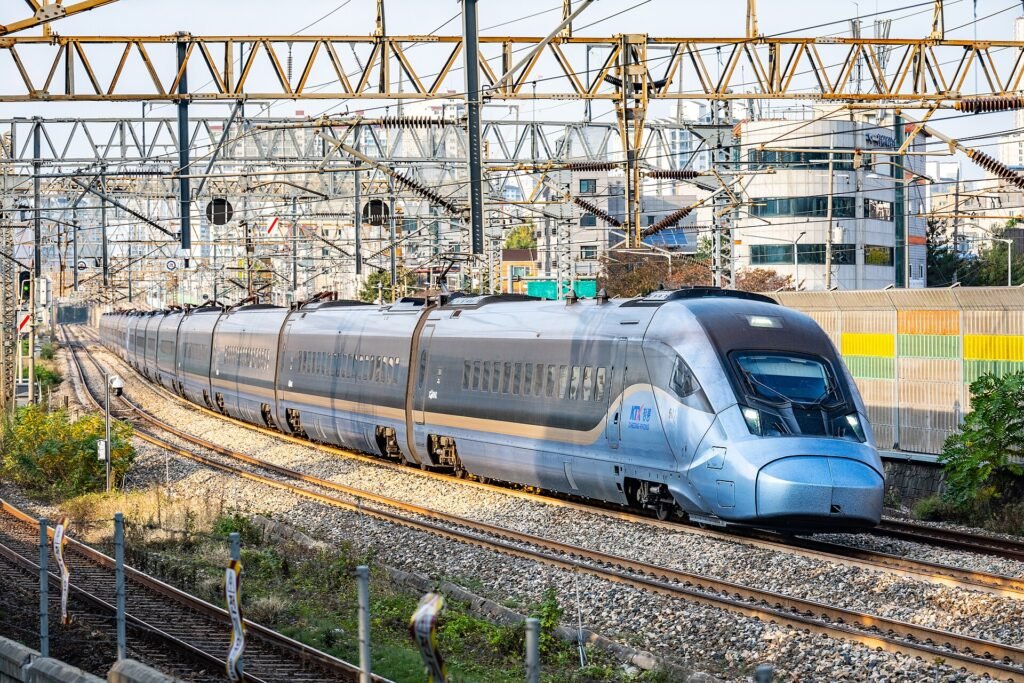
Top photo: KTX-Cheongryong near Guro, Seoul, by Takeshi Aida, CC BY-SA 2.0, via Wikimedia Commons.
